 EdCircuit Staff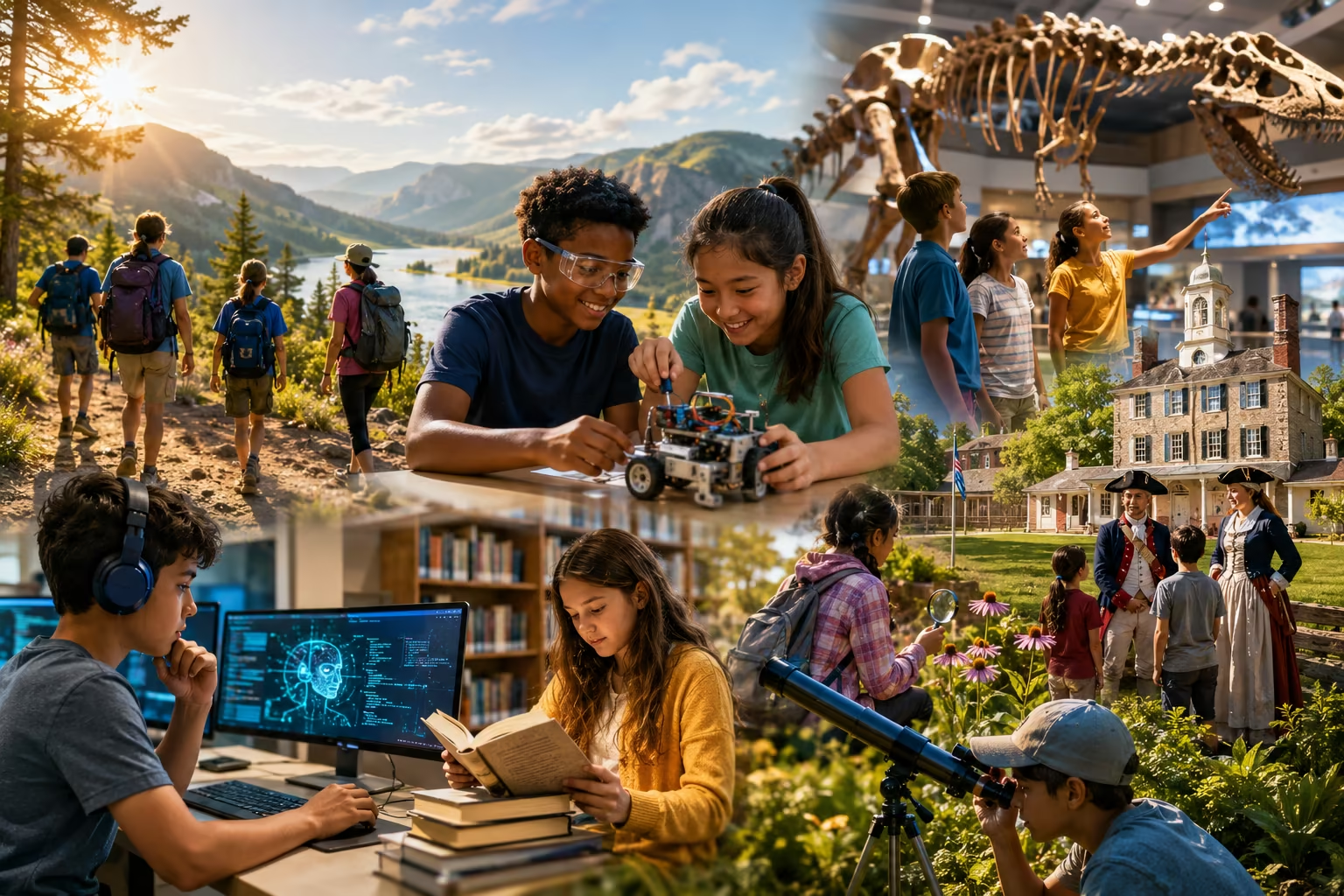
Summer learning adventures are becoming one of the most powerful ways students can explore new interests, develop future-ready skills, and create lifelong memories beyond the classroom.
For many families, the final school bell signals the start of something special.
Backpacks are set aside. Alarms are silenced. Schedules loosen. Students trade classrooms for sunshine, hallways for hiking trails, and school buses for family road trips.
Summer has always represented freedom.
But increasingly, it also represents opportunity.
Across the country, families are redefining what summer can be. They are discovering that some of the most meaningful learning experiences happen not within the walls of a school building, but in museums, libraries, science camps, national parks, historical landmarks, makerspaces, and community events.
The reality is that today’s students live in a world where learning never truly stops. New technologies emerge daily. Artificial intelligence is transforming careers. Cybersecurity has become a critical workforce need. The nation is preparing for the historic America250 celebration. At the same time, educators, libraries, museums, and community organizations are creating more opportunities than ever for students to explore their passions.
The best summer classroom may not have walls at all.
A New Era of Summer Learning
Not long ago, summer learning was often associated with avoiding the “summer slide.”
Today, the conversation is changing.
Families are increasingly viewing summer as a season of exploration rather than remediation. Instead of simply trying to preserve academic skills, many parents are looking for opportunities that inspire curiosity, creativity, problem-solving, and real-world experiences.
The shift reflects a growing understanding that some of the most important lessons students learn occur outside traditional academic environments.
A student attending a robotics camp is learning engineering principles.
A teenager volunteering in a community garden is learning environmental science and civic responsibility.
A family visiting a historical site is strengthening historical literacy and civic understanding.
A child participating in a library reading challenge is developing literacy skills while discovering a lifelong love of reading.
These experiences often feel less like school and more like adventure. Yet their impact can be profound.
Many educators recognize this reality. Teachers across the country spend their summers leading STEM camps, facilitating outdoor education programs, volunteering at museums, coaching robotics teams, and creating enrichment opportunities that help students continue learning in exciting new ways.
The classroom may close in June, but learning continues everywhere.
America250 Creates a Summer of Discovery
Few educational opportunities are as timely or exciting as the preparations underway for America’s 250th birthday.
The nationwide America250 initiative is creating opportunities for students and families to explore history, civics, citizenship, and community engagement in meaningful ways. Across the country, museums, historical societies, libraries, parks, and civic organizations are preparing special programs, exhibits, celebrations, and educational experiences that help tell the story of America while inspiring future generations. America250
For students, history comes alive when they experience it firsthand.
Imagine a family standing at a Revolutionary War battlefield where pivotal moments unfolded.
Imagine visiting a presidential home, a historic courthouse, or a museum exhibit that showcases the innovations and struggles that helped shape the nation.
Imagine attending a local America250 celebration where students can interact with historians, community leaders, veterans, and civic organizations.
These experiences help transform history from a chapter in a textbook into a living story.
More importantly, America250 presents an opportunity to ask an important question:
What role will today’s students play in America’s next 250 years?
The answer may begin with a summer adventure.
STEM Camps Are Inspiring Future Innovators
Walk through a modern STEM camp and you will likely see students doing things that would have seemed impossible just a decade ago.
Students are programming robots.
Designing drones.
Building rockets.
Creating mobile apps.
Exploring engineering challenges.
Developing video games.
Conducting scientific research.
Experimenting with renewable energy technologies.
The explosion of STEM-focused summer programs reflects the growing demand for future scientists, engineers, programmers, researchers, and innovators.
These experiences are powerful because they move beyond theory.
Students are not simply reading about science.
They are doing science.
They are testing ideas, making mistakes, solving problems, collaborating with peers, and experiencing the excitement that comes with discovery.
For many students, a single STEM camp becomes the spark that influences a future career path.
An aspiring engineer may discover a passion for robotics.
A future environmental scientist may become fascinated by ecosystems.
A student who has never considered technology as a career may suddenly find themselves building their first successful program.
Sometimes all it takes is one experience to open an entirely new world of possibilities.
AI and Cybersecurity Are the New Summer Skills
While sports camps and traditional summer activities remain popular, another category of summer learning is rapidly expanding.
Artificial intelligence.
Cybersecurity.
Digital innovation.
These fields are no longer reserved for college students or technology professionals.
Students of all ages are gaining access to age-appropriate programs that teach them how emerging technologies work and how they can be used responsibly.
A middle school student might spend a week learning prompt engineering and AI creativity.
A high school student may participate in a cybersecurity challenge that teaches ethical hacking concepts and digital defense strategies.
Others may explore coding, machine learning, data science, or robotics.
These opportunities matter because the workforce students will enter looks dramatically different than the workforce of even a decade ago.
Technology literacy is becoming as important as traditional literacy.
Understanding AI, digital citizenship, cybersecurity, and responsible technology use is quickly becoming part of being an informed citizen.
For families looking ahead, summer can be the perfect time to begin exploring these skills.
Libraries Are Community Learning Powerhouses
Few places offer as much educational value as a local library.
For generations, libraries have served as summer destinations for curious minds.
Today, they are doing even more.
Modern libraries have evolved into innovation hubs that provide access to technology, makerspaces, coding workshops, author visits, creative projects, career exploration opportunities, and STEM activities.
Many libraries offer free summer reading programs that encourage students to keep reading while school is out.
Others host robotics demonstrations, AI workshops, art programs, science activities, and community events.
Libraries remain one of the few places where curiosity can lead almost anywhere.
A student interested in space exploration can discover astronomy.
A future entrepreneur can explore business and leadership.
An aspiring artist can find inspiration.
A curious reader can stumble upon a book that changes the course of their life.
Best of all, many of these opportunities are free.
Museums Continue to Spark Wonder
There is something powerful about standing in front of a real artifact, a scientific exhibit, or a piece of art.
Museums create moments of wonder.
They help students connect ideas across subjects while encouraging observation, inquiry, and critical thinking.
Science museums turn complex concepts into hands-on experiences.
Art museums inspire creativity and expression.
History museums bring the past to life.
Children’s museums encourage exploration through play.
The best museums do more than display information.
They invite students to interact with it.
Those experiences often stay with learners for years.
A single visit can inspire new interests, career aspirations, or simply a deeper appreciation for the world around them.
Nature Remains the Ultimate Classroom
Not every summer learning experience requires admission tickets, registration forms, or organized programming.
Some of the most impactful opportunities exist just outside the front door.
Nature remains one of the greatest classrooms ever created.
A hike becomes a lesson in ecology.
A camping trip becomes an exploration of environmental science.
Bird watching teaches observation.
Gardening introduces biology.
Fishing demonstrates patience and ecosystems.
Stargazing creates wonder while introducing astronomy.
Students who spend time outdoors often develop a stronger connection to the natural world and a deeper appreciation for conservation and stewardship.
In an age dominated by screens, outdoor exploration offers something increasingly valuable: presence.
The ability to slow down, observe, reflect, and connect.
The Memories That Last Long After Summer Ends
Years from now, students may not remember every worksheet they completed or every assessment they took.
But they often remember experiences.
They remember launching a rocket for the first time.
They remember standing beside a historic monument.
They remember building a robot that finally worked.
They remember discovering a favorite book at the library.
They remember the family hike, the museum trip, the science camp, and the conversations that happened along the way.
One day, parents realize that their children no longer ask to visit the museum.
One day, students outgrow summer camps.
One day, the family road trip becomes a memory.
That is precisely why these experiences matter.
They are educational.
But they are also deeply personal.
They build confidence.
They strengthen families.
They create stories that are retold for years.
The Best Summer Classroom Has No Walls
As communities prepare for America250 celebrations, as STEM opportunities continue expanding, and as AI and cybersecurity become part of everyday life, families have more opportunities than ever to transform summer into a season of discovery.
The best summer learning experiences do not require perfection.
They simply require curiosity.
A trip to a museum.
An afternoon at the library.
A cybersecurity course.
A STEM camp.
A historical landmark.
A community event.
A hike through a local park.
A conversation sparked by wonder.
Together, these moments remind students that learning is not confined to a classroom calendar.
The most meaningful education often happens when curiosity leads the way.
And sometimes, the most important classroom of all is the one without walls.

Subscribe to edCircuit to stay up to date on all of our shows, podcasts, news, and thought leadership articles.