

edCircuit
  • Start Here
    • Login
    • Register
    • Subscribe
    • Submit a Press release
    • Advertise or Sponsor
    • Contribute
    • Get Interviewed
  • On the Wire
  • EdTech
    • All EdTech
    • Online Learning
    • Hybrid and Remote Learning
    • Augmented and Virtual Reality
    • ESports
    • Gamification and Game-Based Learning
    • Digital Citizenship
    • EdTech Entrepreneurs
    • Market Trends
    • Future of Education
  • Artificial Intelligence
  • K-12 Education
    • All K-12
    • K-12 Teachers
    • Teaching Strategies
    • Special Education and IEPs
    • Dyslexia
    • Gifted and Advanced Learning
    • Early Childhood, Pre-K and Kindergarten
    • School Calendar
    • Tutoring and Homework Help
    • Attendance and Absenteeism
    • After-School Programs
    • School Counselors
    • Homeschooling
    • School Models
    • Teacher Retention
    • Parents
    • Students
    • STEM and STEAM Education
  • Teaching and Learning
    • Literacy and Reading
    • Math Education
    • Civics and History Education
    • Financial Literacy
    • Assessment and Testing
    • Curriculum and Instruction
    • Personalized Learning
    • Project-Based Learning
    • Social-Emotional Learning
    • Executive Function
    • Creativity
    • Diversity, Equity, Inclusion
  • Professional Development
    • All Professional Development
    • Educators
    • Administrators
    • edLeaders
  • Higher Education
    • All Higher Education
    • College Admissions
    • Career and Technical Education (CTE)
    • Graduation
    • FAFSA and Financial Aid
    • Student Loans
  • Cybersecurity
  • School Safety
    • All School Safety
    • Science and Lab Safety
    • School Design and Facilities
    • Bullying
    • Duty of Care and School Liability
  • Continuing Education
    • All Continuing Education
    • Online Certificate Programs
    • Teaching Jobs and Careers
    • Teacher Appreciation
  • Education Policy and Government
    • All Education Policy
    • Department of Education
    • School Choice
    • Global
    • Advocates
  • EDU Shows
    • All EDU Shows
    • Safer Ed
    • Mind the Gap
    • Education Industry Questions
    • CoffeEd
    • InFocus
    • InformED Report
  • EDU Podcasts
    • All EDU Podcasts
    • Author Chats
    • CoSN The Podcast
    • Education Today
    • Building the Bridge
    • Students Speak
  • Education Industry Guides and Reports
  • Archived Media
    • Future of School: The Podcast
    • Equity Everywhere
  • About edCircuit
  • Subscribe
edCircuit
  • Sign in
Join Free
Home Tags Posts tagged with "2016 election"
Tag:

2016 election

Follow
Mostly empty STEM classroom in Kuala Lumpur, declining STEM students
InformED Report

InformED Report 12/13/16

by EdCircuit Staff December 13, 2016
written by EdCircuit Staff 6 minutes read

Play video: The InformED Report: Episode 14 (1 minute 59 seconds)1:59

The InformED Report: Episode 141 min 59 sedCircuit on Vimeo

The InformED Report for December 13, 2016 opened with efforts to bring more students into science, technology, engineering and math, from a national plan in Malaysia to a new STEM academy in Texas and a robotics class in Minnesota. It then turned to campuses after the presidential election, where more than 100 college presidents asked President-elect Donald Trump to speak out against harassment, and an Iowa lawmaker proposed penalizing colleges that offered students post-election counseling. The edition closed on a Stanford study showing how easily students are fooled by what they read online.

In this edition

  • Malaysia’s Education Ministry drafted a 2017-2025 national STEM action plan to reverse falling STEM enrollment.
  • Texas’s Mansfield school district approved $5.6 million for a STEM academy, and a Minnesota school taught seventh and eighth graders to program robots.
  • One hundred and ten college presidents urged President-elect Trump to condemn harassment and hate.
  • Iowa Rep. Bobby Kaufmann planned a “suck it up, buttercup” bill aimed at colleges’ post-election programs.
  • A Stanford study found 82 percent of middle schoolers could not tell sponsored content from a real news story.

Malaysia drafts a national STEM plan

The Malaysian Digest reported that Malaysia’s Education Ministry was drafting a 2017-2025 National Science, Technology, Engineering and Mathematics Action Plan to counter the declining number of students choosing the STEM stream. Deputy Education Minister Datuk P. Kamalanathan told parliament that the plan, to be carried out with the Higher Education Ministry and the Ministry of Science, Technology and Innovation, would focus on eight areas. They included teaching and learning policies and facilities, awareness, careers, strategic cooperation, data and research, and commercialization and innovation. The list reached well beyond the classroom, to awareness, careers and research, a sign that the ministry treated the decline as more than a teaching problem.

U.S. schools recruit early for STEM

In Texas, Amanda Rogers of the Star-Telegram reported that Mansfield school district trustees voted 6-0 on November 15 to spend $5.6 million renovating the annex behind Wester Middle School for a STEM academy. The board also voted to build a $14.9 million early childhood literacy center for 3- and 4-year-olds and for children in its Preschool Program for Children with Disabilities.

In Minnesota, U.S. News carried a report from the St. Cloud Times on Stephen Larson’s computer programming course for seventh and eighth graders at St. John’s Preparatory School. Over a semester, students learn the basics of programming on iPads and then program Arduino robots, working by trial and error. “I think technology is helping kids understand programming quicker and faster,” Larson said, adding that more students were joining in as it became easier. For district leaders, the two stories showed different scales of the same strategy: a dedicated campus where the budget allows, and a single well-designed middle school course where it does not.

College presidents ask the president-elect to speak out

Inside Higher Ed’s Scott Jaschik reported that 110 college and university presidents had signed a joint letter urging President-elect Trump to “condemn and work to prevent the harassment, hate and acts of violence” being reported across the country, including on campuses. More presidents signed after it first circulated. Mariko Silver, president of Bennington College, led the effort to organize the letter. She said students needed to hear from the country’s future leadership that they would be safe from harassment, and stressed that the letter did not align its signers with any political view. Most signers led private institutions, many of them liberal arts colleges, and seven led historically Black colleges. Silver suggested that leaders of public universities might need to consult more widely before signing such a letter.

An Iowa bill aimed at post-election campus programs

The Washington Post’s Samantha Schmidt reported on a different response. After the election, some campuses held rallies, counselors offered “healing spaces,” and some professors canceled classes or let students skip tests. Bobby Kaufmann, a Republican in the Iowa House, said he found the “whole hysteria to be incredibly annoying” and planned to introduce what he called the “suck it up, buttercup” bill when the legislature met in January. It would cut the budgets of state universities that used taxpayer money for election-related programs beyond their usual student services, by double the amount spent. He also said it would create new criminal penalties for protesters who shut down highways. The two stories marked out the choice in front of campus leaders that fall: how to support students who felt threatened without being seen by lawmakers as indulging them.

Students and fake news

In The Wall Street Journal, Sue Shellenbarger reported on a Stanford University study of 7,804 students from middle school through college, the largest yet on how young people judge information online. Some 82 percent of middle schoolers could not tell an ad labeled “sponsored content” from a real news story. More than two in three middle schoolers saw no reason to distrust a post by a bank executive arguing that young adults need more financial-planning help. Nearly four in 10 high school students accepted a photo of deformed daisies as strong evidence of toxic conditions near the Fukushima nuclear plant, though it gave no source or location. Many students judged tweets by their detail or the size of the photo rather than by who posted them.

Writing for edCircuit, Elizabeth Osborne argued that schools teach students about online predators and inappropriate posts but rarely teach them to tell what is true. She offered teachers a short list to use with students: check the URL carefully; use Wikipedia, whose content must be neutral and verifiable from reliable sources; search for the story to see whether other sites carry it or have debunked it; use a fact-checking site such as Snopes; and look into the source itself. For school leaders, the Stanford results made a case for teaching these habits in every subject, since students meet unreliable information everywhere they read.

Sources

  • Malaysian Digest, “Education Ministry Drafts Action Plan To Deal With Declining STEM Students,” 2016.
  • Amanda Rogers, “Mansfield school district approves pre-k, STEM campuses,” Fort Worth Star-Telegram, November 2016.
  • U.S. News & World Report, from the St. Cloud Times, “Minnesota High School Students Learn to Program Robots,” 2016.
  • Scott Jaschik, “President’s Message to President-Elect,” Inside Higher Ed, November 18, 2016.
  • Samantha Schmidt, “The ‘suck it up, buttercup’ bill: Iowa lawmaker targets post-election campus ‘hysteria’,” The Washington Post, November 16, 2016.
  • Sue Shellenbarger, “Most Students Don’t Know When News Is Fake, Stanford Study Finds,” The Wall Street Journal, November 2016.
  • Elizabeth Osborne, “The Hidden Danger of Social Media: Fake News,” edCircuit, 2016.

About the InformED Report

The InformED Report is edCircuit’s short news program on education. This edition first ran on December 13, 2016. In 2026, edCircuit re-presented it with a new anchor and this full written account. Both report the stories as they stood on that date and link the original reporting, so readers can see exactly where each claim came from.

Subscribe to edCircuit to stay up to date on all of our shows, podcasts, news, and thought leadership articles.

December 13, 2016 0 comments
0 FacebookTwitterPinterestLinkedinWhatsappCopy LinkEmail
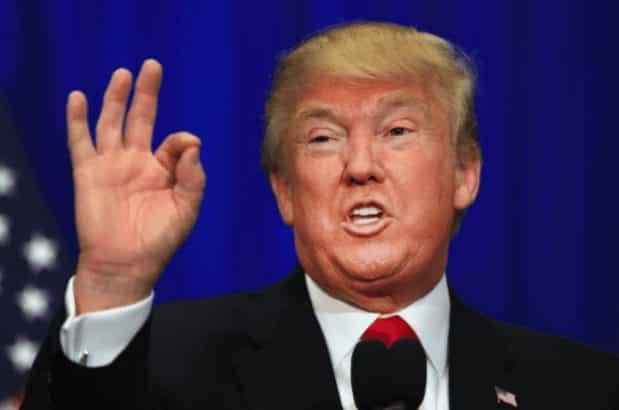
A man in a suit speaking into a microphone in front of a blue backdrop and an American flag
InformED ReportHigher EducationK-12Education Policy and GovernmentStudents

InformED Report 11/10/16

by EdCircuit Staff November 10, 2016
written by EdCircuit Staff 5 minutes read

Play video: The InformED Report: Episode 7 (1 minute 37 seconds)1:37

The InformED Report: Episode 71 min 37 sedCircuit on Vimeo

Donald Trump’s victory in the presidential election on November 8, 2016 was widely unexpected, and education reporters spent the next day working out what it could mean for schools and colleges. The InformED Report for November 10, 2016 looked at what the result might change for families paying for college and for federal education policy, and at the protests that broke out on college campuses and in at least one large California high school the day after the vote.

In this edition

  • Money advised families that the short-term effect of the election would be felt mainly in the markets and college savings, with larger changes to student loans possible later.
  • Trump advisers had discussed taking the federal government out of student lending, and his calls for less regulation pointed to lighter oversight of for-profit colleges.
  • The Atlantic expected more power to shift to states, a push for school choice, and a smaller federal Education Department.
  • About 1,500 students, half of Berkeley High School, walked out of class, and protests spread across college campuses.

What the election could mean for college costs and federal policy

Writing the morning after the vote, Money’s Kim Clark, Greg Daugherty and Kaitlin Mulhere told families that in the short term, not much would change. Until the inauguration in January 2017, the main effect would be on financial markets and college savings. Families saving through a 529 plan in an age-based portfolio, which held about 80 percent of 529 assets, were somewhat protected, while money in individual stocks, bonds and mutual funds would rise and fall with the market. The New York Times reported that U.S. stock futures had plunged 5 percent overnight before recovering nearly all their losses once trading began.

The longer-term changes could be larger. Sam Clovis, the Trump campaign’s national co-chair and policy director, had discussed handing federal student lending to banks and other private lenders, and had suggested charging students different interest rates based on their expected earnings. Trump had proposed an income-based repayment plan capping payments at 12.5 percent of income for 15 years, said he would push colleges to cut costs, and repeated his wish to eliminate the Education Department, an idea most experts considered far-fetched. Money also noted that his stated desire to reduce regulation could mean less oversight of for-profit colleges, and that shares of several large for-profit companies rose between 4 and 10 percent on the morning after the election.

For K-12 schools, The Atlantic’s Emily DeRuy laid out what was likely. Closing the Education Department entirely seemed highly unlikely, she wrote, but its scope could be scaled back sharply, and with Republicans controlling the White House and both chambers of Congress, more decisions were likely to move to states and districts. Trump had proposed $20 billion for school choice, and a federally backed voucher program had a real chance of advancing. “You’re going to see Trump making a push for parental choice,” said Gerard Robinson of the American Enterprise Institute. DeRuy added that Trump’s pledge to “repeal” Common Core was not something a president could do, since the standards were adopted by states, and that the Obama administration’s pending rules under the Every Student Succeeds Act looked unlikely to survive.

For district leaders, the practical advice at the time was to watch rather than react. Very little of what was said in the campaign had become policy, and the education secretary had not been named. Districts with budgets built on federal grants, and states still writing their ESSA plans, had reason to follow the transition closely and to expect more of the decisions to land with them.

Students walk out after the election

Protests began on campuses as the results came in. The Washington Post’s Susan Svrluga reported that students at colleges across the country, especially on the West Coast, took to the streets that night. John Baughman, an associate professor of politics at Bates College, noted that college students belonged to the most Democratic-leaning of all age groups, after a decade of generational shift toward the party.

High school students followed the next morning. The Los Angeles Times reported that at Berkeley High School, about 1,500 students, half the student body, walked out after first period began at 8 a.m., according to Berkeley Unified School District officials. Reuters reported that students and teachers rallied in the school’s courtyard before marching toward the University of California, Berkeley, carrying signs and using the hashtags #NotMyPresident and #BHSWalkout. One student told the rally that people of color feared discrimination and that immigrant families now worried about deportation.

For principals, the walkouts raised questions every school faces after a divisive public event: how to keep students safe when they leave campus, how to respect their right to speak, and how to support those who come to school afraid. Schools that had thought through those questions in advance were better placed to answer them on the day.

Sources

  • Kim Clark, Greg Daugherty and Kaitlin Mulhere, “What Trump’s Election Means for College Students and Parents,” Money, November 9, 2016.
  • Landon Thomas Jr., “Stock Markets, Initially Shaken, Edge Higher After Trump Victory,” The New York Times, November 9, 2016.
  • Emily DeRuy, “Donald Trump and the Future of Education,” The Atlantic, November 2016.
  • Joseph Serna and Matt Hamilton, “Trump victory sparks student walkout at Berkeley High School, angry protests across California,” Los Angeles Times, November 9, 2016.
  • Susan Svrluga, “Mobs of tearful, angry students protesting Trump victory swarm college campuses,” The Washington Post, November 9, 2016.
  • “California high school students walk out of classes in Trump protest,” Reuters, November 9, 2016.

About the InformED Report

The InformED Report is edCircuit’s short news program on education. This edition first ran on November 10, 2016. In 2026, edCircuit re-presented it with a new anchor and this full written account. Both report the stories as they stood on that date and link the original reporting, so readers can see exactly where each claim came from.

Subscribe to edCircuit to stay up to date on all of our shows, podcasts, news, and thought leadership articles.
November 10, 2016 0 comments
0 FacebookTwitterPinterestLinkedinWhatsappCopy LinkEmail
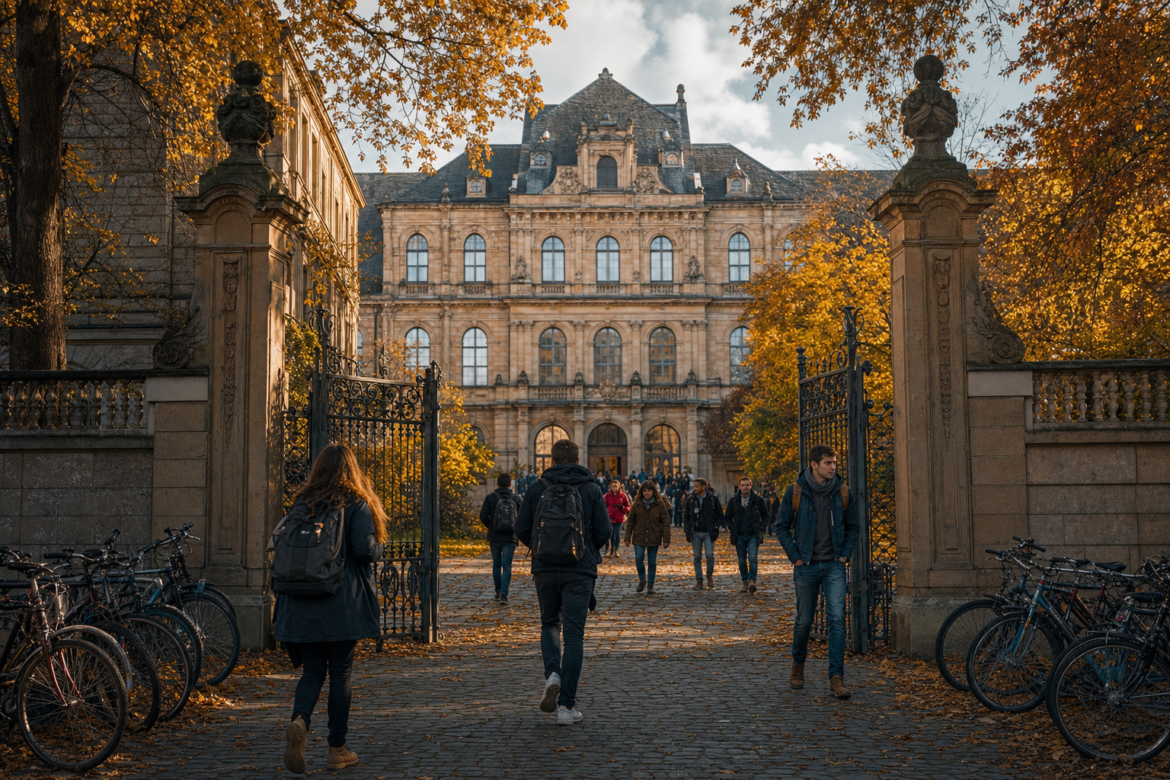
Students walking into a German university, tuition-free college
InformED Report

InformED Report 11/3/16

by EdCircuit Staff November 3, 2016
written by EdCircuit Staff 6 minutes read

Play video: The InformED Report: Episode 5 (3 minutes 17 seconds)3:17

The InformED Report: Episode 53 min 17 sedCircuit on Vimeo

In the final days of the 2016 campaign, Hillary Clinton’s promise of tuition-free public college for most families was one of the few education proposals voters heard repeatedly. The InformED Report for November 3, 2016 looked at what Germany’s experience suggested about free tuition and how Clinton planned to pay for hers. It then reported on families in Texas, Flint and New York who said children with disabilities were being denied the services federal law guarantees, and on new Google and Gallup research showing who gets to study computer science in school.

In this edition

  • Germany’s tuition-free universities showed both the appeal and the strains of free college, a model Clinton proposed for the U.S.
  • Clinton’s plan would make public college tuition free for households earning up to $125,000, at a cost of $450 billion.
  • Texas had the lowest special education enrollment in the nation, and Flint families announced a proposed class action over special education services.
  • A New York for-profit preschool company agreed to pay more than $4.3 million for misusing special education funds.
  • Black students were 1.5 times as interested in computer science as their white peers but less likely to have classes in it.

Free college: the German example and the Clinton plan

Jon Marcus, writing in Quartz, went to Berlin’s Freie Universität to see how tuition-free higher education looked from the inside. Two students, Claudia Niessler and Stefan Steinbock, said they would not have attended a university that charged tuition, and that free tuition let students with good grades and low incomes earn degrees. The university’s president, Peter-André Alt, saw the other side: without tuition revenue, universities were overcrowded and stretched thin, and taxpayers who never attended college were paying to fill the gap. The article’s headline drew the lesson for the U.S.: tuition-free college was no silver bullet for America’s education problems.

In the Washington Post, Danielle Douglas-Gabriel examined how Clinton would pay for her version. During the final debate, Clinton said tuition at public colleges and universities would be free for students from households earning up to $125,000, as part of a $450 billion higher education plan. Her campaign had first proposed a $350 billion plan, the New College Compact, which would give money to states that guarantee “no-loan” tuition at four-year public universities and community colleges. To pay for it, the campaign said Clinton would bring back Reagan-era cuts to itemized tax deductions for high-income families.

A Michigan story in Inside Higher Ed showed how improvised college funding can become permanent. During the recession of the late 2000s, the state began directing federal welfare money to state college tuition grants. Andrew Kreighbaum reported that more than $93 million of Michigan’s Temporary Assistance for Needy Families allocation went to tuition grants, with more than $40 million going to private institutions in fiscal 2016. Taken together, the three pieces moved the free-college debate toward the questions of who would pay, and what universities would give up to make it work.

Children with disabilities and the services they were owed

Texas had the lowest special education enrollment in the nation. KERA News’s Bill Zeeble reported that, a month after the Houston Chronicle found the state had for 12 years delayed or withheld services to save money, federal authorities were asking Texas to justify its policies. Rosly Espinoza described years of trying to get help for her daughter Citlali, whose struggles began in pre-kindergarten and worsened by second grade. Espinoza asked the school to evaluate her daughter, the step required before services can begin, and the school did not.

In Flint, Michigan, ThinkProgress’s Bryce Covert reported that the water crisis had compounded learning challenges for children who already had them. Nakiya Wakes said her son, who has ADHD, was suspended more than 50 times in a year, and that the school fought her request for an Individualized Education Program. “We didn’t ask to be poisoned, and these kids need their education,” she said. Flint families, with the ACLU of Michigan, the law firm White & Case and the Education Law Center, announced a proposed class action alleging that the state and the Flint school system were already failing children with special needs before the crisis.

In New York, The New York Times’s Kate Taylor reported that the for-profit company K3 Learning Inc. and the family behind it had agreed to pay the state more than $4.3 million. State Attorney General Eric T. Schneiderman’s office said money meant for special education preschool had gone to credit card bills, a boat and a son’s law school tuition.

The three cases were different in cause, but each turned on the same duty. A district must evaluate a child it has reason to suspect has a disability, and money set aside for those children has to reach them. For special education directors, the stories were a reason to check how quickly evaluation requests were answered and how closely contracted services were audited.

The gaps in computer science education

New research from Google and Gallup, reported by Jessica Guynn in USA Today, found that Black students were less likely to have computer science classes at school and less likely to use computers at home, even though they were 1.5 times as interested in studying the subject as their white peers. In The Atlantic, Emily DeRuy reported that just over half of students in grades 7 through 12 attended a school offering a dedicated computer science class, and that teachers and parents were more likely to tell boys than girls they would be good at it.

A coalition of computer scientists had just released a framework describing what K-12 students should know about computer science, and organizations from the National Science Foundation and the College Board to Code.org and Girls Who Code were working to expand access. For school leaders, the survey suggested that student interest was already there. Offering the course, and making sure counselors and teachers encouraged every student to take it, was where schools could act.

Sources

  • Jon Marcus, “Germany proves tuition-free college is not a silver bullet for America’s education woes,” Quartz, October 2016.
  • Danielle Douglas-Gabriel, “Clinton touts debt-free college plan. Here’s how she’d pay for it,” The Washington Post, October 19, 2016.
  • Andrew Kreighbaum, “Welfare Funds for Students Far From Welfare,” Inside Higher Ed, October 18, 2016.
  • Bill Zeeble, “In Texas, Families With Special Education Needs Feel Their Kids Are Getting Shortchanged,” KERA News, October 2016.
  • Bryce Covert, “Families in Flint say there’s a special education crisis that’s about to get worse,” ThinkProgress, October 2016.
  • Kate Taylor, “Education Company to Pay $4.3 Million in Settlement With New York State,” The New York Times, October 19, 2016.
  • Jessica Guynn, “Google: Race, gender gaps persist in computer science education,” USA Today, October 18, 2016.
  • Emily DeRuy, “A Plan to Teach Every Child Computer Science,” The Atlantic, October 2016.

About the InformED Report

The InformED Report is edCircuit’s short news program on education. This edition first ran on November 3, 2016. In 2026, edCircuit re-presented it with a new anchor and this full written account. Both report the stories as they stood on that date and link the original reporting, so readers can see exactly where each claim came from.

Subscribe to edCircuit to stay up to date on all of our shows, podcasts, news, and thought leadership articles.

November 3, 2016 0 comments
0 FacebookTwitterPinterestLinkedinWhatsappCopy LinkEmail
A retro typewriter featuring a 'NEWS' headline typed on white paper against a wooden surface
InformED Report

InformED Report 10/27/16

by EdCircuit Staff October 27, 2016
written by EdCircuit Staff 6 minutes read

Play video: The InformED Report: Episode 2 (2 minutes 19 seconds)2:19

The InformED Report: Episode 22 min 19 sedCircuit on Vimeo

In September 2016, a Houston Chronicle investigation reported that Texas had for years held the share of students receiving special education to a target far below the national rate. The InformED Report for October 27, 2016 led with that story and the reaction to it. It then looked at how little education featured in the first presidential debate, and at new federal figures on student loan defaults at for-profit colleges, alongside Senator Elizabeth Warren’s criticism of how the Education Department was treating former Corinthian Colleges students.

In this edition

  • The Houston Chronicle reported that Texas officials had set an 8.5 percent benchmark for special education enrollment, far below the national average of about 13 percent.
  • Education received only fleeting mentions in the first presidential debate and remained a second-tier issue in the campaign.
  • Students at for-profit colleges accounted for 35 percent of federal student loan defaults while making up 26 percent of borrowers.
  • Senator Warren said nearly 80,000 former Corinthian students were being pushed into debt collection.

How Texas kept children out of special education

Brian M. Rosenthal’s investigation for the Houston Chronicle found that, starting in 2004, unelected officials at the Texas Education Agency set a benchmark of 8.5 percent for the share of students who should receive special education services, and then audited districts that served more. The policy was never publicly announced or explained. Districts above the line were asked to file “corrective action” plans for lowering their special education populations. The paper reported that Texas reached 8.5 percent for the first time in 2015, down from about 12 percent a dozen years earlier, while the national average stood near 13 percent.

The Chronicle told the story through families such as Heidi Walker, who had told administrators at her son’s school in Humble that her 5-year-old had been diagnosed with a disability similar to autism, months before a kindergarten meltdown at recess showed how much help he needed. Federal law has required public schools to serve every eligible child with a disability since 1975. By the paper’s estimate, if Texas served students at the national rate, 250,000 more children would be receiving services such as therapy, counseling and one-on-one tutoring. Writing in The Washington Post, Valerie Strauss summarized the finding that the effort had saved the state billions of dollars while denying support to children with autism, dyslexia, epilepsy, mental illness, speech impairments, and even blindness and deafness.

The state disputed the account. The Texas Education Agency said 8.5 percent was an “indicator,” not a mandated goal, and that it did not punish districts that exceeded it. Even so, Education Commissioner Mike Morath said the agency would review its special education program, and House Speaker Joe Straus said he would work with the agency on the problem. According to the Chronicle, no other state had limited special education in this way.

For special education directors anywhere, the story raised a hard question about what drives identification. A district’s obligation to evaluate a child it suspects has a disability comes from federal law, not from a state target or a budget line, and an enrollment figure that looks low can hide children who were never assessed.

Education’s small place in the presidential debate

Politico’s Michael Stratford counted only fleeting mentions of education in the first debate between Hillary Clinton and Donald Trump. Clinton raised it most often. She twice mentioned “debt-free college” as part of her economic plan, pledged to invest in education for middle-class workers, and promised to help people refinance college debt at a lower rate. She also suggested that if Trump paid no federal income tax, he contributed “zero for schools.” Trump said the country needed new schools, along with hospitals and airports, but that “we don’t have the money because it’s been squandered on so many of [Clinton’s] ideas.”

Business Insider’s Abby Jackson described education as a second-tier issue in the 2016 election, with both nominees spending most of their time on national security, trade and an email scandal. In Trump’s case, education still followed him through the lawsuits brought by former students of Trump University. For school leaders trying to read the campaign, the debates gave few specifics. The candidates’ written plans, rather than their stage remarks, were the better guide to what either administration might do.

For-profit colleges and student loan defaults

New Education Department data, reported by Lucinda Shen in Fortune, showed that students at for-profit colleges accounted for 35 percent of federal student loan defaults in the three-year period beginning in 2013, down from 44 percent two years earlier. Those students made up just 26 percent of all borrowers. The measure counted borrowers who had missed payments for 360 consecutive days. The release came as the department was tightening its oversight of for-profit chains such as ITT Technical Institute, DeVry, Corinthian Colleges and Brown Mackie College.

Senator Elizabeth Warren of Massachusetts drew attention to what happened to students after a college failed. Common Dreams reported that, in a letter to Secretary John King, she said the department’s student loan bank was pushing nearly 80,000 former Corinthian students into some form of debt collection, despite assurances that they would be eligible for loan discharges. “It is unconscionable that instead of helping these borrowers, vast numbers of Corinthian victims are currently being hounded,” she wrote. CNN Money, meanwhile, offered prospective students a list of questions to ask before enrolling at any for-profit college.

For high school counselors, the default figures were a practical warning. Helping a student compare a program’s cost, completion record and job placement before signing a loan is part of preparing them for what comes after graduation.

Sources

  • Brian M. Rosenthal, “How Texas keeps tens of thousands of children out of special education,” Houston Chronicle, September 2016.
  • Valerie Strauss, “What Texas did to its special education students,” The Washington Post, September 18, 2016.
  • Michael Stratford, “Fleeting mentions of education in first debate,” Politico, September 27, 2016.
  • Abby Jackson, “Here’s where Hillary Clinton and Donald Trump stand on education,” Business Insider, September 2016.
  • Lucinda Shen, “For-Profit Colleges Account for a Third of All Federal Student Loan Defaults,” Fortune, September 29, 2016.
  • Lauren McCauley, “Warren Blasts Dept of Ed. for ‘Hounding’ Students Defrauded by For-Profit School,” Common Dreams, September 30, 2016.
  • Katie Lobosco, “For-profit colleges: 6 things to ask before enrolling,” CNN Money, September 2016.

About the InformED Report

The InformED Report is edCircuit’s short news program on education. This edition first ran on October 27, 2016. In 2026, edCircuit re-presented it with a new anchor and this full written account. Both report the stories as they stood on that date and link the original reporting, so readers can see exactly where each claim came from.

Subscribe to edCircuit to stay up to date on all of our shows, podcasts, news, and thought leadership articles.

October 27, 2016 0 comments
0 FacebookTwitterPinterestLinkedinWhatsappCopy LinkEmail
Smiling female teacher near a whiteboard with an illustration and diverse schoolchildren
Education Policy and GovernmentInformED ReportSchool SafetyHigher EducationDepartment of EducationK-12

InformED Report 10/26/16

by EdCircuit Staff October 26, 2016
written by EdCircuit Staff 6 minutes read

Play video: The InformED Report: Episode 1 (2 minutes 41 seconds)2:41

The InformED Report: Episode 12 min 41 sedCircuit on Vimeo

In the autumn of 2016, ten months after the Every Student Succeeds Act replaced No Child Left Behind, the fight over how the new law would work had moved from Congress to the regulations. The InformED Report for October 26, 2016 opened with the Obama administration’s proposed rule on how districts spend federal money meant for poor children, and the objections it met at a House hearing. The edition then looked at where the presidential candidates stood on school and college funding, a coalition’s push to take police out of schools, and the federal decision to strip the largest accreditor of for-profit colleges of its recognition.

In this edition

  • A House subcommittee heard arguments over the administration’s proposed rule on how districts spend federal money for high-poverty schools.
  • Education Secretary John King named universal access to high-quality early learning as the largest piece of unfinished business.
  • Clinton and Trump both called for more federal school spending, and third-party candidates offered free college or an end to the Education Department.
  • More than 100 groups called for fewer police in schools, where officers had spread from 10 percent of schools in 1997 to about a third in 2014.
  • The Education Department revoked federal recognition of ACICS, the accreditor of Corinthian Colleges and ITT Tech.

The fight over the federal spending rule for poor students

On September 21, 2016, a subcommittee of the House Education Committee held a hearing on the Obama administration’s proposal for how school districts spend the billions of federal dollars meant to educate children in poverty. The Washington Post’s Emma Brown called it perhaps the most hotly contested education issue in Washington since the new federal law passed the previous December. The hearing was titled “Supplanting the Law and Local Education Authority Through Regulatory Fiat.”

The rule turned on an old principle: federal money for poor students has to add to state and local spending, not replace it. The Education Department and its allies in the civil rights movement said the rule would make sure children in high-poverty schools received the aid they were due. Opponents said it had overreached. Steve Canavero, Nevada’s state schools superintendent and a former principal, warned in his prepared remarks that districts would have to manage spending centrally to comply, so that almost any decision touching money would need a compliance check from the district finance office, from hiring and purchasing to curriculum.

Education Secretary John King, reported by U.S. News’s Lauren Camera, framed the administration’s remaining work more broadly. Early childhood education was first on his list. “There is a very large number of students in this country who don’t have access to high-quality early learning,” he said, adding that the goal was universal pre-K for low- and middle-income families, for 3-year-olds as well as 4-year-olds.

For district finance officers and superintendents, the hearing was a reminder that the details of ESSA were still being written. A rule on supplement-not-supplant could change how budgets were built school by school, so leaders had good reason to follow the comment process closely rather than wait for a final version.

Where the candidates stood on paying for schools and college

Two weeks before the election, UPI’s Eric DuVall reported that Hillary Clinton and Donald Trump both called for more federal spending on schools. Trump argued for greater accountability for schools and teachers, school choice with government support, and more control for states and districts. Clinton, allied with the teachers’ unions, called for higher teacher pay, a smaller role for charter schools, universal prekindergarten and a rethink of school discipline, especially for minority students.

The third-party candidates pushed further on higher education. Inside Higher Ed’s Andrew Kreighbaum reported that Green Party nominee Jill Stein promised free college and the cancellation of existing student debt. Libertarian nominee Gary Johnson promised to end the U.S. Department of Education. Their platforms showed how wide the range of positions on federal education spending had become.

The push to take police out of schools

The Huffington Post reported that the Dignity in Schools Campaign, a coalition of more than 100 education and social justice organizations from 27 states, had released recommendations for alternatives to harsh discipline and youth criminalization. Law enforcement officers were regularly stationed in 10 percent of schools in 1997. By 2014, school resource officers were in about one-third of them.

The administration was moving in a similar direction. U.S. News reported that the Departments of Education and Justice had sent letters to states and districts stressing well-designed training for school resource officers. “We must ensure that school discipline is being handled by trained educators, not by law enforcement officers,” Secretary King said. The New York Times had reported that where officers were already stationed, judges and youth advocates were seeing a surge in criminal charges against children for misbehavior many believed belonged in the principal’s office.

For principals, the practical question was who handles discipline when an officer is present. A written agreement on the officer’s role, and training that keeps everyday misbehavior with educators, were the steps both the coalition and the departments pointed toward.

The federal government cuts off the largest for-profit accreditor

On September 22, 2016, the Education Department revoked its recognition of the Accrediting Council for Independent Colleges and Schools, known as ACICS. The Chronicle of Higher Education’s Andy Thomason reported that Emma Vadehra, chief of staff to the education secretary, agreed with the recommendations of department analysts and a federal advisory panel. ACICS had accredited the now-closed Corinthian Colleges and ITT Technical Institute campuses. “ACICS’s track record does not inspire confidence that it can address all of the problems effectively,” Vadehra wrote, in a letter quoted by U.S. News.

The stakes were large. U.S. News reported that the council oversaw about 725 institutions and, the year before, $3.3 billion in federal financial aid. Senator Lamar Alexander, chairman of the Senate education committee, said 245 colleges would have 18 months to find a new accreditor while 600,000 students waited. ACICS planned to appeal to Secretary King.

Sources

  • Emma Brown, “Congress to hear arguments on Obama administration’s proposed education spending rule,” The Washington Post, September 21, 2016.
  • Lauren Camera, “John King: We’ve Got Unfinished Education Business,” U.S. News, September 2016.
  • Eric DuVall, “On The Issues: Hillary Clinton, Donald Trump urge more school funding, differ in use,” UPI, September 21, 2016.
  • Andrew Kreighbaum, “Third Parties on Higher Ed,” Inside Higher Ed, August 25, 2016.
  • “Over 100 Education Groups Want to Kick Cops Out of Schools,” The Huffington Post, September 2016.
  • “Obama Administration Pushes to Limit Police In Schools,” U.S. News, September 2016.
  • “With police in schools, more children in court,” The New York Times.
  • Andy Thomason, “Education Dept. Revokes Recognition of Embattled Accreditor of For-Profit Colleges,” The Chronicle of Higher Education, September 22, 2016.
  • Lauren Camera, “Education Department Strips Authority of Largest For-Profit Accreditor,” U.S. News, September 22, 2016.

About the InformED Report

The InformED Report is edCircuit’s short news program on education. This edition first ran on October 26, 2016. In 2026, edCircuit re-presented it with a new anchor and this full written account. Both report the stories as they stood on that date and link the original reporting, so readers can see exactly where each claim came from.

Subscribe to edCircuit to stay up to date on all of our shows, podcasts, news, and thought leadership articles.

October 26, 2016 0 comments
0 FacebookTwitterPinterestLinkedinWhatsappCopy LinkEmail

Participate

  • Contribute
  • Sponsor
  • Submit Release
  • Subscribe
  • Get Interviewed
Logo with an orange lowercase letter e followed by the partially visible, faded text edCircuit on a light background.

edCircuit emPowers the voices of education, with hundreds of  trusted contributors, change-makers and industry-leading innovators.

Washington, DC

Share your voice

  • Contribute
  • Sponsor
  • Submit Release
  • Subscribe
  • Get Interviewed

Follow edCircuit

  • LinkedIn
  • X
  • Facebook
  • Pinterest

Learn more

  • Our Reach
  • edCircuit Media
  • Careers

YouTube channel

  • YouTube

@edcircuit

Copyright © 2014-2026, edCircuit Media – emPowering the Voices of Education.

We value your privacy

We use cookies to enhance your browsing experience, serve personalized ads or content, and analyze our traffic. By clicking "Accept All", you consent to our use of cookies.

Customize
  • Needed for the site to work: signing in, the cart, your consent choice. Always on.

    8 cookies
    • ss_consent 1 yearYour cookie choice on this site, so you are not asked again.
    • wordpress_logged_in_* 2 days, or 14 days with "remember me"Keeps you signed in as you move between pages.
    • wordpress_sec_* 2 days, or 14 days with "remember me"The secure half of your sign-in.
    • wordpress_test_cookie SessionChecks that your browser accepts cookies when you sign in.
    • wp-settings-* 1 yearYour display settings when signed in.
    • wp_woocommerce_session_* 2 daysYour shopping session: the cart and the checkout.
    • woocommerce_cart_hash SessionTells the site whether your cart has changed.
    • woocommerce_items_in_cart SessionWhether your cart holds anything.
  • Remembers choices you make, such as a language or a region, and supports features like live chat.

    1 cookie
    • woocommerce_recently_viewed SessionThe products you looked at, so the site can show them again.
  • Helps us understand how visitors use the site: which pages are read, and for how long.

    2 cookies
    • _ga 2 yearsGoogle Analytics: tells one visitor from another. Set only after you allow analytics.
    • _ga_* 2 yearsGoogle Analytics: keeps your session state. Set only after you allow analytics.
  • Measures how fast pages load so we can make them faster.

  • Used to show you content and offers that match your interests, on this site and elsewhere.

    1 cookie
    • sbjs_* SessionWooCommerce order attribution: where you came from, so a purchase can be credited to the campaign or site that sent you.

Your browser asks us not to sell or share your information (Global Privacy Control), so advertising cookies stay off.

Do not sell or share my personal information

Some cookies from other companies help show you offers on other sites. Tick the box and save your preference to opt out of that sharing; untick it to opt back in at any time.

Your browser sends Global Privacy Control, so this preference is set for you and cannot be changed here.

Sign In

Keep me signed in until I sign out

Forgot your password?

Password Recovery

A new password will be emailed to you.

Have received a new password? Login here

Shopping Cart

Close

No products in the cart.

Close
-
00:00
00:00

Queue

Update Required Flash plugin
-
00:00
00:00

Your cart (items: 0)

Products in cart

Product Details Total
Subtotal $0.00
Shipping and discounts calculated at checkout.
View cart
Go to checkout

Your shopping cart is empty

Return to shop

Notifications