We need to send the right messages to our students by Tamara Fyke
As educators and parents, our hope is that schools provide a safe and nurturing environment that inspires lifelong learning. However, from our own experience, we know that growing up isn’t easy. Given the increase in childhood trauma and tenuous nature of societal stability, many of us adults acknowledge that being a kid today is more complicated than it was for our generation. We didn’t have cell phones and social media. We didn’t see mass school shootings in headline news, nor did we have TV shows like 13 Reasons Why that chronicled a girl’s suicide.
Aware of the impact of modeling, I believe that the bullying experienced in schools reflects that displayed in media, and vice versa. One feeds the other and perpetuates the cycle. What can we do to change the current dialogue?
Firstly, we need to send the right messages to our students. Positive youth development theory directs us to focus on building relationships and competencies in order to move kids from risk to resiliency. Resiliency is defined as the ability to bounce back despite adversity. With this in mind, we must shift our focus from bullying to building. We can build students’ competencies, build relationships with them, and maintain a positive outlook toward students’ well-rounded development. Competencies are skills or assets – things the child has going for him/her. Relationships include the various dyads and triads of relationship between child-self, child-peer, child-family, child-school, and child-family-school.
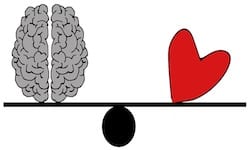 Secondly, as caring adults – educators, parents, and youth leaders – we must have the necessary conversations with our kids. That means there is an exchange of thoughts and words, not a monologue from the adult. Kids need to know that they are not alone. By assuring them that we are on their side, we become a safe place for them to share their ideas, questions, and concerns.
When we think about the stages of moving kids from risk to resiliency, and the character traits that can help them, success, self-awareness, self-control, and kindness are a few that become relevant and urgent. The following tips provide a starting point for sparking meaningful conversations with students and shifting the focus to “building”:
1.) Self-Awareness
Definition: Self-awareness is knowing your strengths and weaknesses; being able to know and understand how you feel.
Tip: Ask, “How is your heart today?” Typically, this question is disarming. Give students a moment to reflect on what is going on inside. Have them journal or share aloud once a safe and secure environment has been established. Institute regular heart checks.
2.) Self-Control
Definition: Self-control is managing your feelings, attitudes, and actions.
Tip: Remind students that it is okay to feel how they feel. However, they do not need to let their feelings be the boss of what they do and say. During neutral time, talk about and practice strategies for dealing with strong emotions, such as deep breathing, peace corners, and journaling.
3.) Kindness
Definition: Kindness is treating others the way you want to be treated.
Tip: Empower students to change the culture and climate of their school. Ask them to share their ideas about what needs to be different. Provide coaching and support, but let them take the lead. Real and lasting change begins with them.
A focus on building looks at the assets―the strengths―each of our children has, rather than deficits. When we keep the conversation on terms such as “bullying,” we run the risk of labeling kids; of defining them as “bullies,” rather than focusing on a growth mindset and approach toward building upon their talents, interests, and unique qualities. Let’s leave labeling behind and instead choose to focus on love.
Hear more from Tamara Fyke of Love In A Big World at the 2019 Future of Education Technology Conference in Orlando, Florida, January 27-30. Tamara will be a featured panelist for the analyst session, Insights for Supporting SEL with EdTech, January 29 at 2 p.m.
Further Reading
- edCircuit – Tamara Fyke Columns
- The Nation – A New Wave of Bullying in Schools
- USA Today – One third of middle- and high-schoolers were bullied last year, study shows

 Mark Gura went to public school in New York City in the ‘50s, and he says it was very much about compliance and conformity with very little tolerance for kids exploring and using their imaginations. “Kids like me tended to explore our creativity under the desks, so to speak,” Mark says. I recently sat down with him to talk about teaching creativity to students, the subject of his new book Make, Learn, Succeed.
 Mark developed a course of various creative exercises through visual arts to spontaneously create a unique response to a confrontation or critical comment as opposed to merely reaching into their little manual of two or three stock responses. While not 100 percent successful, Mark saw a large percentage of his troubled students broaden their horizons and learn to use their creativity to find emotional outlets to safely channel their anger and frustrations in a healthy way.
 Mark Gura taught visual art in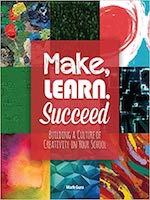

 Dr. Michelle Zimmerman has more than 18 years of classroom teaching experience, and is currently on the rise as a recognized expert in teaching STEM in K-12. I sat down with her recently to talk about the current state of STEM education, a subject she will be discussing in depth in a handful of sessions at the 2019
 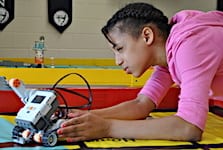 Training educators is a daunting task under the best of circumstances. They need to have a broad field of experience to make a cross-discipline approach to STEM work, either through university or training. One of the first obstacles to overcome is the way the subject itself is taught. “If we get so locked into saying, ‘This is the one and only way of doing or approaching the subject or topic,’ we miss the opportunities to practice looking across multiple domains and finding those connections that help solve problems.”
 Michelle Zimmerman, Ph.D., has taught all grades from Pre-K through 10th with a focus on middle and high school since 2009. She has presented her research across the US and Canada since 2007, FETC, ISTE, TCEA, NCCE, CRESST, BLC, NNSTOY, The Learning Counsel, SXSWedu, New York Academy of Sciences, UCLA, NYU, and AERA among others The evidence of her original research and theory into practice can be seen in designing

 The ability to connect unrelated things, or associational thinking, is a fundamental process that underlies creative thinking.
  Playing games that help build associational thinking can improve creativity. For example,
 We have so many content standards to get through that we just skim the surface and have difficulty getting students to a place where they have an enduring understanding about the content. With enrichment, even though the content standards are all covered, because gifted students usually get the basic understanding fairly quickly, the teacher can go more into depth regarding the topic, digging deeper than your typical classroom. What this might look like is the teacher has a brief explanation on how vibrations cause sound and then allows the students to conduct experiments and put this idea to the test. Or a math teacher who after the class gets the gist of what she wants them to know, might do a project exploring the standard further or ask them to find a way to apply this to real life.
  Given these advantages and disadvantages, I still haven’t answered which one is better. As my educational law professor used to tell us all the time, “it depends.” It depends on the subject area (English is much easier to accelerate and skip content because it always circles back on itself and builds on layers while math can be more challenging). It depends on the student because some may have the maturity to handle moving up with older students while another may not. It depends on the teacher who may or may not have the proper training to get students to dig deeper into something and enrich them. It depends on the parent who might think their child will have social and emotional issues if they leave their friends to go to a higher grade, or who are not ready for their child to begin having older conversations with the older students. Also, tt depends on the administrator who might not be willing to put kids into enrichment groups because they do not want to appear elitist with students receiving special services (of course overlooking the fact that by not doing this, they are in fact denying them of services specific to their needs). Finally, it depends on the school. A school may not be able to cluster gifted students together into gifted cohorts because there are not enough of them or they are spread out amongst other schools. It depends on the schedule. The schedule may not allow for younger students to attend higher classes because they are held at another building or at different times.



 Don Wettrick is the founder of StartEdUp, author of “Pure Genius” and Innovation Specialist at