Children need a cultural context for their personal behavior Middle school can be tough. My twelve-year-old boy just finished sixth grade. It was better than fifth grade. However, he and the other boys were still jockeying for position. At one point early on in the spring semester he told me about the 30-second fight challenge that occurred in the locker room after P.E. class. I wasn’t familiar with this, so he explained it to me. One boy challenged the others, about once a month, to see who wanted to stand up against him in a 30-second fight. Whoever was the least injured after the timer ran out was declared the winner. My son witnessed a brutal fight that day and then hid in a bathroom stall, afraid that he might be hit next. He was visibly upset about the incident, so I alerted the P.E. teacher to this dangerous new trend taking place in the locker room―a twisted misinterpretation of what it means to be “brave” or “courageous.”
This occurrence and many others that happened throughout the year were often the topic of our car-ride conversations. I must confess, my son didn’t always make the best choices. More than once, he took matters into his own hands to prove himself to his peers. No matter what happened, we talked through it, and I continually reminded him about the true meaning of courage―standing up for what is right; facing your fears.
Cultural Awareness
 Our multicultural family lives in urban Nashville. In fact, we live in an historically black neighborhood rich with historically black colleges and universities and a once well-known jazz district that was an important location for civil rights leaders. We look at the events of our city, such as the gentrification of our community; and our country, such as the arrest of two black men at Starbucks in Philadelphia, through the lens of our diversity. More often than not, we connect these current events to historical events. I ask, “Does this situation remind you of anything?” My children are well-versed in the stories of slavery and the Civil Rights Movement. They know the stories of heroes like Rev. Dr. Martin Luther King, Jr., Rosa Parks, and John Lewis.
What I have discovered is that my children need a cultural context for their personal behavior. They must understand that their actions have consequences, for them and for our community.
Courage falls under the domain of responsible decision-making. When you decide to stand up for what is right or to face your fears, it first impacts the self, but it is also a decision that impacts others.
In the Classroom
So what does teaching courage look like in the classroom?
- Listen to students. If a child has the guts to come to us and tell us that an incident occurred, even if we did not see it with our own eyes, let’s give the child the benefit of the doubt and investigate. Whether or not things happened exactly as the child said is irrelevant. He or she felt safe enough to come to us, so let’s show honor by looking into it.
- Tell stories of people of courage. Whether through direct instruction during English language arts or social studies, storybooks in the classroom library, films for special activities, or posters on the wall, let’s fill our students’ minds and hearts with stories of people who stood up for what is right and faced their fears. They will learn by example.
- Connect history to current events. In classroom discussions, journaling or project-based learning, give students the time and space to process what is happening in our world today and draw parallels to what happened in other time periods. This makes history come alive and also helps them see that they can learn from the past in order to create a better future.
Bolstering our students’ hearts with knowledge and wisdom equips them to make sound decisions when faced with difficulties. Like my son, they will say, “I’m really trying. This isn’t easy…but I made a good choice.”
Further Reading
- edCircuit – Tamara Fyke Columns
- Edutopia – Preparing for Cultural Diversity: Resources for Teachers
- Delaware Online – Delaware teens, youth advocates want to see more diversity in their classrooms

 Mandy Manning is an NBCT in English as a New Language, the
 As college seniors put the finishing touches on their academic careers, they’re looking forward to finally entering the workforce with those hard-earned degrees in hand.
 Understand the importance of benefits.

 Competition. Everything we know is competition. How do we survive? We compete.
 Series Synopsis: Due to continuous digital bombardment and the emergence of the new digital landscape, today’s youth process information, interact, and communicate in fundamentally different ways than any previous generation before them. Meanwhile, many of us, having grown up in a relatively low-tech, stable, and predictable world, are constantly struggling with the speed of change, technological innovation, and the freedom to access the overwhelming sea of information online – all defining characteristics of the digital world of both today and the swiftly-approaching future.
 For the vast majority of the digital generations, the digital world is far from being an isolating experience. Outside of school, they are immersed in a media-participatory culture built on physical or close relationships that allows them to interact not only with their friends, but also with people who are not geographically close to them. The emergence of collective intelligence, crowdsourcing, smart mobs, the global brain, and group IQ have emerged as an entirely new way of processing massive amounts of information by creating a shared pool of knowledge, where the collective whole is greater than the sum of the individual parts. The emergence of global networking has shifted power and knowledge from the individual to the group. In the Internet of things, everyone has become connected to everyone and everything else allowing individuals to work together to accomplish things collaboratively.
 As a professor, author, blogger, consultant, and keynote speaker, Ryan L. Schaaf wants to help educators reach the learners of the digital generations.

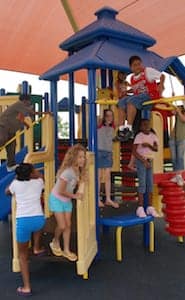 Many teachers are concerned that their students are so engaged with digital technology that they no longer pay attention in the classroom. Some kids are sneaking a peek at their cell phones or surreptitiously texting instead of listening to the teacher. The interactive nature of technology and the immediacy of feedback provide a level of entertainment that is difficult for teachers to match.
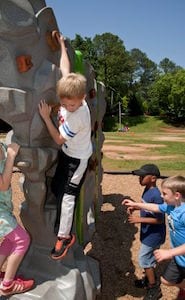 However, there are several ways in which teachers can modify homework, project-based learning, and even direct instruction to encourage other forms of play. Adding a little play to your students’ day and helping them develop a healthy play diet will make them more engaged and help them learn more. Here are some suggestions:
 Randy Kulman, Ph.D. is the Founder and President of