Driving while staring at the rearview mirror
Editor’s Note: This is Part Three of a Three-Part Series (Read Part 1 | Part 2 | Part 3)
by Dr. Sonny Magana

Given the current zeal for high-stakes testing to measure minimum proficiency, we have to ask ourselves, are our existing learning and assessment tools using processes and products in ways that actually prepare modern students … for the past? Certainly, the skills associated with memorizing content knowledge and accurately retrieving information that is stored in one’s memory are necessary capacities. However, if we limit our conception of learning to simple memorization and recall without explicitly making student thinking and learning visible, then we run the risk of inadequately preparing students for both current and future learning.
In parts I and II of this series, I explained that the concept of learning readiness needs to be separated into two distinct, yet equally important components: 1) current learning readiness and 2) future learning readiness. Arguably, the purpose of education is to support the development of the skills, habits, and mindsets to ensure students become highly capable learners who are able to successfully master learning now, and well into the future. It seems beyond argument that we need to intentionally avoid using modern educational technologies to simply digitize the “tell and practice” model of teaching and learning. Doing so is tantamount to driving the modern pedagogical bus forward while focusing our gaze squarely in the rearview mirror.
The T3 Framework for Innovation
A wicked problem facing education is that while instructional frameworks have existed for decades, none have directly imbued teaching strategies with digital tools — until now. In fact, as Dr. Robert J. Marzano once observed, “We’re just beginning to scratch the surface of a whole new domain of instructional strategies that are only possible in technology-rich classrooms” (Marzano, 2008).
I also previously introduced the T3 Framework for Innovation, a hierarchical model which articulates this new domain of instructional strategies by incrementing the impact of educational technology tool use into three domains: T1) Translational, T2) Transformational, and T3) Transcendent. Grounded in sound theory and high-quality education research, the T3 Framework was designed to disrupt the preponderance of low-impact technology use in schools, and guide education systems to more effectively prepare students to master current and future learning. The T3 Framework for Innovation in Education is, in fact, a model that addresses a new domain of modern instruction that is only possible in technology-rich learning environments.
For example, the elements in the T2 Transformational Technology Use domain of the framework — T2.1) Production, and T2.2) Contribution — were synthesized directly from compounding longitudinal data. These strategies scaffold students’ intentional use of modern digital tools in order to master current learning content and the process of meta-learning, in which students essentially teach themselves how they best master surface learning, deeper learning, and knowledge transfer. Significant and compounding evidence attesting to the positive impact of these strategies were cited in Disruptive Classroom Technologies: The strategies in the T2) Transformational domain were observed to have an effect size of ES 1.6 (Magana & Marzano, 2014; Magana, 2017).
To put this into perspective, an effect size of 1.6 is not only exceedingly large, but equivalent to an additional three or four years of academic achievement in a single academic year. This is tantamount to a tripling or quadrupling of student learning productivity, the quantity of academic content which students master during an academic year. Another way of looking at an effect size of 1.6 is equivalent to an acceleration in student learning which, in effect, reduces the amount of time it takes for students to master current learning content. A reasonable inference can be readily made that the T2) Transformational strategies empower students to master current learning content, while affording learning systems time and space within the instructional week to execute strategies which effectively build students’ future readiness.
One can expect students to become far more current learning-ready with reasonable implementation of the T2) Transformational domain strategies. That is to say that one’s students will be better able to master current learning content in modern classroom contexts more efficiently. While clearly this is important, it is entirely insufficient because it only addresses part of the learning readiness issue.
Transcendent Technology Use and Future Readiness
It’s important to give students well-defined, “neatly packaged” problems with a clear and identifiable solution, and then provide them algorithms, or heuristics, in order to solve those problems. The not-so-clear but present danger here is that if we only let students struggle with clearly identified problems that have a single clear solution, they may erroneously think that all problems they will encounter in life are readily identifiable, well-structured, and easily solvable with simple heuristics that are based upon memorization and knowledge retrieval. The implication of this problem is that students may become habituated to a simple binary “right or wrong answer” approach to solving the myriad complex problems they will encounter later in life. But life doesn’t exactly work that way. Life problems are messy, and they require critical and creative thinking, communication, collaboration, deep consideration, and collective contribution.
Future learning readiness means having the facilities, disciplines, and mindsets to effectively frame new complex problems, investigate them, and apply the principles of scientific inquiry to design new pathways of contributive knowledge generation. This means that, in addition to mastering current learning problems, students need to develop the capacity to identify, investigate, hypothesize, and iteratively resolve wicked, real world problems that matter to them.
The elements in the T3) Transcendent technology use domain — T3.1) Inquiry Design, and T3.2) Social Entrepreneurship — are arguably more predictive, but are grounded in sound learning theory, learning science, research, and experience. These strategies date back to the earliest conceptions of the scientific method. I have further codified these elements into six concrete strategies that teachers can implement in their classrooms immediately and with positive effect.
As Dr. Marzano noted in his foreword of my book, “Transcendent uses of technology…have the power to shift one’s consciousness outside current circumstances. Indeed, this is at the heart of the meaning of transcendence — shifting one’s perspective from idiosyncratic and myopic to communal and all-inclusive. At this level, technology has an instrumental function. It cannot provide transcendent experiences, but it can help students create experiences that are transcendental to them with the guidance and support of the teacher. In effect, the teacher becomes as important to this process as the technology. It is at this level that the entire system changes.”
It is at the T3) Transcendent level that the entire system changes.
The purpose of modern educational systems is to prepare students to master current and future learning challenges using modern processes and products. School systems that have used technology tools to digitize the outdated “tell and practice” model of instruction have simply failed to achieve this purpose. It does not have to be this way.
Compounding research evidence strongly suggests that when you and your entire learning organization commit to planning, implementing, and evaluating the impact of the strategies in the T3 Framework for Innovation, there is a very high probability that your students will become far readier to master both current and future learning. So now you have to ask yourself, are you ready for the T3 Effect?
Follow me on Twitter and let me know if you are ready to transcend the status quo with the T3 Framework: @sonnymagana

Further Reading

 The college textbook publishing industry is fighting for its life. Technologically-powered disruption has driven traditional publishers to the brink of collapse, and technologically-powered innovation can bring them back. But not in the way that they think.
 It’s easy to understand why going digital is an attractive option for traditional publishers. Digital publishing has significant cost advantages, and allows publishers to drop the price of new textbooks to compete with used copies. Furthermore, the circulation of digital textbooks can be restricted through licensing, preventing the formation of a profit-draining used market.
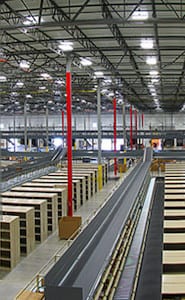 Here’s one example. Under the traditional business model, textbook publishers print huge quantities of books, store those books in warehouses, ship them to bookstores at the start of each semester, and then deal with the inevitable flood of returns that comes in a few weeks later. This is profoundly inefficient, and inefficiency drives up cost.
 Alastair Adam is Co-CEO of
 When I was seven years old, my mother took me with her to a sign language class two nights a week. I remember immediately connecting with signing and practicing all the time – I loved those classes. Things changed once I entered grade school. I started playing the flute and the more I practiced, the better I seemed to get. Although that instant connection to signing never left, my focus became music and I committed to becoming the best I could be. By high school, I was going to Philadelphia every weekend for private lessons and woodwind quintet rehearsal, even performing in Moscow, Russia. Pursuing music performance was the logical path to take after high school. As one of only four flute players to be accepted, I was honored to be going to Indiana University, where I would study with Peter Lloyd, principal flutist from the London Symphony. The feeling of playing with an orchestra, with the music happening all around me and through me, was magical.
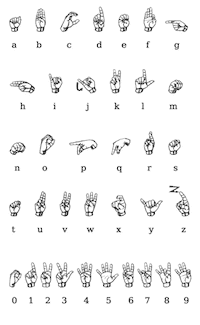 Now, I’ve been teaching for 21 years and I know it was absolutely the best decision I ever made. Year after year, my students inspire me to give more of myself, to keep learning and to guide them to successes they never thought possible. Being a teacher is one of the biggest honors of my life, aside from being a mother to two exceptional little boys. But with this honor comes great responsibility because every day we, as teachers, are showing our students what we believe is a priority.
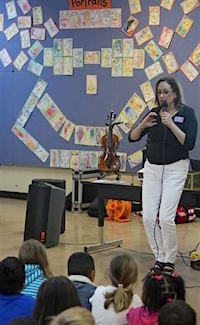 we talk about diversity, we talk about empathy and understanding, and shifting the perspective of deafness as a disability to the realization that there is a rich culture with arts and literature, theater, a shared history, shared language and a set of ideals.
 Amy T. Andersen, NBCT is a high school
 .
.

 Amongst these sheep there is a single llama. Why this sheep farm feels the need to have a llama I do not know. What I do know is that this llama stands out in stark contrast to the sheep. It does not take me more than a few seconds to locate my furry friend. And why can I find him so quickly? Yes he looks different than everyone else, but more importantly, he acts different than everyone else. While the sheep constantly have their head to the ground, chewing their grass, the llama is picking his head up and moving it in all sorts of interesting ways. He is unique. He stands out from all of the sheep.
  Why is it so important to produce llamas? What will eventually happen to these sheep is they will go to college and continue to be sheep. And who can blame them? This is all they have been trained to do. Then when they go out into the real world, there is nothing that distinguishes them from the rest of the herd of sheep. They all have great GPAs, they all have met the course requirements of their schooling, and they are all eager, although as sheep the only thing they are eager for is more grass. Imagine you were hiring folks for your company, one that requires employees to be creative, think fast on their feet, and be adaptable. As you are interviewing these sheep, there is truly nothing that separates them from the other sheep. Sure, one might be slightly better than another, but in the end, they are all just sheep. These sheep certainly can follow directions, they work hard, they get along with the other sheep, and they are not going to give you any problems. This is not going to move your company.
  How do you make a llama? Simple, you give it space to be a llama. Instead of intently watching your herd of sheep and correcting them with you shepherd’s crook should they make even a single step out of line, you should let them wander wherever they like. This means allowing for more authentic and inquiry learning in the classroom. If you are covering a topic and a student seems genuinely inquisitive about a certain aspect of it, you should have the opportunity to allow this student the space in order to explore this topic further? The excuse often becomes that the teacher has a lot of material to get in and students needs to stay with the pack? Of course, this is how we produce sheep, not llamas.


 Danny Wagner is Senior Editor, Education Reviews at