When are we going to teach math understanding, and not just knowing?
By Ana Redmond
 I keep reliving this conversation over and over again with different moms. One mom, who now runs an after school center for kids, said when her daughter was young she was behind in math. So, she took her daughter to one of the math centers that make kids do worksheets in a very strict progression. She was excited to see her daughter solve 3+6 one day on the worksheet.
Another day, she was driving with her daughter in the car, and asked her daughter a situational question. There are 6 cars in this parking lot, and 3 on the road, how many in total. She did not expect the answer she got: “I don’t know.” The mom eventually realized that her very smart daughter had memorized the math symbols and answers without understanding their meaning at all.
I met another mom, a very highly qualified Russian immigrant with advanced science degrees, at an event at which I was talking about math learning by doing. She described the time her son was in 3rd grade, and desperate and frustrated with math. The teacher required them to do math in a minute. And, if they weren’t able to, a note came home, to make sure the parents made him do so repeatedly. After several frustrating attempts at math memorization during which her son screamed in frustration, the mom took him out of school, gave up her job and started homeschooling.
 Recently, I met another concerned mom and dad whose daughter is struggling with math. Her daughter is in 2nd grade and having trouble with math facts at school. She is frustrated. Her daughter is supposed to work on her math facts at home. She says teaching her daughter math is like Groundhog Day. Her daughter memorizes the math facts, and then the next day they start with the same facts all over again when she forgets them (just like Groundhog Day).
6 years ago, that was also my story. I started building math games for my daughter when she started falling behind in math in kindergarten. She was getting extremely frustrated and agitated when it was time to do math. Yet, she was an advanced reader, reading at 2nd grade level. It was not that she was incapable. The problem was how math is taught to young kids.
Adults seem to believe that if kids memorize enough math facts kids will figure out the meaning of the symbols without being told what it is. It is true that some kids do figure it out on their own. Many kids either don’t understand the meaning of the math or don’t do so till much later, by when they have already been branded as poor in math.
Jo Boaler, Professor of Mathematics learning at Stanford writes in this article:
“The irony of the emphasis on speed is that some of our world’s leading mathematicians are not fast at math. Laurent Schwartz — who won math’s highest award, the Fields medal, in 1950 — wrote in his autobiography that he was a slow thinker in math, who believed he was ‘stupid’ until he realized that ‘what is important is to deeply understand things and their relations to each other. This is where intelligence lies. The fact of being quick or slow isn’t really relevant.’”
Math is not computation. Math is patterns and symbols that have meaning. Math is a means of communicating complex ideas.
As a software developer, I also recognize the irony of forcing our children to learn math facts. I never use memorized math facts for calculations ever. I couldn’t even if I wanted. I don’t remember them. But, I constantly use math. I convert the real world to math. I convert requirements into equations and procedures that the computer then runs. The important part of math is understanding how to represent a real world problem using mathematical symbols. How math connects to everyday things. What math symbols mean.
That’s the math I taught my daughter. I built her games that explained concepts simply. She understood the meaning of the symbols by solving simulated problems. The understanding she gained built her number sense. I never again asked her to memorize facts. But, once she understood the meaning of the symbols, the memorization happened automatically. If she forgot the math fact, as she sometimes did, she just went back to basic principle to figure it out again. She developed a strong foundation in math along with her confidence in her ability to figure it out. Now, she is one of the best students in math in her 6th grade class.
Albert Einstein famously said:
“Any fool can know, the point is to understand.”
Then, why do we keep teaching math facts (knowing) instead of math concepts (understanding)? When will we all stop reliving Math’s Groundhog Day?
Previously published in Medium and The Seattle Times
Author
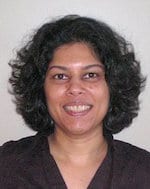 Ana Redmond is the founder and CTO of infinut.com, where she designs and builds touch-screen games to teach math concepts to elementary-school children. She has worked as a software developer for 20 years and taught software-development courses as adjunct faculty at University of Washington Professional and Continuing Education. She is the mother of two daughters.
Follow Ana Redmond on Twitter
Further Reading
- AllKindOfMinds – Understanding Math Concepts
- Edutopia – 6 Ways to Help Students Understand Math
- TED Talks – Roger Antonsen: Using Math To Understand The World

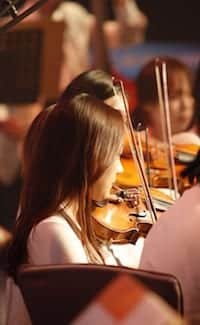 Cameron Guerrero has been the Director of Bands and Orchestras for the
  “It just offers them the opportunity to unplug a little bit for a moment. That’s what I tell them, that they should use their daily practice as a mini-vacation from their daily life.”
 Cameron Guerrero is the Director of Bands and Orchestras at

 S: Select research questions and search tools. Have one or more questions that get to the core of what you want to find out in your search. Also, choose search engines and tools most relevant to what you’re looking for.
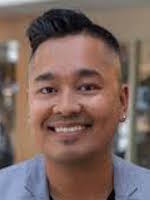 Merve Lapus is responsible for the overall outreach strategy for Common Sense Education and oversees a team that works directly with school leadership to impact school communities using technology for learning. Collaborating with school networks, state-level organizations, and community leaders, Merve is committed to fostering a whole-community approach to digital teaching and establishing supportive learning spaces for children and families to thrive in a world with media and technology.

 Members of the always-on generation are completely comfortable seeing and conveying information in visual formats. And because they were born digital, right before our very eyes, the digital generations are taking control of critical elements of the communications revolution. All you have to do is play a video game against them and get annihilated to realize that their visual-spatial skills are so highly developed that the research seems to indicate that they have cultivated a complete physical interface between digital and real worlds.
 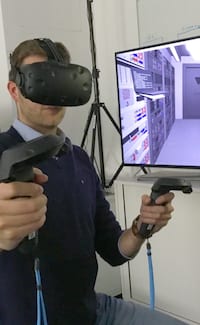 YouTube could be one of the greatest resources for a connected educator. The sheer volume of available videos is staggering. A simple search can retrieve dozens of potential videos to enhance the learning experience for any subject. If a teacher is studying the water cycle, a simple search uncovers thousands of potential video segments to integrate into instruction. If a class is studying Shakespeare, they have access to numerous productions of each of his plays, sonnets, and poems. In Social Studies, students have access to famous speeches such as Abraham Lincoln’s
 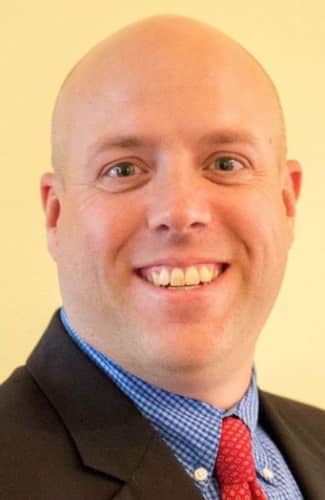 As a professor, author, blogger, consultant, and keynote speaker, Ryan L. Schaaf wants to help educators reach the learners of the digital generations.
 By intentionally building relationships with our colleagues and students, our students learn that we are a here for them to talk through their ideas, doubts, and questions. We become conversation partners on their road to discovery.
 Talking Safely Online (Grades 3-5)
 Bronwyn Harris is an author, educator, and editor living in the East Bay. She is originally from Petaluma, California, and earned a bachelor’s of science in psychology from UC Davis, and a multiple subject teaching credential from CSU Sacramento. Bronwyn began her teaching career in 2000 in the most violent neighborhood in Oakland, California, and has since written a book about her experiences: