After spending more than 20 years with the San Diego education community teaching an incredibly diverse student population, Steve Elizondo has learned a few things about the empathy and relationship-building needed to be a successful educator in today’s world. He knows the critical importance of nurturing the love of reading, the love of math and the love of learning, period. And it all starts with reading.
The Gateway to Success
When it comes to the challenges of teaching, literacy is always near the top of the list. “One of the big ones,” Steve says, “Is the number of kids who come in specifically reading below grade level. A large percentage of them are reading significantly below grade levels.” It’s a big challenge to help catch them up so they can be successful in school. After all, while reading is certainly one of the gateways to success in elementary and high school, the negative impact of poor literacy on learning in college and later on in one’s career can be massive.
Making Progress
Steve established PLCs or Professional Learning Communities to provide the scaffolding for the learning. “The first battle really is making sure that kids can read well so they can enjoy their experience,” Steve says. “Then we go from there.”
By tapping into the progressive social and emotional learning environment that he and his team create, kids perform well on tests and assessments because they’re engaged and love their learning. The data points that we all like to gather blossom because confident students making good progress who are excited about their learning will naturally perform better on tests. Increased state scores is a nice by-product of the steady progress of advancing the learning ball at High Tech High and Golden Hill Elementary.
Student Engagement
Steve says, “One of the things that I continue to love about High Tech High is the freedom that educators, principals, teachers and whoever works there has to create innovative, relevant projects and learning activities for kids.” After 11 years, innovation and creativity have become part of Steve’s psyche when he thinks about education. The importance of relevance, engagement and 21st Century skills for kids, means success in the long run for the future leaders prepared under his tutelage.
“In my experience, focus on the student engagement and the fun of learning will play out the way we hope and plan,” Steve says.
Subscribe to edCircuit to stay up to date on all of our shows, podcasts, news, and thought leadership articles.

 It doesn’t seem right that a young person between the ages of 11 and 19- who has lived for such a short time and has a long life ahead – would choose to die. Look up “teenage suicide’ at
  Teenage Stress
 The list below lists the most prevalent causes of youth suicide. The list is not all-inclusive but should assist educators in identifying the most common warning signs. Not all youngsters who exhibit these signs will commit suicide. However, the greater the number of warning signs, the greater the likelihood of suicide predictors.
 Chronic or sudden truancy
 Conflicts around sexual orientation
 Franklin Schargel is a former classroom teacher, counselor, and school administrator. Mr. Schargel is currently a consultant and Senior Managing Associate. He presents workshops on at-risk learners and preventing school dropouts. He is also the author of 12 books dealing with school reform. His latest book,
 The world has changed dramatically in recent decades, but our education system has not. With a few exceptions schools, classrooms, and instructional methods look the same today as they did a hundred years ago. Students sit rows of desks as the teacher stands in the front of the room, lecturing or handing out worksheets or directing students to a textbook. The emphasis is on memorizing information or practicing discrete skills such as calculation or writing. The main difference would be the presence of modern technology in the classroom, but the basic goals of education and the pedagogy remain the same.
 In response to this new reality, interest in Project Based Learning has grown tremendously.
  Students learn deeply, think critically, and strive for excellence.
 To what extent do students:
 Students use a project management process that enables them to proceed effectively from project initiation to completion.
 Looking back at the educational publishing landscape five years ago, alternative text (alt-text) was an extremely new field — a cutting-edge deliverable that few clients were requesting, and even fewer companies were creating. Ten years ago, it was almost completely unknown in the educational publishing world. Today, the development of alt-text for visually impaired students is an in-demand and highly specialized sector of educational publishing.
 Images can be used for different purposes. For example, an organizational structure chart may be used to convey the hierarchy of a company, but it also may simply be used as an example of what an organization structure chart looks like. Descriptions of this image will vary based on its purpose. The latter purpose will require a much higher-level description, while the former purpose will require a much more specific one.
 Alt-text should not interfere with the assessment process or provide the visually impaired student with any advantages over a sighted student. Therefore, alt-text must be careful to leave all interpretation of the image up to the student.
 One aspect that new alt-text developers seem to find most challenging is using the precision of language required to keep the cognitive load on the student to the absolute lowest level possible. While verbosity in a learning environment should generally be minimized, alt-text must be especially succinct. A significant amount of information must be conveyed, such as a complex graph of a trigonometric function or data from a flowchart, and must be conveyed in the most efficient way possible.
 Alt-text is all about ensuring that visually impaired students are not at a disadvantage when it comes to images. But the converse is making sure the descriptions of the images do not give the visually impaired student information that the sighted student does not have, or otherwise limiting the effectiveness of an assessment. This means describing images without interpreting them, particularly when that interpretation is intended to be done by students, such as whether data points trend upward or downward. It also means reading the surrounding context and describing the image within that context. For example, the graph of a parabola would normally be described using its x-intercepts, but if the image is being used in an assessment section and the question is asking students to identify the x-intercepts, this cannot be an aspect of the description. Like in most things, context is always key!
 Andrew Pass is the founder and CEO of

 As UDL tells us, when we are designing for student variability, it is important to provide students with a few ways to demonstrate their knowledge and keep the lesson or content interesting for everyone. New technologies have revolutionized how students learn and allow for that multiple means of expression. Portable, personal laptops like Chromebooks or Surface Pros with stylus and touch interfaces, great computing power, and cloud connectivity make it possible to tailor learning to personal interests and needs, even allowing for 1:1 initiatives where each student has their own device to support their learning.
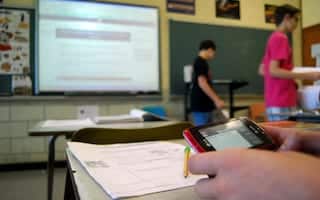 Providing the tools, diverse activities and scaffolded content to meet each learner’s unique needs can feel daunting. It’s important to start small with one new practice or strategy and then build on that. There are a number of tools that teachers can explore that can help to address learner variability. Here are just a couple of examples:
 Personalizing instruction and the use of technology in the classroom does not mean there is less of a place for teacher-led instruction. It also doesn’t mean that teachers need to spend endless time after school each day creating an individualized lesson for each and every student in the class. It’s all about meeting students
  Martin McKay
 It’s true that many at-risk students struggle to meet academic expectations, but it’s lesser known that external factors – such as discipline issues, structure at home and socioeconomic status – are often at the root of this issue. To address this gap, many schools leverage funding programs such as Title I Part A, which provide more attention to at-risk learners and are designed to keep students from falling behind.
 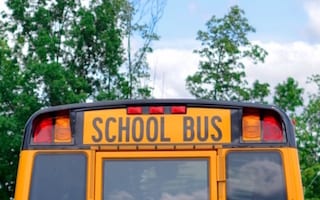 Within the Howe school district, a bus ride can last almost an hour or more. Since many students lack Wi-Fi access at home, connected school buses offer the opportunity to learn, study and complete homework while on the bus – all thanks to Internet access. Howe implemented Wi-Fi and GPS enabled busses, increasing equal access to education, and a better use of student time. In addition, connected buses, especially with video, improve student safety and well-being.
 A public funding partner can be especially useful here in identifying smart and unforeseen ways to utilize Title I Part A funding. For example, within the first step, it’s crucial not to leave dollars on the table, or to continue prior habits – school districts often look to past years for inspiration, and can overlook new types of technology.
 Some of the benefits we’ve seen when it comes to innovative Title I Part A funding include access to online college courses, “office hours” with teachers, mentoring with advanced students and dual-enrollment. To make this happen, school districts must begin to understand their needs, their funding options and how Title I Part A funding aligns with their challenges.