How an Educator Engages ALL Kids in Learning Their Times Tables
 Alex Kajitani is on a mission to help every kid master their multiplication tables. For him, it’s as simple and as difficult as that. Alex, a former award-winning teacher and creator of Multiplication Nation, sees the “times tables” as a basic foundation of everything from geometry to algebra — an essential element to moving forward in school. Alex believes that not knowing them puts a child at a distinct disadvantage both in education and throughout the rest of their lives. “Algebra I is the clearest indicator of students accepted into college,” Alex notes. “But what people don’t know is that failing it is the number one indicator of high school dropouts.”
Understanding the fundamentals also boosts the confidence of students and encourages more participation in class, an often-elusive goal in today’s classroom. “This is no longer a conversation about how we get one student to master their times tables so they can be good in math,” Alex says. “This is now a conversation on how we get all students to master them so they can move together as a class.”
 Alex went from a lucrative career in restaurant management 15 years ago to being honored as that 2009 California Teacher of the Year and a top four finalist for National Teacher of the Year. The journey from just starting out as a teacher and working his way toward such recognitions was a challenge, but the end result is inspiring. Through his innovative strategies for student engagement, Alex became known as the Rappin’ Mathematician, and his ability to engage audiences isn’t confined within the classroom walls: his remarkable storytelling talent is in evidence during frequent conference presentations and his popular TEDx Talk.
Alex noticed that his students memorized complicated and rapid-fire rap lyrics from famous rap artists within days of the song being released. This realization inspired him to write his first rap song, based on adding and subtracting fractions. The song was a hit, and test scores that week shot through the roof.
It was an epiphany for Alex, and he realized that relating math to kids and their life meant the lessons would be learned and implemented. “We’ve got to stop trying to take our curriculum and force it into the students’ lives,” Alex says. “Instead, we need to take our students’ lives and see where that fits into the curriculum.”
 Combining these insights and talents led Alex to create Multiplication Nation, a site that makes sure all students learn their times tables. For Alex, Multiplication Nation is an opportunity to take those lessons and create something that could have both an immediate and a long-term impact while remaining relatively easy to implement. “It’s sort of like being able to bring me into your class every single day and work with your students one on one,” he explains.
But through it all, he remains focused on the goal. “As I’ve said, I’m on a mission to help every kid master their times tables, and I’m not going to quit until they do. And even then, I probably won’t quit,” he says with a smile.
About Alex Kajitani
 Alex Kajitani is the 2009 California Teacher of the Year, and a Top-4 Finalist for National Teacher of the Year. He is the co-author of Chicken Soup for the Soul: Inspiration for Teachers, and his first book, Owning It was named “Recommended Reading” by the U.S. Department of Education.
Alex is also on a mission to get every kid in America to learn their times tables, and to make this happen, he created the popular online program www.MultiplicationNation.com.
Alex is a highly-sought after keynote speaker who supports and motivates teachers nationwide, and he’s known around the world as “The Rappin’ Mathematician.” Alex has a popular TED Talk, has been honored at The White House, and was featured on The CBS Evening News, where Katie Couric exclaimed, “I LOVE that guy!”
For more of his innovative ideas, visit www.AlexKajitani.com.
Follow Alex on Twitter.

 Erin Owens creates a fun taste of reality for her first graders. As a culminating activity for
  I have found that a microphone has played a key role in motivating them to produce quality work. First of all, they love the microphone; they say it is like ‘being on American Idol.’ You can hear them more clearly and their voice is obviously amplified. This gains the attention of the audience more so than traditional sharing. After the ‘glamour’ wears off, they begin to realize that they are showcasing their work each time they “step up to the microphone. I began to see a major change in their motivation to produce the best work they were capable of to impress and entertain their peers.” Notice how she capitalizes on her students’ desire to perform to help them refine the presentation of their work.
 the game, the box, provide pieces and a board, and write the rules. I received a wide variety. One game I will always remember was about how a bill gets passed into law. We spent time [in class] talking about all the points where a bill in Congress or the state General Assembly could be killed, pigeon-holed, or defeated. One student took a box the size of a cereal box, set up a pathway with appropriate steps along the way, constructed question/answer cards, and found an array of tokens for game pieces. If a player answered a question correctly, he or she would roll a dice and move along the path to passage. But the student had cut trap doors at the points where a bill could be killed, and if a player landed on a trap door/bills topper, the player to the right could pull a string, making that player’s token disappear from the board. The player would have to start over. Not a bad game from a student who has fetal alcohol syndrome and is still struggling to pass his classes.”
 Anne Pasco is
 One of the many decisions we make as teachers is how to approach technology in a balanced way. The digital world is our students’ world, and tech has the potential to engage and inspire them. But we also want to avoid contributing to digital distraction.
 to achieve their own interests and goals, whatever those may be. This helps students also learn media balance, because the more they see technology as a tool to achieving other things, the more they see it as just that — a tool — and not as something to be used uncritically.
 One way to get students practicing the behaviors for a positive classroom culture is to use a
  As senior manager for educator professional learning programs at
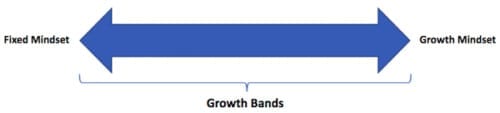
 In the past few years, the idea of growth mindset has gained a lot of traction in education. The general idea behind growth mindset, a concept put forth by psychologist Carol Dweck, is that everyone has the ability to grow their mind. This is counter to the fixed mindset theory that espouses that everyone is born at a certain IQ and just stays there the rest of their lives.
  To be honest, in my experience in gifted education, a majority of the time I see at most a little movement of cognitive scores from one year to the next, but they are not drastic improvements or falling scores. A child might go from a 128 to a 115, or another might improve from a 124 to a 129, but for the most part, there is a lot of consistency with these scores. There can be explanations as to why a child did not score as well, ranging from they did not get a good night’s sleep or a healthy breakfast, to they just did not take it seriously. I see a lot of false negatives, meaning that children who are gifted do not score high enough, but very rarely do I see false positives, or children who score gifted but are not. It would be very difficult for a child to score well without actually having the ability to do so.
  Gifted education operates under the principle that we identify these high ability children and then provide them with programming that will be challenging. Some people claim this model to be elitist. Why should these children receive something different than your typical child? I would argue that just like special education students, gifted students have a unique need that often times a typical classroom is not meeting.
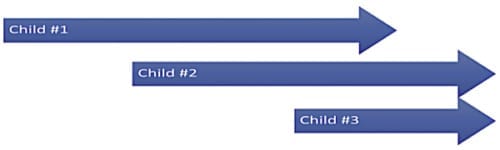 Notice child #2 and #3 have different starting points. Child #2 scored behind child #3 at first, but was able to catch up with hard work, grit, and a growth mindset. Child #3 did not grow as much because although she might have started with a higher ability, her achievement did not match this potential ability and thus she only grew a limited amount.
  Think of these growth bands as rubber bands. They have stretch to them, but there are limitations to this stretch. If you try and stretch it too far, just like the rubber band it will break, snapping back at you. The stretch is where the hard work and exposure to experiences comes into play. It is the combination of the hard work and ability that can stretch a child to his highest potential. Those that lack the effort might find their growth bands not stretching so far and thus do not reach their potential.
 In the suburbs of San Diego lies the
 They tell David that the education culture somehow made it undesirable for a kid to get a skilled labor certification, become a journeyman and serve an apprenticeship, and then go into a development career. “We’ve told every kid that they have to go to college, and they do,” David says. “That’s some hard feedback coming from community leaders who are very successful business people.”
 Student engagement surveys measure hope, engagement, relevance, and whether or not kids feel the adults in the building care about them. Ed Hidalgo says that if we put those metrics first in the classroom, then the conditions for learning and human development in our schools are going to skyrocket. Gallup research shows that a one-point increase in hope and engagement will equal an 8 percent gain in language, arts, and math. Talk about a return on your investment.
 Dr. David Miyashiro currently serves as Superintendent of the Cajon Valley Union School District. David was named 2016 Superintendent of the Year by the Association of California School Administrators Region 18. With David’s leadership, Cajon Valley has undergone a seamless transition to the digital age.
  Ed Hidalgo is the Chief Innovation and Engagement Officer (CIEO) at