
How can we reach our neediest populations? by Dr. Dianna Whitlock
 While the sustainability of positive results of preschool programs has been documented, little research has been conducted specific to rural preschool age children, specifically those living in rural poverty. However, targeted programs have been designed and implemented for preschool age children of low socio-economic status in general. Since poverty has been cited as a predictor of a child’s success or struggles in school and school readiness, quality early childhood programming is one possible solution to providing the necessary experiences for students to demonstrate success in the early grades and eventually break the cycle of poverty.
Though all children might benefit from pre-kindergarten services outside their homes, preschool experiences have been recognized as particularly important among children in economic need, as these families may not have access to resources at home to ensure a strong start in the school system. According to Head Start statistics, students ages four and five living in poverty often tested 12-14 months lower than the national norms in the area of language development. Results of the long-term Perry Project, which tracked 123 at-risk students living in poverty, found higher school performance by those who participated in early childhood education services than those who did not attend preschool. These students excelled in:
- intellectual performance
- scholastic placement
- scholastic achievement
- graduation rates
- employment
 In addition, those who attended preschool as part of the Perry Project had fewer incidents of delinquency or criminal activity later in life. Overall, preschool seemed to increase the quality of life within an underprivileged population.
While there have been mixed reviews on the longevity of academic gains of those who attended preschool, It has been determined that students who attended Head Start demonstrated higher academic achievement than other children from low-income families in elementary school. Likewise, it there is a correlation between early childhood experiences and later cognitive abilities measured by standardized assessments.
Rates of childhood poverty in rural areas have historically been higher than those living in urban poverty. In the late 1990’s, this gap became even greater, increasing from one percent to a five percent difference between the two groups. Recent improvements in the economy proved more beneficial to urban families than to those living in rural America. Rural youths have typically been less competitive in the job market than those who attended non-rural schools.
So, what are the roadblocks to providing a quality preschool experience to our rural students, and how can we overcome them?
1.) Availability of services – The majority of preschool initiatives have been implemented outside rural areas, and it has been the responsibility of rural parents to locate services, often in neighboring communities. School-based and community programs in rural areas tend to fill up quickly, and parents often find their children waitlisted for preschool services.
Solution: Many schools are now offering school-based services in order to ensure student readiness for the kindergarten year.
 2.) Cost – The high cost of providing preschool for all often forces administrators and legislators to scale down programming or provide services to a targeted population. These targeted programs are designed for a specific population, such as low income or special education students. This can lead to a number of students falling between the cracks, as many do not qualify for special education services, but are also not displaying traits of school readiness when they reach kindergarten.
Solution: While the operation of preschool services can be expensive, a number of studies have analyzed the long-term economic effects of an early childhood education. Some of these include higher graduation rates, earlier employment, and fewer supports necessary for grades k-12. However, schools must fund the up front cost of providing preschool services. This can be problematic in light of budget cuts and reduced funding formulas. Schools may need to rely upon grant funding and partnerships with private entities to offer scholarships to students in economic need.
3.) Transportation – Since non-metro parents living in poverty face challenges including physical isolation and lack of transportation services, lack of transportation may be the biggest obstacle to providing early childhood services to students in rural areas. Distances from school are often greater for rural families, and since no public transportation exists, children are often not able to attend school based services if transportation is not provided by the school.
 Solution: If students can’t come to the school, it may be necessary to bring the school to the students. While little information exists on literacy opportunities in the homes of students living in rural poverty, a recent study found that students in rural areas had less access to reading materials. This may have stemmed from geographic distances from libraries, or from the digital divide that exists in rural areas. This meant that those who lived in rural areas had limited access to internet and computers in the home. Through partnerships with community centers in rural areas and local internet providers, schools can offer literacy and technology opportunities to preschool students in rural areas.
As educators, we must make every effort to include our neediest populations, in terms of lack of school readiness or literacy materials in the home, when we plan and initiate early childhood programming. These initial efforts and costs will allow schools to reap long-term benefits for their students’ academic careers.
Author
Dr. Dianna Whitlock is Director of Research and Process Development at Standard For Success, an Indiana firm that helps schools build effective teacher evaluation programs from the ground up with their teacher evaluation solution.
Further Reading
- Washington Post –Preschool is important, but it’s more important for poor children
- NPR – Pre-K: Decades Worth Of Studies, One Strong Message
- New York Times – Preschool Makes a Difference for Poor Immigrant Children

 Does being fearless, knowing how to dog paddle and wearing floaties prepare you for a 50-meter freestyle? If that were a standardized test question and a student selected “True” their answer would most likely be marked wrong. Students rarely have opportunities to explain their reasoning. But, what if Amara explained that she had been taught to visualize her success, learned the rules for the specific race (she actually participated in a dog paddle race) and to ease up on the intensity of practice shortly before the event? Rather than relying on the shallow end of numerical scores, consider how assessment becomes more transparent and meaningful when it delivers visible insight into student’s thinking.
 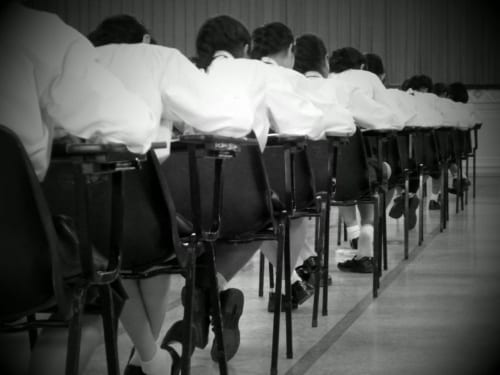 Developing assessment literate teachers, rather than expanding standardized testing, is essential to the success of every student. At the heart of assessment literacy is an understanding of the purpose of assessment, how to interpret and utilize data appropriately, and ways to provide opportunities for all students to succeed.
 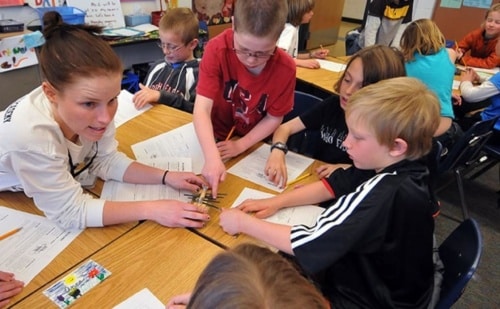 Understanding the learning goals and intentions: Using their own words to explain what, why and how they will learn.
  It’s not the best practice to throw your student into the deep end to see if they can swim.
 Are students ready to compete on a global level? The world has become smaller and more competitive with the advancement in technology. As educators, what can we do to prepare the next generation so they can be ready to take on the world?
 1.) Collaboration
 According to author
 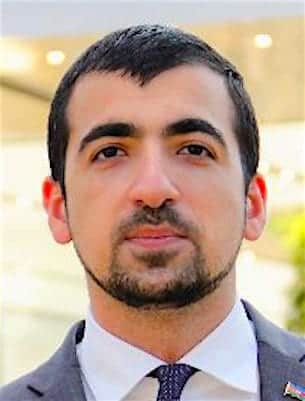 Farid Gasim is Founder of
 We’ve all had teachers who changed our lives. Whatever the subject, they passed on their excitement about discovery and imagination, never doubting their students’ capacity to grow. They were avid learners themselves. They stood out because they stood up for learning in everything they did.
 Drive by a medium-security prison. Take away the razor wire, add a mascot, and what do you have? A public school. They both
  The third chapter,
 Kendra Heffelbower is a teacher at C.W. Harris Elementary School in Washington, D.C. Before coming to C.W. Harris 4 years ago, she taught at Watkins Elementary School on Capitol Hill for 11 years. In this Q&A, you’ll hear how Kendra makes environmental education a reality for her students, giving them a true appreciation of the world around them.
 Q: When was the first time you feel like you understood the true power of sustainability education, and felt like making a difference in this area was truly possible?
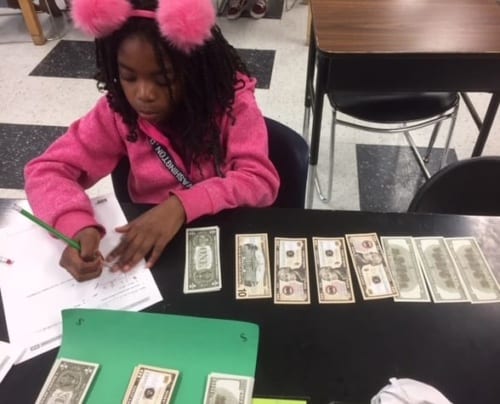 When the opportunity to work with EcoRise came along three years ago, I was very excited because it was my second year at C.W. Harris, where we didn’t have any of the environmental programs that we had at my former school on Capitol Hill. EcoRise not only provided a sustainable, science-based curriculum but also the opportunity for students to actually get money to invest into environmental projects through their Eco-Audit Impact Grants. This program prompted the creation of a STEM position at C.W. Harris that has grown over the past three years so that students here in Southeast D.C. are able to research and learn more about the impact they have on the environment and what they can do to either hurt or help the community they live in. This has made a powerful impression on students.
  Q: Tell us about the moment when you felt like your students really started to “get it.” What kind of change did you witness in student attitudes and behaviors?
 Q: If you were talking with a teacher or other educator who has never worked with EcoRise, what’s the number one thing you’d want them to know?
 By now, most of us in the education world have heard of flipped learning or using a “flipped classroom.” At the most basic level, flipped learning involves having students watch their classroom lecture at home and use class time for active learning and homework with their teacher (and fellow classmates).
  2.) Improved grades and test scores
 class lesson to meet the needs of every student. A flipped learning curriculum allows students to go at their own pace, which can be especially helpful to those who are either higher or lower performers. At
  1.) Start slow.