Lake Washington’s professional learning and coaching atmosphere Lake Washington School District is proud of the work they are doing in making sure their students are college and career ready upon graduation. And with a graduation rate that is consistently around 90%, it is clear that they are successful at it.
 At the core of the success of the district is a professional development and coaching culture that the district promotes and fosters, a culture that has been embraced by educators and administrators alike. I recently sat down with Charlotte Plouse, Caitlin Bank and Ashley Boughton, to discuss this district-wide coaching initiative that has transformed the workplace over the last four years.
As I learned in the interview, a lot of time and effort went into creating just the right coaching program with the greatest chance of success. Leaders spent many hours researching best practices and talking with various stakeholders to create the perfect storm of professional learning. The results speak for themselves with improved student outcomes and a high level of morale which leads to a low turnover rate.
Lake Washington is a model for other districts around the country to copy when it comes to professional development, mentoring and coaching in K-12 education.
This article was originally posted in the Huffington Post
About Lake Washington School District:
 Lake Washington School District in King County, Washington, is the third largest school district in the state with an enrollment of over 29,000 students. The Lake Washington School District’s mission is focused on graduating Every Student Future Ready. This means every student is prepared for college, prepared for the global workplace, and prepared for personal success. The district was formed in 1944 by combining three smaller districts.
Author
Dr. Berger of MindRocket Media Group is an education correspondent and personality with articles in The Huffington Post, and Forbes
Twitter.
- Education Dive – Refocusing professional development to make good teachers great
- EdTech Magazine – Google Champions Teacher Tech Training with New Program
- Elko Daily Free Press – Video service will coach teachers

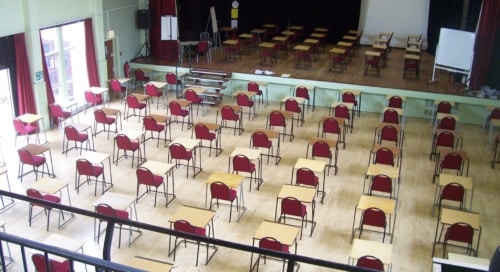 According to a report from the Council of Great City Schools (CGCS), the average student completes 112 mandatory standardized assessments between grades Pre-K to 12. This averages out to 20 to 25 hours of standardized testing each year, which is
  When educators are adding new tests to support new practices, they are hesitant to “prune” the current assessments they are using. The addition of something new without the removal of something that exists and educators’ willingness to constantly try something different without giving existing programs time to show results contributes to the problem. Inertia and familiarity also promotes over-testing. Many assessments are administered annually simply due to the fact that it is something that’s always been done. What may have been mandatory a couple of years ago due to a grant requirement, for instance, may now be optional.
  Assessment audits help districts rationalize the assessments administered to students. By doing so, they also help to establish consistent testing across schools and reduce duplicative assessments so that educators gain back valuable instructional time.
  Taking these steps provides districts with a streamlined assessment strategy that allows them to actually do
 Series Synopsis: Due to continuous digital bombardment and the emergence of the new digital landscape, today’s youth process information, interact, and communicate in fundamentally different ways than any previous generation before them. Meanwhile, many of us, having grown up in a relatively low-tech, stable, and predictable world, are constantly struggling with the speed of change, technological innovation, and the freedom to access the overwhelming sea of information online – all defining characteristics of the digital world of both today and the swiftly-approaching future.
  Many educators express great concern about their students’ lack of ability to learn the way students did in the past. I especially hear this from teachers who have been in the classroom for a long period of time. Many complain their traditional teaching methods are just not as effective with students in classrooms today as they once were. All of this is creating a groundswell of controversy about current teaching methods and the ability of the digital generations to learn.
  Two books make a case for just how different today’s always-on generations really are. There is
  And what type of digital world is it? Every minute of the day, YouTube users watch 4.1 million videos, email users send 156 million messages, Google receives over 3.5 million search queries, 900,00 Facebook users log in, Tinder users swipe almost 1 million times, Twitter users tweet 452,000 times, Instagram users post over 46,000 new photos, Spotify users listen to 40,000 hours of music, Apple and Google users download 342,000 apps, and Pinterest users pin 3,472 images.
 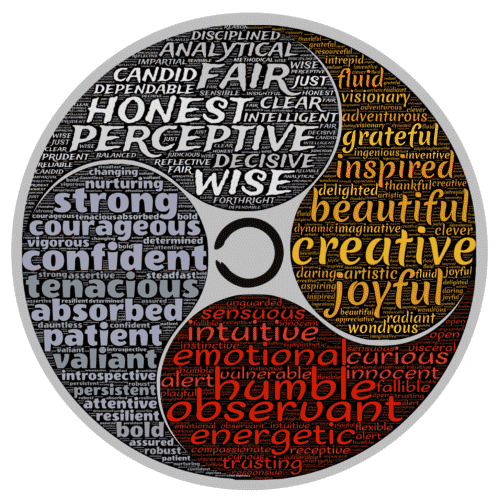 Digital culture is the new normal – not just locally, regionally or nationally, but worldwide. And this new world of digital immersion has affected virtually every aspect of our lives, from our thought processes and work habits to our capacity for linear thinking, to how we feel about ourselves, our friends and even distant strangers.
 It has been this way throughout the history of grading. For example, in the 1930s and 1940s (mostly), grading changed from mostly norm-referenced (“grading on the curve,” or comparing students with each other) to mostly criterion-referenced (grading based on achievement of learning goals). At the time, the term “absolute standards” was used, the term “criterion-referenced” didn’t become common until the 1960s. The point to be made here is that this change happened because of a change in how educators thought, not because someone popularized some new methods.
 Why, over two decades hence, is standards-based grading still struggling and, to be frank, done so poorly in some places? The problem is that standards-based grading proponents have been busy trying to reform grading rather than trying to change the way graders think. Grading reform that comes as strategies to implement—for example, decide on standards, revise report cards, revamp the gradebook, and so on—doesn’t deal with the fact that in grading, as in many other areas, what educators do reflects what they think.
  The change in thinking that needs to occur to make grading more standards-based is this. Educators must believe that grades should be based on the quality of a student’s work in relation to the intended learning goal,
  Or for another example—one I just saw in a class again this week—some teachers give points on tests or reports for things they often call “required elements,” things like putting one’s name, date, period number, and so on, on the paper, or having a title page, or using 12-point font, or whatever. Think about that. If a report is worth 50 points, and a third of those points are about name and date and font and such, what does the resulting score mean for any given student?
 Susan M. Brookhart
 When President Obama called for the country to recruit 100,000 STEM teachers in ten years in his 2011 State of the Union address, Talia Milgrom-Elcott decided she was going to lead the charge to make it happen. In a rare case of a citizen answering the call of a president, Talia formed
  Talia is widely recognized for her visionary and innovative approach to tackling large, systemic challenges. At


 Sierra Vista Middle School in Irvine, California has a local treasure in music teacher Henry Miller. He was nominated last year for the National GRAMMY Music Educator Award presented by the
  And it had a big hit. Programs that were large and had multi-course offerings were reduced significantly. It took a very long time for a lot of schools until they actually recovered from it.
 HM:
HM: If they see that I’m here for kids to be able to create a quality experience for my students ─ that what I’m doing benefits them ─ then, I get the support. I’ve been very fortunate to be able to have colleagues who are open, and I don’t have people who are “This is mine, and that is yours and ne’er the twain shall meet.”
 HM:
HM: It’s not a competitive environment where I’m trying to beat you or play better than you. We’re all working together; the kid who may be the concertmaster in the orchestra is just an important as the one who is sitting last chair in the violin section. If that one kid doesn’t play their music correctly, it’s going to be heard and it’s going to be detrimental to the overall experience.
 Henry Miller was born in Los Angeles and grew up in Torrance, California. His trumpet playing earned him a scholarship at the