North Carolina’s Charter School Teacher of the Year leads the way
Deborah Brown is the 2017 North Carolina Charter School Teacher of the Year and is currently an English teacher and Director of Professional Development for Research Triangle High School (RTHS) in Durham, NC. Her specialties include Speech and Debate as well as student journalism. She has coached Debate teams, Mock Trial Teams and Drama performances to competitions at the local, regional, state and even national levels.
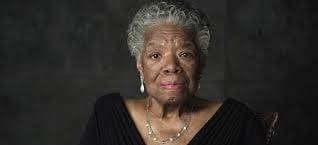 Referencing Maya Angelou’s poetic quote, Deborah shares, “I’ve learned that people will forget what you said, people will forget what you did, but people will never forget how you made them feel.” Deborah believes that excellent teachers make students feel like they can be successful. People may remember idiosyncrasies and moments, but the biggest thing they remember is how you made them feel. The teachers make the students feel welcome like they’re in a safe place where they can experiment, try and fail. As Deborah points out, “We set the kids up to succeed in the classroom, but the learning is in the failure.”
Research Triangle High School is an independent public charter high school, a North Carolina-designated place of learning that is accountable to the state and the public. The school doesn’t charge tuition and prides itself on being at the forefront of modern teaching methods. The flip model and project-based learning are adopted environments that Deborah believes in promoting. Technology allows learning to become a collaborative process and used appropriately, Deborah finds it can free up time for beneficial projects. Deborah specifically points to student-led portfolio conferences as a tech advancement that brings student ownership to learning while informing parents of their child’s progress. It’s a win-win improvement that connects the community to the school.
 As their brochure says, “We see a place where what a student does is more important than where the student comes from, where success is rewarded but the effort that provides it is cherished. We see a place where students work together to construct within and between themselves the skills and habits an uncertain future requires. We seek to move students from dependent to independent learners; from receivers to creators of knowledge.”
“We offer an unconventional way of experiencing conventional knowledge through experiential learning, and we bring the science of Research To Practice into the curriculum. We ask a lot of our students but have built the support structures needed to help them reach the high bar. We bring an entrepreneurial spirit to proven educational practice and current research, seeking to build a school that changes the lives of its own students as well as helping other schools to change theirs.”
About Deborah Brown:
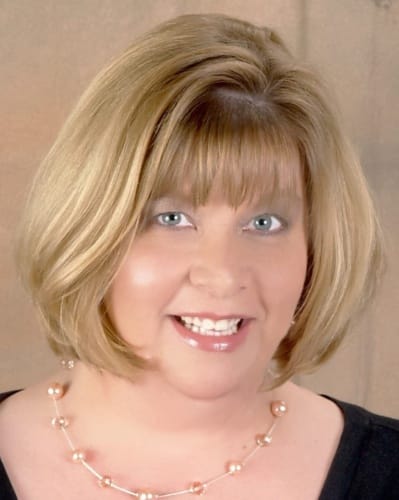 Deborah Brown is the 2017 North Carolina Charter School Teacher of the Year and serves on the NC Governor’s Teacher Advisory Council. She is a National Board Certified Teacher with a Master’s Degree, summa cum laude, from Syracuse University. She holds four teaching licenses in middle & secondary English, Speech Communications, and Theater Arts.
In 2012 she joined Research Triangle High School in Durham, NC, where she founded the English Department and served as Director of Professional Development. She has coached Debate teams, Mock Trial Teams and Drama performances to competitions at the local, regional, state and national levels.
In 2016 her yearbook program was named a Program of Excellence by Jostens, one of only three such awards given in North Carolina. She is trained in the New Tech model of Project Based Learning and is one of the original facilitators for the iLead 21 leadership development course, piloting the 1st national model and serving as a consultant and contributor.
She has been a presenter at state and national conferences and is the author of a chapter in the textbook Applying the Flipped Model to English Language Arts Education. She manages a youtube channel of original flipped videos for English Language arts and has created over 150 instructional videos.
Ms. Brown was twice named a North Carolina Center for the Advancement of Teaching Scholar in Residence. She lives in Cary with her husband Mark and has two children recently graduated from NC State and UNC.
Follow Deborah Brown on
Author
Dr. Berger of MindRocket Media Group is an education correspondent and personality with articles in The Huffington Post, Scholastic, and Forbes.
Twitter.
- Education Dive – 6 administrators share strategies to gain and maintain student engagement
- Education Week – What Is the Future of Individualized Education Programs?
- EdSurge – Thinking Outside the Music Box: Using Digital Tools to Teach Music and More
https://vimeo.com/

 Alina Campana is the Program Director for
 They’re building up the arts throughout the school and in every classroom with the idea that that will help them impact student achievement and student engagement and also things like family involvement which is key to a successful school and school climate and culture.
 So there is growing compelling research that shows that the arts can be a positive influence.
 And then, some teachers are uncomfortable with the arts, and it could be kind of scary because it wasn’t core to how they grew up in their learning or they haven’t had experience with the arts that much. But, very often, when they try it, they do see a shift in their classroom in the ways kids learn. And, sometimes, we hear from teachers who say that the arts have helped them see that child in a new way and the child was a student whom they thought of as struggling. Learning through the arts allowed that child to shine, in a way, that they hadn’t seen before. So it helps shift teacher perspectives on who their kids are and how they learn. I think that’s important for all the kids.
 AC:
AC: Alina Campana is the Program Director for
 1.) The
  2.) Others will answer this question better than I can, but the real answer is: Use anything that works. PBL is not technology dependent—that’s a mythology from the early days when technologists in the late 90’s began to push a purely constructivist or discovery version of PBL. At its heart, PBL is a simple process: Engage students in a challenging, open-ended problem; turn them loose in teams to research, weigh, design, and create; give them adequate doses of essential knowledge and core content; and expect them to produce a well-constructed, thoughtful public product that shows what they have learned and concluded. Where does technology fit into the process? Wherever people today normally use technology to find and share stuff.
  3.) As voice and choice is an essential component to any PBL product, one of the easiest ways to integrate technology, and my personal favorite, is using technology as a product for student learning. We want students to apply their learning in a variety of contexts in a PBL project. We also value authenticity in a PBL experience. Both of these ideas “scream” for technology to be leveraged as students create their products. Products that leverage technology could be websites, podcasts, movies, public service announcements, and presentations; all of which are highly authentic and allow students to express their creativity. By using technology-based products, we are allowing students to express their learning in assessments that are meaningful, rather than a simple pen and paper examination. It only makes sense for students to show their learning through technology.
 4.) My favorite strategy for using technology within a PBL environment: not using technology! Okay, maybe that’s not quite the right wording…more along the lines of think about how technology will make your project more effective and let that drive the usage. Allow for the project to demand when and if technology is utilized. Content can easily slip away and be masked by the glitz and glam of the latest tech. Projects that integrate technology at appropriate times, driven by the needs of how it is unfolding, generally have more success and the information sources are often sound (and necessary). This is how we do life (efficiently and with purpose) and therefore, we want our learners equipped with best practice.
  6.) One technology strategy that I have embraced over the last several years is the use of the video recording abilities found within the Learning Management System,
 Benjamin Heinen is the visual arts curriculum coordinator and local program coordinator for
  Together with national and local partners, Turnaround Arts mission is to improve low-performing schools by not only integrating the arts back into a standard daily curriculum but using them to enhance a student’s grasp of all subjects and lessons through integrating the creative problem-solving and scientific method connection they foster. Turnaround Arts seeks to improve the social-emotional learning and development of K-8 students by bringing the joy and excitement of learning back to the classroom through the arts.
 A description of a strong teacher evaluation system is never complete without discussion on inter-rater reliability. Inter-rater reliability remains essential to the employee evaluation process to eliminate biases and sustain transparency, consistency, and impartiality (Tillema, as cited in
  It is within all of us to want to do well. While this statement is subjective, we must remember that the desire to improve, especially among those in-service professions such as teaching, is fundamental.