It is time to embrace learner-centered leadership
Hear more from Randy Ziegenfuss and other innovative analysts, thought leaders, and educators at the 2018 Future of Education Technology Conference (FETC), January 23-26 in Orlando, Florida. Learn more here.
by Randy Ziegenfuss, Ed.D and Lynn Fuini-Hetten
What happens when school leaders understand the idea of learner agency? What happens when school leaders release student voice? What happens when leaders create an audacious vision for learning by including all community stakeholders in the design of that vision? Something we call learner-centered leadership!
 Over the past several months, we’ve partnered with Education Reimagined to explore the distinctions of and competencies for learner-centered leadership through a series of interviews on the podcast Shift Your Paradigm: From School-Centered to Learner-Centered. Throughout early episodes, we engaged school leaders and learners working in transformed learning environments to help answer these questions: What is learner-centered leadership? What new sets of knowledge, skills and dispositions do school leaders need to lead a transformation of the current school-centered paradigm to a learner-centered paradigm?
Here’s a snapshot of what we’ve started learning to answer these big questions. In Episode 1: What is learner-centered?, we interviewed Kelly Young, executive director of Education Reimagined. The episode focused the conversation on what learner-centered means and what learner-centered leadership might look like using Education Reimagined’s A Transformational Vision for Education in the US as a guiding document.
We followed Episode 1, interviewing Allan Cohen, strategic consultant, and Anya Smith, learner at Mount Vernon Presbyterian School, with Episode 2: What is learner-centered leadership?. Transformation, learner-centered and learner-centered leadership were the key topics of conversation. We learned that transformation can come in many different forms, but for purposes of our inquiry, transformation occurs when we let go of the past and create something entirely new. True transformation is about breaking from what has been done, not just improving the current model.
 Once we established context for our action research in Episodes 1 and 2, we began speaking with school leaders and learners about the learning transformations happening in their environments. Dr. Kevin Brown, superintendent, and Dr. Frank Alfaro, assistant superintendent of the Alamo Heights Independent School District in Episode 3. Our most powerful takeaway was that learner-centered leaders engage the voice of the learner. We got a glimpse into how Alamo Heights has created a Profile of a Learner and how students played a significant role in the process. In Episode 4: Learning rocketry in a learner-centered environment, we interviewed Erick Castillon, a graduate of Alamo Heights. Erick’s story provides a rich example of how learner-centered leaders treat learners as individuals.
We continued the conversation in Episode 5: Iowa BIG. We spoke with Dr. Trace Pickering, executive director; Shawn Cornally, co-founder; and Jemar Lee, learner. From Trace, we learned the importance of learner agency to the leader. “Learner agency is that secret ingredient, that secret sauce that unlocks the other four elements – competency,  personalization, open-walled and socially-embedded.” Our major learning from this conversation was that learner-centered leaders have a clear understanding of learner agency and the role it plays in shifting the paradigm from school-centered to learner-centered.
We’ll outline the next stages in our journey to distinguish learner-centered leadership from traditional educational leadership in future posts! Check out the Shift Your Paradigm podcast site for all episodes and accompanying blog posts that deconstruct some of the learning from each episode. And join us for a new conversation every two weeks as we uncover what it takes to lead a learner-centered learning environment. It’s not what you think!
Randy Ziegenfuss will be speaking at 2018 FETC conference
Author
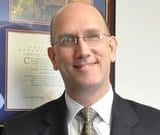 Randy Ziegenfuss currently serves as Superintendent in the Salisbury Township School District. Prior to his current position, Randy was a classroom teacher, Department Chair, Technology Integration Specialist, Director of Technology and Assistant Superintendent. Randy is also Clinical Adjunct Professor of Education at Moravian College, teaching courses in inquiry, assessment and technology in the undergraduate, graduate and principal certification programs.
He graduated from Moravian College with a B.Mus. degree, earned his M.A. from Teachers College, Columbia University in technology leadership, and an Ed.D. from the University of Pennsylvania in educational and organizational leadership. In 2014, the Pennsylvania School Librarians Association (PSLA) recognized Randy as the Outstanding District Administrator for the state of Pennsylvania.
In 2015, Randy was recognized by the Pennsylvania Association for Educational Communications and Technology (PAECT) as the Outstanding Leader of the Year. Read Randy’s blog WorkingAtTheEdge.org and listen to the podcast co-hosted with @lfuinihetten at TLTalkRadio.org.
 Lynn Fuini-Hetten is the Assistant Superintendent in the Salisbury Township School District. Prior to her work in this position, Lynn served as Supervisor of Instructional Practice, middle school teacher, instructional coach, instructional support teacher and assistant principal in the district. In her current role, Lynn is responsible for professional learning for all staff, supporting curriculum development, supervising the district’s virtual learning academy (VAST), and managing federal programs. Lynn has been an integral part in the success of Salisbury’s 1:1 teaching and learning initiative – Teaching and Learning 2020 (TL2020).
As a result of her work in the area of professional development, Salisbury Township School District was recently recognized nationally as a Project RED Signature District and an Apple Distinguished Program. Lynn was recognized in 2013-14 with a mini-grant from LearningForward PA to provide professional development focused on leading the implementation of PA Core Standards for the administrative team.
Lynn received a BS and an MS in elementary education from Kutztown University, principal certification from Penn State University, instructional technology certification from Kutztown University and is currently pursing a doctorate in educational leadership from Wilkes University. Lynn has taught undergraduate course at DeSales University. In May 2014 Lynn received the Wanda McDaniel Award from the Women’s Caucus of PASA (Pennsylvania’s Association of School Administrators.)
Further Reading
- Iowa Public Radio – Iowa Ideas: A Push Toward Learner Centered Education
- T|H|E| Journal – Designing Learner-Centered Spaces
- Education Week – A Learner-Centered Culture Includes Educators, Too


 Early in my career, I taught sixth through eighth grade mathematics in a rural school deep in the swamps of Louisiana. I had convinced the principal I knew how to teach middle school mathematics, which was a long way from the truth. One October day we tackled the objective of solving percent of discount problems.
 The first element of the Expert Lens is the Interpersonal Knowledge of the expert teacher. This lens is the optics through which teachers view students’ social and emotional needs. Expert teachers are able to pick up subtle clues from facial expressions, body language, tone of voice, and other interactions to understand the needs each student in the classroom. This lens is also the foundation of the classroom culture the teacher and students create.
 The pedagogical element of the Expert Lens is the choices the teachers makes in choosing the strategies or teaching methods to use to teach the content and build culture. These methods build upon the interpersonal knowledge as the teacher chooses strategies to help student master content, but also impact culture. For example, in Suzy’s first hour class, the students worked through a poetry analysis activity using a Think Write Round Robin structure to practice the SIFT method for analyzing poetry. During Suzy’s second hour class, the students used the same SIFT method, but the class used a jigsaw discussion structure instead of a Think Write Round Robin.
 The final element of the Expert Lens is content knowledge. Expert teachers have a highly developed, conceptual knowledge of their content. This understanding allows them to see the content as a whole and understand the big picture connections running across their year. These teachers are able to understand how each moment in each lesson fits into the overall mastery of the content.
 In education, we are always seeking the one thing to make every child successful. From the perfect curriculum to that one canned program to the earth-shifting strategy, we keep seeking. All of these are fruitless pursuits. The one thing is a powerful teacher who possesses highly developed interpersonal, pedagogical, and content understanding and applies these through the Expert Lens.
 Michael Cardona
  But I think there’s been this movement of accountability that’s overwhelmed the system and that’s put this enormous amount of stress on not only students and their parents, but on teachers as well.
 I believe that it helps to engage the child when they know that they have that support system. That they know it’s not this linear thing that they are at home, they go to school, and they go back home; that it’s all-encompassing. It’s an environment. It’s comprehensive in that Mom or Dad or caretaker are there and a part of that ecosystem in a way that is communicative and provides, I think, feedback to the teacher. So isn’t it incumbent upon us to provide parents with an opportunity where not only do they have access to the classroom but it’s access that allows them to participate?
  So how do you, as a leader, look at that and say, “Alright, I want to make sure that, yes, we all know it’s a technology-driven classroom that we’re working in now.” How do you provide support to those veteran teachers or even the brand new, early career teachers that think that this is not exactly what they thought they would be doing? They’re all dependent upon you and your team to provide them the skills, the resources, and the training.
 There was a reporter from this foundation and she said, “Who do you want to talk to?” and I said, “Talk to any of these principals or teachers because if they’re here on a Saturday, they’re invested in us making sure that they’re taken care of. You have some teachers here who have been in the district for 35-plus years and they’re leading mindfulness exercises.”
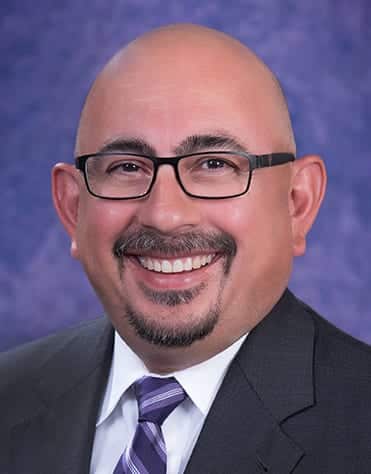 Michael A. Cardona was named Superintendent of
 Dr. Kim Alexander started out as a West Texas farmer and rancher. A persistent drought forced him to use his college degree to land a job at the local school, which initiated his career in education. After years of experience as a high school principal, grant writer and English language arts and kinesiology teacher, he is now the superintendent of
  One thing about Texas is that it’s such a large state with 5.2 million students ─ the fastest-growing state ─ that it is difficult to measure folks without standardizing the thing. But the problem is that Texas is very diverse within its borders, so it’s hard to do anything meaningful that is standardized.
 KA:
KA: And so we’re developing the “what” in lieu of it. And then how do we measure it? How do we report it through digital student portfolios that folks not just from Roscoe but from Austin, from
  KA:
KA: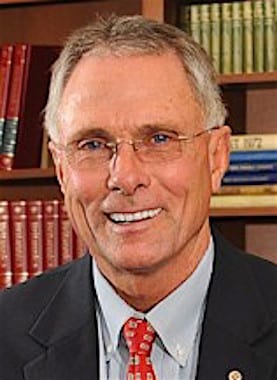 Dr. Kim Alexander of Roscoe is superintendent of