Music education has evolved dramatically over the past 15 years, transforming the traditional music classroom into a dynamic, creative environment where technology, collaboration, and artificial intelligence are helping students compose, perform, and explore music in entirely new ways.
Walk into a modern music classroom today and you may see students composing a beat on a laptop, layering digital instruments into a soundtrack, or collaborating on a shared composition online—while a jazz ensemble rehearses just across the room. This blend of traditional musicianship and digital creativity represents a powerful shift in how music teachers approach instruction and how students experience the art of music.
For music educators, the mission remains the same: help students discover their voice through rhythm, melody, and expression. But the tools used to achieve that goal have expanded significantly. What was once a room filled with music stands, sheet music, and instrument cases is now often a vibrant studio where students can perform, compose, record, and produce music.
As schools across the country celebrate Music In Our Schools Month, this evolution offers an opportunity to reflect on how far music education has come—and how music teachers continue to lead innovation in the classroom.
From Traditional Music Rooms to Creative Studios
Fifteen years ago, the structure of most music classrooms was relatively consistent. Students focused on reading notation, practicing scales, and rehearsing ensemble pieces in band, orchestra, or choir. Technology had begun to enter the classroom, but its presence was limited. A music teacher might have used notation software to write sheet music or an electronic keyboard lab for practice, but digital music production tools were far from common.
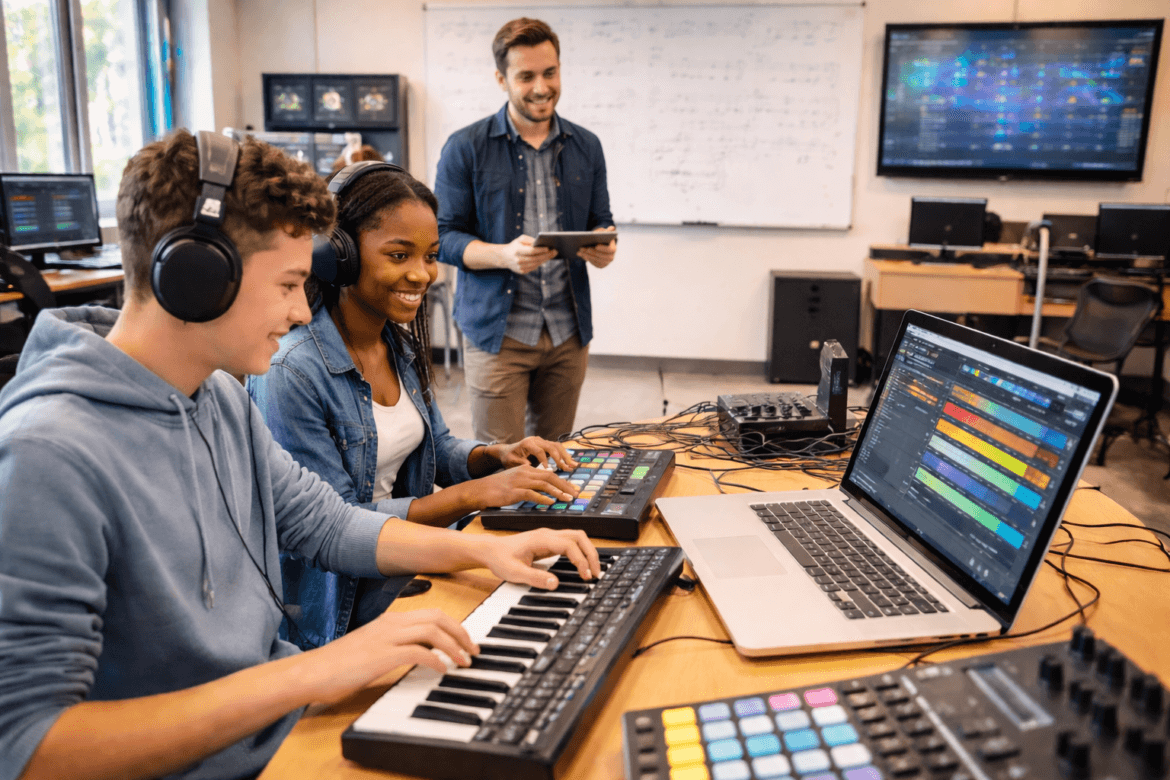
Today, many music classrooms resemble creative music studios.
Music teachers increasingly incorporate digital audio workstations (DAWs), MIDI keyboards, and music production software into their lessons. These tools allow students to compose original music, experiment with sound design, and develop arrangements using both traditional and digital instruments.
Students can layer sounds, adjust tempo, experiment with effects, and build full musical compositions using technology that mirrors what professional musicians use in studios.
This transformation has expanded what it means to learn music. Performance and ensemble playing remain essential, but students are also developing skills in composition, recording, editing, and digital production.
For many educators, this shift has opened new doors for creativity in the classroom.
Students as Creators in the Modern Music Classroom
One of the most exciting changes in music education has been the shift toward student-driven music creation.
In the past, students primarily focused on performing music written by composers. While that tradition remains important, technology now allows students to explore composition and creativity in much greater depth.
Online music platforms such as Soundtrap, BandLab, and Noteflight enable students to build music layer by layer. They can record instruments, create beats, add harmonies, and mix tracks while learning the fundamental principles of rhythm, melody, and harmony.
For music teachers, these tools create opportunities to connect classroom instruction with the musical experiences students already encounter outside of school.
Many students today grow up surrounded by digital music through streaming platforms, social media, video games, and music production apps. By integrating these tools into instruction, educators can transform that familiarity into meaningful musical learning.
Students who might not initially see themselves as performers may discover their passion through composition, beat production, or sound design, expanding the ways young musicians engage with music education.
Online Collaboration Changes the Way Students Make Music
Another major shift in music education has been the rise of cloud-based collaboration.
Digital music platforms now allow students to collaborate on compositions even when they are not in the same physical space. A student can begin a project in class, continue working on it at home, and share the piece with classmates who can add their own contributions.
This collaborative process mirrors how music is created in the professional world today. Artists frequently collaborate across cities and countries using digital production tools and shared online platforms.
For music teachers, these tools also create new opportunities for feedback and mentorship. Educators can review students’ compositions, leave comments, and guide students through revisions, helping them refine both their technical and creative skills.
This process transforms music education into an interactive, creative cycle in which students experiment, revise, and grow as musicians.
Artificial Intelligence Enters the Music Classroom
One of the newest developments shaping music education is the arrival of artificial intelligence in music creation.
AI-powered tools are beginning to appear in music classrooms, offering students new ways to explore composition and musical structure. Some tools can generate melody ideas, suggest chord progressions, or help students experiment with rhythm patterns.
For music teachers, AI is not replacing creativity—it is enhancing the creative process.
Students can use AI to quickly test musical ideas, experiment with variations, or explore different arrangements. Teachers then guide students through the artistic decisions behind those choices, helping them understand how melody, harmony, and rhythm work together.
AI can also support differentiated learning. Students who may struggle with traditional notation can still explore musical ideas through AI-assisted composition tools, while more advanced students can use the technology to refine complex arrangements.
As educators continue to explore AI’s potential, many see it as another instrument in the music room—one that expands creative possibilities while still relying on human interpretation and expression.
Music Teachers as Innovators
Perhaps the most important part of this transformation is the role music teachers themselves have played in leading innovation.
Across the country, music educators have embraced new tools while preserving the traditions that make music education so powerful. They are blending classical instruction with modern technology, allowing students to explore multiple pathways within music.
A single class period might include ensemble rehearsal, digital composition, and music theory—all connected by the same goal: helping students understand and appreciate music.
Music teachers are increasingly some of the most creative educators in the school building, constantly adapting their classrooms to meet the interests and talents of their students.
Preparing Students for the Future of Music
The evolution of music education also reflects the changing nature of the music industry itself.
Today’s musicians often serve multiple roles: performers, composers, producers, sound engineers, and digital creators. Careers in film scoring, video game sound design, podcast production, and multimedia storytelling all rely on both musical creativity and technological fluency.
By incorporating digital tools and AI into instruction, music teachers are preparing students with skills that extend far beyond the rehearsal room.
Students develop creative thinking, collaboration, digital production skills, and artistic confidence—abilities that benefit them not only in music but in many other fields.
The Future Music Classroom
Looking ahead, the music classroom will likely continue to evolve alongside technology.
Students may collaborate with classrooms across the world, compose music using advanced AI tools, or rehearse in immersive virtual environments that simulate concert halls and recording studios.
But even as the technology evolves, the heart of music education will remain unchanged.
Music teachers will continue to inspire creativity, guide students through the language of music, and help young musicians discover the joy of artistic expression.
The modern music room proves that when tradition meets innovation, the possibilities for student creativity—and the future of music education—are limitless.
Subscribe to edCircuit to stay up to date on all of our shows, podcasts, news, and thought leadership articles.