What Parents and Educators Can Learn From Adults with Dyslexia
By Don Winn
 I never wanted to be a writer. If someone had told my young self that I would become a writer one day, I would have laughed—or thrown up—or run away. The idea of becoming a writer never even crossed my mind.
As a kid, reading and writing were torture. I hated them both. After being diagnosed with dyslexia in first grade, the intervention I received helped me to cobble together some rudimentary reading skills, but then I was placed back on the educational assembly line and fell further behind year after year. This had a devastating effect on how I viewed myself.
Dyslexia affects a person beyond reading and writing. It creates a social and emotional toll—lingering feelings of shame, brokenness, inadequacy, and a lack of belonging, which can prevent a dyslexic person from reaching his or her potential, or even recognizing that they have any potential.
 This is hard enough to deal with if you know you are dyslexic. But imagine the difficulties that undiagnosed dyslexics face, dealing with the social, emotional, educational and professional complications of dyslexia every day of their lives, but never knowing the reason why.
There are millions of undiagnosed dyslexic adults today—an estimated one out of ten people! This vast multitude often suffers silent shame and fights feelings of being a fraud, living in constant fear of being ‘found out.’ Many come up with creative ways to cover inadequacies in the workplace, feeling ever more inauthentic with every excuse, while negative self-beliefs limit personal growth. Readers may identify with the following:
- Hiding:being afraid of rejection or losing a job because of dyslexia
- Shame:not understanding the nature and scope of dyslexia and feeling broken or less worthy than others as a result
- Anxiety:constantly struggling to find the extra time needed to plod through work assignments in a world that demands instant results
- Self-loathing:negatively comparing yourself to others who seem to do things effortlessly
- Resignation:believing it’s too late to improve reading comprehension and writing, believing you’ll always be an underachiever
 So if you know—or suspect—you are dyslexic, how can you make the most of your reality, discover your genuine potential, and have your own best life? Try the following suggestions:
- Get informed.Often adults don’t truly understand their experience until a child or grandchild is diagnosed with dyslexia. As they listen to the specifics of the diagnosis, they recognize themselves. Two excellent online resources to learn more about dyslexia are the Yale Center for Dyslexia and Creativity and the International Dyslexia Foundation. Viewing documentaries such as The Big Picture: Rethinking Dyslexia can also be helpful.
- Develop understanding.Realize that you are part of a group. Other dyslexic people have lived through complex life experiences similar to yours in some way. Take advantage of their experiences, cultivate patience with yourself, and learn some new coping skills. Share your new knowledge about dyslexia with friends, family, and workmates. This lays the foundation for self-compassion and honesty. Maybe you never knew that dyslexia is a decoding problem, or that reading will never become automatic for dyslexics? That sequencing issues explain why people with dyslexia might have a poor sense of direction or be challenged to remember more than one step at a time? Knowing these things about yourself and sharing them with others makes a huge difference.
- Question and replace old beliefs.Tackle negative feelings and redirect them with your new-found knowledge. Realize that most dyslexics are hard-working, tenacious, creative, outside-the-box thinkers. This will help you redefine your relationship with yourself, one belief at a time. Understanding that dyslexia is a lifelong processing issue — not an intelligence problem or a motivational issue — resets your expectations of yourself and helps with planning. Recognizing that you will need extra time for tasks that require reading or writing and that allowing yourself this ‘grace period’ is the key to realizing your potential.
 What about dyslexic children? Early diagnosis and intervention are crucial from an educational standpoint: there’s a short window of time during which children learn to read, and after that point, children must be able to read with comprehension in order to continue learning. Indeed, literacy is key for a developing a healthy self-concept, learning practical life skills, and reaching optimal psycho-social milestones.
Although some dyslexic students become adequate readers through traditional instruction, over 50 percent require specialized instruction to overcome reading or processing challenges. Dyslexics respond well to a multi-sensory approach that includes visual, auditory, kinesthetic, and tactile modalities. While traditional instruction centers on memorizing the alphabet and each letter’s individual sound, multi-sensory teaching methods allow children to gradually understand their particular learning styles and discover what lights up their brains. They discover what they are passionate about. Actually, these teaching strategies developed for dyslexics can benefit all beginning readers, not just the struggling ones.
However, there’s more to consider than just getting a child help with reading when it comes to early detection of dyslexia. The many adults who didn’t know they had dyslexia until they were well along in life, or those like myself — who knew they had dyslexia but didn’t understand its full implications across every aspect of their lives — might look back and lament “wasted” time when they could have done things differently or seen themselves and all their hard work in a more understanding, compassionate light. Early detection of dyslexia in children can prevent this kind of situation for kids and help them make the most of all their abilities, possibly even preventing them from developing excessively limiting self-beliefs.
 Kids with undiagnosed dyslexia are in a terrible situation — they have come to believe that regardless of what they do, they will not succeed. They see no light at the end of the tunnel; instead, their vision is filled with images of continued failure. This is why it’s so crucial for parents and educators to be alert to possible signs of learning challenges. Every child has potential, and the sooner interventions and accommodations are in place, the sooner the child’s vision for themselves can begin to include hope. As mentioned above in the tips for adult dyslexics, getting informed, developing understanding, and questioning and replacing inaccurate beliefs are key for helping dyslexic children as well.
Are you concerned that your child might be dyslexic? Here are some potential signs of dyslexia for different age groups. If you see evidence of a few of them, consider getting your child tested.
If your preschooler has trouble identifying rhyming words, pronouncing words, calling things by the right names, following instructions with more than one step, or if they speak less or use fewer vocabulary words than their peers, screening for dyslexia is advisable. Delayed language development is often the first sign of dyslexia in preschoolers. Is there a history of reading or spelling difficulties in the parents or siblings? Dyslexia is highly heritable.
Kindergarteners and first graders with dyslexia could exhibit frustration with reading, complaining that it is too hard. (They are good at disappearing when it’s time to practice reading!) They often are unable to sound out even the simplest words, since they can’t easily connect a sound to its matching letter. Great problem solvers and guessers, they often supply their own narrative to an illustrated book based on the pictures. They may say kitty or kitten instead of cat, for example, even though the word cat is used in the story.
 Older children with dyslexia will be slow, reluctant readers. They avoid reading out loud whenever possible. They make wild guesses about unknown words since they have no strategy for sounding out new words. Longer, more complex words are frequently mispronounced. When asked a question, they take longer to reply, often using word whiskers such as “ummmm” to give themselves time to process. Learning things in sequence is challenging or impossible: timelines, phone numbers, multiplications tables, for example. Handwriting is messy, and most dyslexics print block letters rather than write cursive.
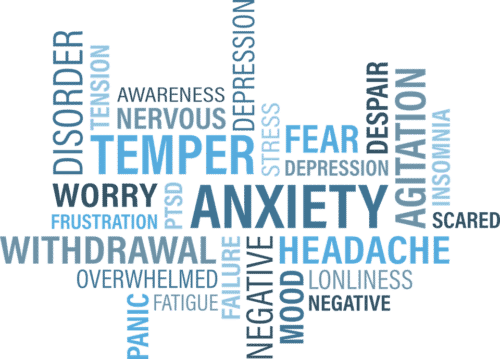
Signs of low self-esteem and shame show up early for dyslexics. Children especially experience low self-esteem in situations in which they believe they are destined for failure. Thus, kids with learning problems feel most vulnerable in settings in which their learning difficulties are obvious and exposed, such as in the classroom. Low self-esteem can show up in a number of ways.
- Quitting or outright avoidance of difficult tasks
- Being disruptive or clowning
- Poor eye contact, slumping posture, and reluctance to talk or engage in conversation
- Impulsivity
- Becoming aggressive or bullying
- Negative self-talk: I’m stupid, I can’t do anything right
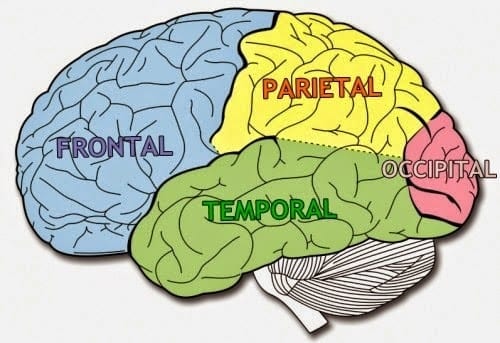 When children with dyslexia understand what’s going on with their brains and are taught how to make things better, the difference in their outlook is astounding. Early detection and intervention is key to giving kids with dyslexia a good foundation in reading, but also a good foundation for developing coping skills that will give them hope and the ability to live up to their full potential.
Author
Further Reading
- Des Moines Register – Drake’s Adult Literacy Center focuses on the small things
- Casper Star Tribune – Wyoming prisons use unique education program to improve inmate literacy
- Bustle – Study: Learning To Read As An Adult Changes Your Brain In A Big Way

 In 1973, an article appeared in Policy Sciences, a periodical with a small but devoted readership. Written by Horst Rittell and Melvin Webber, the piece introduced the concept of tame and wicked problems. Soon after, Gerry Weinberg (he’s a household name in computer science) suggested that “All the easy problems have been solved. From now on the problems will be much tougher.” What they suggest is that we need to better understand wicked problems. Not wicked in the sense of evil, but in the sense of the higher level of thinking we need to tackle them.
 It’s always tempting to look back at that past as simpler and safer, somehow. I started teaching using chalk, mimeographs, and film strips. It seemed like a simpler time with clearer answers. Yet this year I have provided as many virtual learning sessions as face-to-face. To make them work, I’ve had to change not only how I deliver my message, but how I think. I’ve found delivering webinars and web-based retreats to be challenging, exciting, and wicked. I, like all of us, am liable to fall into the trap of tame problem thinking. Tame problem thinking — that I can simply transfer face-to-face teaching to the Web — wasn’t sufficient, as I discovered very quickly.
 The second equation captures an event. 1,232 American bison X 13 Native American hunters = 19 days of protein for the village. It’s a snap shot, a possibility, and it’s an example of wicked problem thinking. It’s not the answer, nor is it a solution, yet it can increase our understanding and insight. Here are the characteristics of wicked problems:
 I’m very grateful for all the teachers who dealt with this infernally curious boy. I must have been fun and a pain. I was always asking questions. Still do. And these wonderful folks provided me with a great baseline of useful tame problem knowledge. Arithmetic. Trigonometry (which I still use when I go sailing). Information about chemistry, physics, biology, history. I also had some wicked problem teachers — two I remember in high school, several in college — who made me uncomfortably better.
 Due to the Net, at the same time we can find out just about anything about anything, we are also liable to all kinds of misinformation and fabrication. The Web has presented us with our most recent wicked problem. We can focus on helping our learners in this increasingly complex world with a critical element in Wicked Learning: Skepticism.
 We can also practice, and model, using more open questions. These are questions that invite exploration rather than focus on a single answer. We can ask, “Who can tell me when Columbus discovered America?” A nice tame problem question (it has an answer) that is useful as a framework to set the stage for a wicked learning opportunity. Then we can follow up with “What are some of the fears that must have been on the minds of the folks on the three ships that sailed in 1492?”
 How do we train students for jobs that don’t yet exist? If you are an educator, a parent, or an employer, I am sure you have pondered this question.
 What we do know is that work is changing; what we don’t know is to what extent. For example, there is little agreement on the long-term effects of automation and artificial intelligence. A
  Whether AI and automation lead to new job creation or to high levels of job displacement, we can expect the way we define and complete work to change. Technological advances have a long history of altering how people complete work, making jobs safer and less routine. Looking ahead ten years, we can expect increasingly to partner with technology to complete work, even if what constitutes work comes to be radically redefined, with people pursuing things such as social good or passion-based projects rather than working to make a living or people opting in and out of work when they choose. We can also expect the structure of work to change as more and more people enter the contingency-based workforce, possibly working several different kinds of jobs or projects concurrently in a far cry from traditional notions of career. Lastly, we can expect that many people will be working in jobs that do not exist today.
 So how do we prepare today’s students to be tomorrow’s workforce?
 Traditionally, teacher professional development (PD) has been designed to build capacity, focus on ways to improve curriculum expertise, and help teachers keep abreast of new instructional strategies, technology tools, and instructional resources. However, each attending participant focused on improving teacher self-knowledge through the same approach or “one size fits all,” requiring individual teachers to modify information gained to meet the needs of their own content area, grade level, or specific group of students. Instead, personalized professional learning (PPL), encourages teachers and school-based staff to engage in the planning and implementation of professional learning to meet individual teacher needs.
 Personalizing professional learning for educators incorporates previous experiences, knowledge and interests, and creates a direct, contextual link between professional learning and student learning. It acknowledges everyone’s needs and strengths and in doing so, teachers feel valued and motivated. Motivating teachers and building upon previous learning not only encourages ongoing professional learning, it builds self-efficacy. Self-efficacy is an individual’s confidence in his or her ability to perform tasks or exercise influence over events that affect their lives. Individuals with high self-efficacy approach difficult tasks as a challenge and not as a threat.
 Teacher agency is the action of teachers directing their own professional growth. Giving teachers agency in their professional growth provides them opportunities to make conscious choices, builds capacity, and most importantly, instills a feeling of ownership in the process. As educators have choice in professional learning opportunities, they bring prior learning and experiences and connect them to new learning. Further, it connects new learning to their teaching contexts and provides intrinsic motivation. When educators are not part of the decision-making process in professional learning activities, there is a disconnect from their daily work. Further, agency is fostered when teachers actively participate in professional learning communities.
 Are gifted programs elitist? This is a criticism leveled upon gifted and talented programs. Some perceive because children are treated differently, with services designed to their specific learning needs, this means they are receiving special treatment. That is certainly one way to look at it. Another, more logical way to look at it is that special education children are treated differently, with services designed to meet their specific learning needs. No one would accuse special education of being elitist. So why the double standard?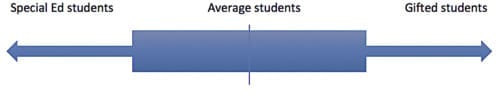
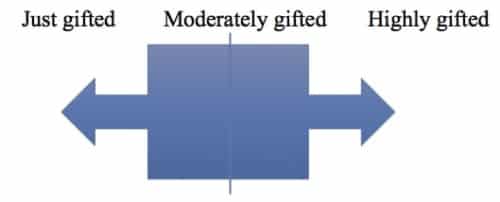
 The problem is not the programming itself, but rather the criteria used to place students in that programming. Some programs have criteria that is going to give some students an advantage while excluding others. For instance, if the program requires a parent request, those students whose parents are heavily involved in their child’s life are going to get into the program while a child whose parents are not as involved or do not understand the process, is going to be left out. This is an example of elitism; or if part of the criteria is based on teacher recommendation and/or grades. Grades and teachers’ opinions are both very subjective. And there are teachers who give poor grades to students based on not turning in homework or being a behavior problem, not based on their ability or their mastery of the content. Gifted children are not always compliant children. They might be acting out because they are bored in class.
 I would be remiss if I did not scrutinize the nationally normed tests themselves. There are those who point to the fact that these tests are biased in their identification. There is an over-representation of higher socio-economic white children in gifted programming, meaning there is an under-representation of minority and/or lower socio-economic children. Part of the issue is that the tests are written in a language that is more familiar to those who are exposed to it on a regular basis. Not only this, children from a higher socio-economic status tend to have more exposure to experiences which can give them knowledge others were not privy to. This can give some children an advantage on the tests, especially the younger grades.
 The truth is, gifted programs are as elitist as we allow them to be. By making sure our gifted programs selection is objective and making efforts to test students with a variety of methods in order to properly identify all students, we create programming that fits an ability, not a social status. This prevents them from being elitist and instead makes them what they were meant to be; a specific service for students with extraordinary ability.
 Gamification is about transforming the classroom environment and literacy instruction into a game. It requires creativity, collaboration and play. There are numerous ways to bring games and game playing into the English Language Arts classroom to promote learning and deepen student understanding. Whether teachers are looking to bring in some aspect of gaming into their class or use a game platform across the curriculum, they can bring in elements of gamification to enhance learning and student engagement, tap into Common Core State Standards and meet ISTE Standards.
 3.) Create a quest. A quest is a mission with an objective. Every year my students participate in a Current Events Adventure Quest, a trivia game based on the weekly current events reading. Students who answer a specific text-dependent question correctly earn points. The student with the most points after six weeks wins a prize. Additional questions are posted on
  One student recently told me that gaming in English was a fun learning alternative which has made her a stronger English student. She went on to say that striving for game points throughout the school year strengthened her work ethic and improved her writing and reading skills, which overall improved her grade. As a teacher, gamification has allowed me to coach students to be successful readers, writers, and critical thinkers. Students learn through play, collaboration, and quest-based adventures. Gamification is an approach to learning that connects meaningful gaming with content objectives to re-engage students and boost learning.