Workshops are only the first step
 Trainers from high performing industries know that training drives potential, not ultimate competency. The process begins with training, but competency in complex tasks results from self-directed performance continuously augmented by job experience, peer support, and additional training targeted to the specific needs of the job or individual. When those conditions are in place, skillfulness becomes embedded in the culture of the workplace and organizations turn the corner on sustained capability.
It’s little wonder that PBL doesn’t thrive, or sometimes survive, unless schools adopt this mindset when it comes to training teachers. Teaching through project based learning qualifies as a very complex task. A workshop or conference introduces the craft, but teachers become competent only through a supportive ecosystem.
 Approaching PBL training with a comprehensive strategic mindset suffers from two limitations. Money and time for PD are always at a premium. But even more limiting is the self-imposed mentality of the one-off workshop, in which an expert roams the front of the room and explains the bullets on a PowerPoint — and then leaves.
Fortunately, there are now solutions to these issues, and it is now possible for every district to replace old-style training with a strategic focus on sustaining PBL. First, virtually every educator, particularly district administrators who cringe at the high costs of training and lack of effectiveness, have finally agreed that workshops may not be the most productive way to make professional learning stick. As the new ESSA or Learning Forward guidelines for PD underscore, job embedded and continuous opportunity to grow are quickly replacing the old one-off experience.
Second, digital platforms that offer a rich, deep, and social experience for teacher learning are in place — a development that has happened only in the last two years. These platforms make MOOC’s and webinars look like dinosaurs; they offer an interactive means to drive teacher potential by offering essential information, testing the learning, opening users to questions and further learning — the essence of self-direction — and empowering teachers to become active, informed participants in a professional community that sustains growth.
Almost counterintuitively, this digital experience drives teachers deeper into the topic. Listening to an expert requires less effort than digging into a challenging online course. But to the bottom line: Online learning doesn’t require setting aside special PD days with high-priced trainers or taking precious workdays in August or bringing in an army of subs for the day. It’s amazingly cost-effective.
So, how do these new developments get incorporated into high quality, ongoing PBL professional learning? A coherent plan focuses on seven elements that make up a comprehensive ‘phigital’ experience that blends online and onsite learning:
Create a shared knowledge platform. The momentum for PBL in a school or district often starts with a face-to-face workshop or conference attended by key leaders and teachers. That’s great. But PBL needs to be part of the knowledge and skill set of every teacher in the school, including foreign language, music, and career tech. Sustainability in PBL requires a cultural shift and philosophical alignment. Enroll every teacher in online training for PBL. This is the shared knowledge base necessary for the staff-wide conversation that results in sustainability.
Kickoff and orientation. There is an illusion that older teachers resist going online and younger teachers embrace it. That’s tech mythology. The reality is that high fliers exist in all age groups but that everyone needs to see how the platform operates and grasp the opportunity for group as well as individual growth. Online learning at this depth is new, even in other industries. It takes time to set up.
 Train coaches. The road to competency requires constant conversation, testing of ideas, and debriefs. Coaches who have deep training in PBL are immensely helpful. This is a middle management, teacher leader position that many districts do not have. But they play a critical role in supporting progress, monitoring, and setting milestones for course completion.
Remote coaching. Both teachers and coaches require help. PBL has many moving parts and is a complex craft for a teacher. Back up the coaches with a PBL expert who can advise the coaches and troubleshoot projects. It’s like having a lawyer on retainer—and it’s necessary.
Revisit. There is a predictable flow chart for implementing PBL that mirrors the Forming, Norming, Storming, and Performing sequence. Early projects will fail and teachers who start out with great enthusiasm may feel frustrated. The challenge of transforming from front of the room education to student centered problem-solving involves thinking like a designer, not a lesson planner, and redefining old notions of rigor. The depth of this challenge continues to be vastly under-estimated by education. Planning for failure is part of success.
 Train a new cadre. Sustainability requires emerging leaders. Look for teachers who do PBL very well and create opportunities for them to share and support. Add them to the coaching mix with informal coaching opportunities. Use the new cadre to build out teams that know how to use protocols and analyze projects.
Plan for new staff. Sustainability won’t happen if one third or one half of the staff doesn’t know PBL. That can happen over a year or two with staff turnover. Every new teacher needs to be ‘inducted’ into the PBL culture. How? Go back to the online and require every new hire to enroll in the online PBL course — the perfect, easy cost solution to keeping PBL at the forefront of the school.
Author
Founder of PBL Global and a leading author, psychologist, and respected international school consultant, Thom Markham has assisted over 350 schools and 6000+ teachers across five continents in implementing project-based learning, 21st-century competencies, and successful inquiry-based systems of teaching and learning.
PBL Global offers a hybrid cost-effective, teacher-effective approach to professional learning for PBL that integrates a powerful library of online courses, staff coaching, and teacher support. Email thom@pblglobal.com or follow him on
Further Reading
- Stillwater News Press – Teachers spend part of summer in class
- Inlander – Spokane schools are trying a nontraditional teaching method called PBL
- EdSurge – Amidst Opioid Addiction, Plummeting Morale, One Elementary School Reinvents Itself

 If we could just fix our kids by plugging every hole from the past… they’d be just fine.
 Plus, academically vulnerable students have likely been grouped together now so that not one learner in the entire class appears to be proficient in the subject. This certainly sets up challenges for differentiated instruction and student self-efficacy. How do we group a classroom full of students with similar deficiencies with stronger students when there are none available? Whatever shiny name we attach to this remedial class, every student in there knows they are now in the “dumb” class.
 Acceleration is a process in which we jumpstart academically vulnerable students on new content just in time for new learning. These learners are going to be moved a day or so ahead of the class. Remediation is present, but with a laser-like focus on just the skills required for the new content. Scaffolding devices, such as bookmarks and cheat sheets will be pushed in, so that students are armed for success. The best part is that learners explore the new content and upcoming vocabulary. This might include a video on crustaceans, a scavenger hunt exploring perimeter, or a sort on integers. When the core teacher announces, “Today, we’re going to talk about something called perimeter,” acceleration class students have just enough prior knowledge to spark hands in the air. “Hey, I know something about that!”
 Active, hands-on, scaffolded, engaging, and focused on learning targets – these are descriptors of an accelerated approach. And while some practice is warranted during acceleration, sessions are largely sans worksheets or computer screens. From my own experiences and in working with districts to implement acceleration, here is the process that I share:
 A few months ago, a principal from an urban school with a large number of economically disadvantaged students called me. Her words: “I’m tired of pouring money into remedial programs and not seeing results.” Her staff was ready to try an accelerated model. Just a couple of months into implementation, she couldn’t wait to share her benchmark gains. More important to her, however, were the changes observed in her students’ self-efficacy. They were more engaged and working harder.
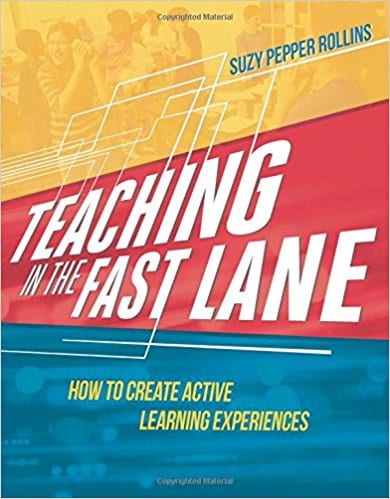
 Rather than pounding away at a students’ not-so-great-academic past, acceleration can provide a fresh start for students. This approach is about what a learner can accomplish today on this lesson. Remediation is still being provided, but it’s in the context of what learners need right now. And yes, there may be some isolated skills they missed that won’t be revisited again and again and again. Guess what? They’ll survive. (They may not survive hating school.)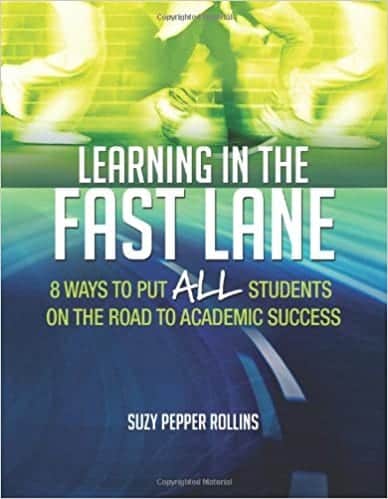

 At a fundamental level, the enterprise of k-12 public education in the U.S. has much in common with the construction aggregate industry both in its method of production and the outcomes it achieves.
 Make no mistake about it, k-12 public schools in the U.S. remain as one of the most effective sorting and screening tools available to mankind for stratifying society. In fact, if you like the way it operates, it’s the best taxpayer dollars can buy. Under the current system, before a child even sets one foot in a classroom, the screening and sorting process begins. Now labeled a student with a unique identification number, the child is systematically assigned to a ‘class’ and ‘grade’ based on his chronological age and the geographic location of his parent’s or guardian’s primary residence.
 There is yet another interesting similarity (call it a coincidence if you like) between the aggregate construction industry and the k-12 education enterprise. They both result in the production of concrete. The aggregate industry produces material used as the substrate for concrete itself, and the enterprise of k-12 education produces concrete thinking.
 If the U.S. is to regain its prominence as a world leader in education, the k-12 enterprise itself must think in the abstract about its future rather than remain stuck in the intellectual cement of its past. Achieving a mind-shift from a ‘here and now’ mentality to one that is future-referenced will require the concerted effort of many thousands of educators from across the country. Using our five senses alone may not be enough to get the job done.
 Over the past 20 years, educators in the United States have voiced concerns about adolescents’ lackluster reading, writing, and communication skills. The
  The Shanahans argued that adolescents in secondary classrooms need explicit scaffolding of the ways disciplinary insiders (i.e., professional artists, historians, mathematicians, musicians, engineers and so on) create and communicate content within their respective fields. Disciplinary literacy assumes there are real differences in the ways professionals across fields participate and communicate, and that without initial instruction in those explicit differences, students might flounder in college and the workplace. Importantly, disciplinary literacy work is about more than just “strategy instruction.” The focus is on apprenticing students into the practices used to construct knowledge in disciplines.
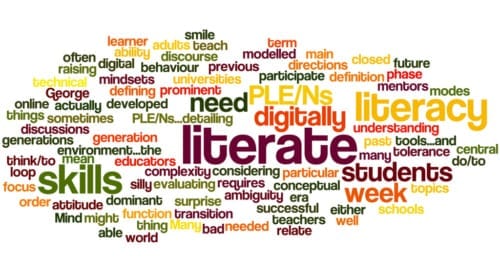 In order for disciplinary literacy (DL) instruction to take-hold and improve student learning, school districts would be wise to think of DL along a K-12 continuum. Below, we offer a Responsive Disciplinary Literacy Teaching Framework for all teachers to use as they design DL instruction. But, we recognize the instruction designed will look different across disciplinary classrooms because
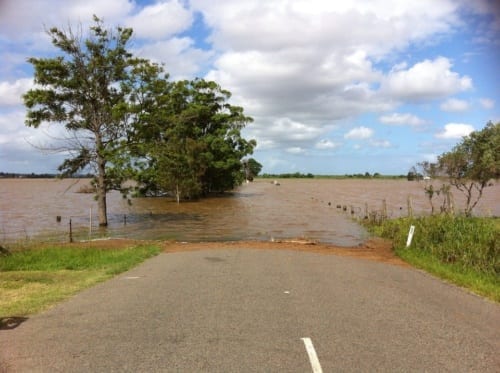
 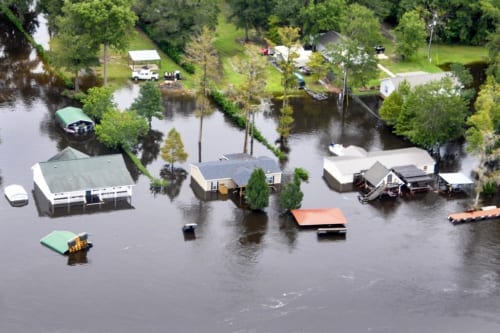 When the historic Thousand-year Storm subsided, over twenty inches of rainfall had burst local dams, washing away roads, bridges, and homes — including Stephen’s, which he shared with his younger brother and grandparents. Now, a year later, and sitting in Mr. Washington’s eleventh grade earth science class, mere blocks from where fields were washed out, subdivisions went weeks without power, and heroic rescues of stranded neighbors on rooftops occurred, Stephen’s experiential knowledge intersected with local scientific norms for inquiring, testing, and knowing more about the world around him.
 For Mr. Washington, using the three teaching practices means bringing intentionality to his planning and teaching. Instead of designing disciplinary literacy inquiry, tasks, texts, and scaffolding regardless of the students in the room, these practices become “best practice” when Mr. Washington uses his knowledge of his students to inform how, when, and why instructional practices are used.
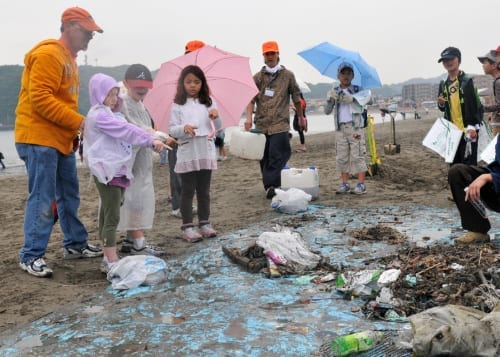 In a summer program targeting English Learners needing support with reading, writing, listening and speaking, we chose to embed literacy interventions in content knowledge. As we met our elementary students, we quickly discovered that they had little-to-no experience with the ocean across the street from their school.
 For the rising first graders, their most pressing questions were about bubbles. These young scientists read books about bubbles, sang songs about bubbles growing and popping, learned the parts (e.g., skin, air) and shape of bubbles (e.g., sphere), experimented with bubbles, and asked more questions about bubbles. They created lava lamps (materials included empty water bottles, vegetable oil, water, food coloring, and antacid tablets) to make observations about how bubbles formed and moved in a liquid. Although their conclusions may seem simple (e.g., The color of the food coloring placed in the lava lamp becomes the color of the bubble’s skin), they were totally appropriate and valid conclusions based on observational evidence. Our rising first graders then wisely asked why some bubbles outside our school were yellow in color, resulting in an older group of elementary students investigating the effects of boat pollution on our cove.
 At the core of the

 Software vendors pepper administrators’ phones with messages day in and day out trying to make a sale. Having been on the receiving end of incessant vendor calls, there is little unique on the market. Most software does one thing particularly well, but because it is commercialized and not district-specific, it is essentially fitting a round peg into a square hole. Vendors promise to work with your student information system, only to find out integration comes in the form of an SFTP upload to retrofit your data into a form the vendor can consume. Therefore, schools scramble to put something together quickly to fill gaps if there’s anyone knowledgeable enough to take on such an endeavor.
 Abre
Abre I developed a module for our Forest Hills district that allows students to register their BYOD devices, interfacing with a different database than that which is installed with Abre. Because the software is open source, you can modify it to make it what you want. Chris and Zach still work for their district, Hamilton City Schools, and Chris develops solutions for his district full time. Hamilton City Schools educates 10,055 students, the 16th largest in Ohio. The software, designed out of need, is currently saving Hamilton City Schools over $120,000.
 There are a couple of important takeaways from Abre. First, anyone can take advantage of Abre and through community development, it will only get stronger. There’s a need for better and efficiently-tested software and by developing from the inside out, everyone wins… the district and most importantly, the user. Second, districts may want to consider pooling resources to employ a developer versus buying software from the metaphorical “big box” stores.