Problem-based learning provides students opportunities to engage more deeply
By Marc A. Natanagara, Ed.D.
 As seen in schools:
• During a study of 15th-century explorers, a student builds a ship out of popsicle sticks.
• An ELA teacher asks students to create a board game in groups of three based on their notes on Huckleberry Finn.
• A fourth-grade class is given the option to assemble a Powerpoint presentation for younger children to explain a plant growth lab they’ve just completed.
• Biology students are tasked with constructing a scale model of an animal cell (not for the first or last time).
These examples fall squarely under what has been called “Project Based Learning,” or PBL. The popular belief over the last two decades is that PBL is more rigorous and engaging than traditional learning because it is hands on and multisensory (or, at least, multimedia). In actual practice, it often is not. Students can still copy material directly from the internet, their text, or notes, or get mom and dad to do their project, with little thought extended beyond the day’s lesson.
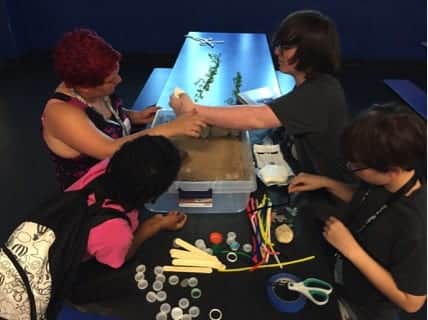
Students chose to design a shoreline for conservation, soon to be tested against erosion.
Problem Based Learning has roots in constructivism and is a cousin to engineering design, STEAM integration, inquiry-based learning, and multisensory and multiple intelligences pedagogy. Constructivism, misunderstood as simply about getting kids to build, is rooted in the idea that students are active learners who construct their own meaning based on personal beliefs, interests, and prior experiences. Such a mindset behooves us to individualize learning; if every student brings different tools to bear and has different goals and needs, how can teaching be one size fits all?
Three of the inspirations for a shift toward PbBL have been:
1. a greater demand in industry for flexible, self-starting, and creative problem solvers
2. new standards in science, careers, and technology that have innovation at their core and that reference other standards (a more integrated approach also supports success on high stakes testing)
3. the cultural revolution known as the Maker Movement, which represents a grassroots synthesis of arts, crafts, tech, hacking, and much more
Students should experience this model if for no other reason, then that it represents the world they will be a part of. It also happens to be a lot of fun.
How can we assure that an activity is problem and not just project based? We can ask ourselves:
• What important real world issue and context exists in this situation that students can relate to? How can I share the issue without defining the problem for them?
• How is assigning this design challenge any better than another or more traditional assignment? (Think Bloom’s Taxonomy.)
• What essential question (to use the Understanding by Design term) can the process and result of the design challenge answer?
• Is my task design likely to result in very different answers and approaches from students?
• Have I defined success through a rubric or checklist that is applicable to a variety of student solutions and addresses critical analysis and inquiry, rather than just product and procedure?
Based on these questions, here is an example of how one of the projects described in the beginning of this article could be reborn as Problem Based Learning:
Modeling Life
- Give a brief introduction of the concept that a cell is, in many ways, a self-contained functioning unit and (thus) the basic building block of all life on earth.
- Facilitate a brainstorming session on what living things need, and connect those ideas to what a self-contained apparatus (like a robot) might need.
- Students research organelles and match one to one of those needs. Then they define the problem as they see it.
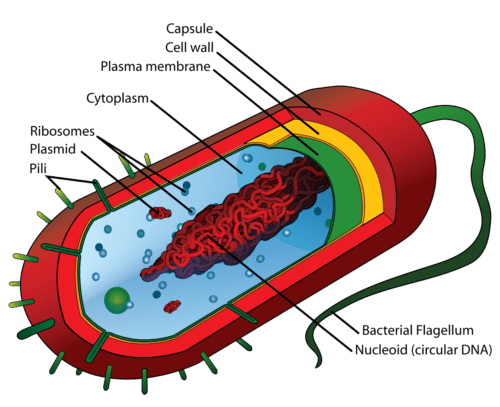 Example: How can a central processor (aka the nucleus) get its message to its constituent parts?
Example: How can a wall or skin (aka the cell membrane) allow materials to selectively pass through it?
D. Students are tasked to design a prototype apparatus to mimic the function and solve the problem. The rubric is discussed that includes scoring elements for innovation, use of materials, functionality, accuracy (compared to real cells), and quality of research.
E. Synthesis and analysis of the process: present, solicit group feedback, and reflect.
1. How, and how well, did you address your identified problem? (Let the class challenge and critique, with guidelines for doing so.)
2. How did you come to this solution?
3. Why did you choose the materials? How did your materials align with your solution?
4. What additional skills or information did you need to create your prototype? How did you get them?
5. How does your solution compare to others? What might you learn from others?
6. How might your solution fit in with others to make a fully functioning unit? (Have students figure out how to bring them together to create a huge, functioning, collaborative class cell model!)
Recommendations:
• Mentors and other facilitators (including the teacher) should not provide ready answers but ask questions to prompt students to think critically about their build and process.
• Do not originally get bogged down in terminology, though feel free to use it and let them look it up as needed. Students will learn terms organically as they research and design.
• Use “learning on demand” by connecting students to each other and other appropriate resources.
Like so much in education, adjusting to Problem Based Learning is a shift that requires an upfront investment, but one that will reap many rewards as students become better at thinking on their own and with an innovation mindset. Teachers will also find it more interesting for themselves and will grow as professionals as they find students stretching their ideas past their original concept of the project. That’s a win-win!
Author
- The Learning Accelerator – InnovateNJ: Gaining Momentum
- EMS1.com – Why EMS educators need to use problem-based learning
- The Daily Sentinel – In Montrose, problems are just learning opportunities


 Dr. Justin (Tim) Mills joined the
 In a recent interview with Chris Besse, president of FreshGrade, Besse talked about his enthusiasm for the program and how it helped parents become more engaged with their child’s learning and contributed to deeper learning for students. He also explained why teachers love the FreshGrade program.
 There are three traditional ways parents find out about their child’s learning: a report card which is often months after the fact, the teacher-parent conference and usually those are quick. It’s a little like speed dating; they don’t really learn a lot because there is no context to what is really happening. The last is the child who, when asked ‘what did you learn in school’ all too often will answer ‘Nothing’ or ‘I don’t remember.’
 1. Formative assessment or looking at learning as it is happening
 Teachers become like champions because they are showing the parent the incredible work they are doing. Using our free app, the teacher can capture the evidence of learning and immediately send that information to the parent. Parents actually see and hear their child learning. They are getting more relative knowledge of their child’s learning.
 FreshGrade is flexible and can fit into an existing Learning Management System that is already in place in a district. It adds a more complete picture of the student’s learning and is quite complimentary to a LMS. It is easy to learn for teachers, parents, and students.
 FreshGrade is a time saver for teachers. Teachers can collect and collate all the year’s learning into one place every day. When it comes time to inform the parent, they simply go into the portfolio and they see and can show what learning has taken place.
 We encourage children to communicate in their mother tongue with their parents to show the learning they experienced. But we are also working on foreign language editions of the entire product to support second language families as best we can.
 Not familiar with the idea of the Age of Experience? With the rise of Amazon, Google, Apple, Facebook, and Microsoft battling for collections of devotees, big business has entered a level of branding and product that is self-evidently called “Experience.”
 Education will need to continue to shift to provide personal value, as judged by the individual person. The only way to do this is to make it a self-determined and experiential thing, being self-determined through the vast possibilities that exist, while also taking care of students to reach minimal goals of reading, writing, mathematics, science, and social studies.
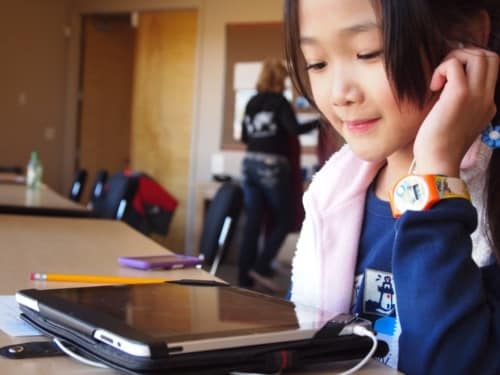 Schools and districts will know they have reached the Age of Experience when they find themselves considering the depth of individualizations they can do. Right now, individualization, a.k.a. “personalization” by most teachers, is the art of mildly adapting the same whole group lesson so that the slower student gets remediation to catch up, or that fast-Johnny gets to go play more math games online, or other educational leisure activity, because he has already finished everything.
 There are essential, universal skills today’s students will need both now and in the future. We have seen the list: Communication Skills, Collaboration Skills, Decision-Making Skills, Critical Thinking Skills, Problem-Solving Skills. However, there is ONE SKILL that must be mastered to do any of the skills on that list. That super skill is: CREATIVITY!
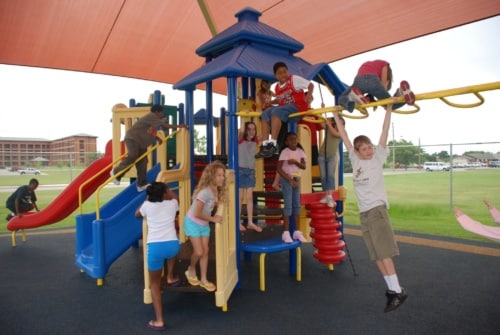 Many students and adults have or develop one answer for many situations. Think of a student on the playground who only has one answer for an issue: if someone hits me, I hit them! Increasing the possibility of other alternatives does not just magically happen! All students deserve the opportunity to explore and share ideas and talk about alternatives and new ideas.
 In what ways might these skills be taught?
 The third score is really fun. The instructor asks the group to use 6-inch voices and choose ONE answer the group believes they have that NO ONE ELSE in the room has. As each group gives their answer, the rest of the class says “yes… we have that answer” with a thumbs down or, if that answer was not given in their group, it is a “thumbs up” and the answer is ORIGINAL.
 After students have been working on fluency or brainstorming for awhile, have them apply the questions from the SCAMPER technique to their ideas. This should help them come up with many new ideas or variations of old ideas. For practice, have the students watch commercials to see how many products have been created through this process. Or, bring in all the samples from the Oreo example.
 This week I had the pleasure of being interviewed on a local White Plains Cable Access Show called “Westchester Roundup.” The interview went well but that is less important than what happened before the interview actually started.
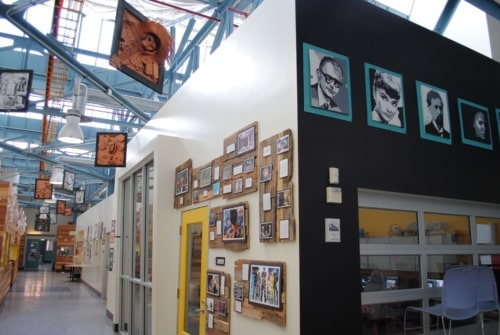 In our talks beforehand, Mr. Johnson suggested I watch a video about Hi Tech High. I was skeptical about a network of charter schools with that name and a CEO instead of a principal. When I saw the Pearson Foundation sponsored the video, I wretched, but watched anyway.
 His school was all project-based learning. It was heterogeneous with no segregation by race or economic status. The school honored the Brown vs. Topeka decision and had “reversed the negative peer effect of segregation.” It focused on original student work where they had to apply content to their projects. “This is what adults do.” In addition, all student work was exhibited so all students and teachers could learn for all successes, and just as importantly, failures.
 She, Mr. Rosenstock and I all want kids behaving like scientists, artists, and historians: not just studying the content, and doing only restrictive work that allows for success on multiple choice tests. What better way is there than through actually doing the work rather than learning about it? What better way is there than project learning or learning through internship programs, especially in high school? After all, “what is adolescence but trying on new roles and sampling identities? We must just give them the chance.”