(And Make Opening Minutes Count Like Crazy!)
By Suzy Pepper Rollins
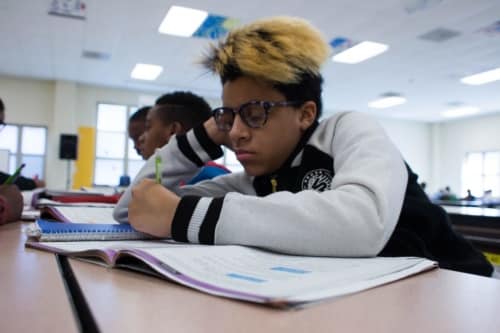 Ahhh…the opening minutes of class. Students file in like they’ve spent days trudging through the desert, begging for water, swearing they need to have an IV started. A stream of elaborate stories about homework ensue, accompanied by pleas to visit their lockers and perhaps call their attorneys. The office needs something, attendance has to be entered…and a colleague requires just one second with you at the door.
Thank goodness for warm-ups! Largely a classroom management tool, these get students out of the halls, into their desks and busy so that the business side of education can be handled.
But wait! What if these “get them busy warm-ups” turn out to be just about the opposite of what thirsty learners really need? Because the case can be made that the opening minutes might just be the best time to learn. Are we maximizing this critical instructional time?
The Case for a Different Start to Learning
This is not a case against getting students started immediately – that’s certainly a sound practice. Rather, this is a case for a different, more elevated type of task to get thinking started. Consider this:
 Students remember the opening minutes of class. Their brains are fresh and open for learning. If we fill up these minutes with a warm-up and now go over homework, we have placed ourselves in the unenviable position of trying to teach new concepts when brains are tired and disinterested.
- Motivation to learn begins in the opening minutes. Students’ brains are asking: Is this going to be valuable? Are my chances good for success? The opening minutes should set up the new concept and instill in students, “This is going to be really interesting and I can do it!”
- 20 minutes of warm-ups x 180 days of school = 60 hours. Yikes! Sixty hours of instruction is so valuable… every minute counts!
- Learning largely involves attaching new information to prior knowledge. Opening minutes can enable students to pull critical files out of their brains, pad their knowledge a bit, and be ready for new learning!
Strategies for the Beginning of a Learning Episode
In both of my books, I call these “Success Starters,” to encapsulate their mission. Here are characteristics I strive for. An opening task should:
- Be highly engaging – every student will jump right in
- Spark intellectual interest for learning the new concept
- Get students questioning, collaborating, and tapping into prior knowledge
- As much as possible, connect to students’ worlds
For example, in a literacy lesson I teach about the cotton gin, I first begin with an opener in which students make decisions about how cell phones have changed our society and economy. After they go to town on that, I put a picture of the cotton gin up. “Now, let’s talk about a different invention.” Students have to determine which of these two inventions changed the world more. It’s relevant (student love those phones!), engaging, sparks thinking, and connects to prior knowledge. And I can still check attendance. If I began this lesson with “Let’s learn about the cotton gin…” Well, we can predict the outcome.
Facts and Fibs are one of my favorite openers for all content areas, including math. Placed on strips, pairs discuss and position the strips as they arrive at a consensus, explaining their reasoning. For example, if students were introduced to exponents the prior day, this Fact/Fib might be just the ticket to get the lesson started:
Fact or Fib? Exponents
A number raised to a power is multiplied times itself repeatedly.
A number raised to the power of 1 is equal to 1.
When an exponent is negative, you have to subtract.
A base raised to a negative exponent creates a fraction with 1 as the numerator.
A number raised to a power is added repeatedly.
Make it Visual
Visual representations can also be an engaging start to learning. Pictures of earthquakes, the Dust Bowl, magnets, battlefields, or onomatopoeia can provide concrete images of what will be discussed today. Rather than have students sit and watch; however, they must connect and respond to the pictures. If it’s angles, what’s different about them? The Great Depression: what do you see in their faces? Early computers: What’s changed?
Make it Wow
Author, presenter, and science teacher Monica Genta takes the “wow” factor of the opening minutes to the next level. “During my astronomy unit, I bring outer space to my students. What better way to do this than lighting a table on fire. Right?” She uses cotton balls as stars and isopropyl alcohol as nuclear fusion – these flaming spheres of hot glowing gas demonstrate the size, color, and temperature for various stars. “As kids walk through the door on the first few days of the unit they are completely mesmerized by the real-life demo.” #betheblueapple
Get Learners Thinking
Angela Stockman, author and ELA consultant, doesn’t start literal fires; instead, she has a focus on lighting up student thinking. She believes in the power of student reflection in the opening minutes, rather than traditional warm-ups. She pitches a prompt, and either has students turn and talk or craft responses in their notebooks. For primary writers, she encourages metacognition about their writing with this process:
- Look at your writing
- Put a smiley face next to a part where you were thinking hard
- Circle a part of your writing that makes you proud
Make it Real
Math consultants and authors Dr. Dianne DeMille and Jennifer Munoz strive for real-world relevance in opening minutes, which they consider “appetizers” for the main meal. Students can gather data sets from newspapers and magazine articles to introduce mean, median, mode, range, and quartiles. Next, students create number lines, tables, and histograms to represent the data. Studying ratios? An example might be from the local fast food drive through. Utilize what matters to learners– be it in the layout of their rooms, the stores they frequent, or the shows they watch.
So, let’s banish those bland warm-ups! Instead, let’s get students thinking, talking, and interacting with the content right away… not minutes later. Rather than send the message of “sit down and get busy,” let’s create opening tasks that say, “Today is going to be a fabulous, highly engaging day of learning!”
Author  Suzy Pepper Rollins is the author of two ASCD books: Teaching in the Fast Lane, just released, and Learning in the Fast Lane. She is also the founder of an exciting new project called MyEdExpert.com, which is a place in which educational authors and presenters make available research-based, downloadable instructional and leadership materials. Authors and presenters Monica Genta, Angela Stockman, Dr. Dianne DeMille, and Suzy Pepper Rollins are all contributors on MyEdExpert.com. Visit www.myedexpert.com for their bios and links to their individual websites.

Further Reading
- The Herald – Clover students may have flexible learning options in their future
- Faculty Focus – Five Ways to Get Students Thinking about Learning, Not Grades
- The Washington Post – Deep thinking and writing bloom at an unlikely high school in the District
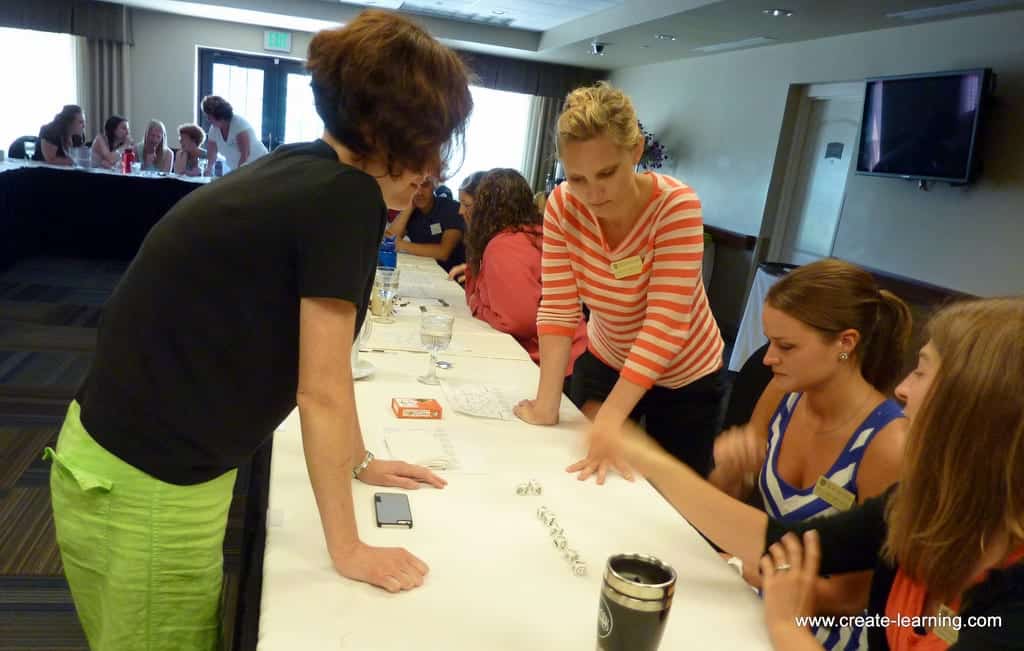
 Team building is an essential component in industry and in education. Teams offer a systematic structure to address prevent and solve many of the problems we face in education today that are too difficult for one person or one group to solve. In addition, effective teams:
 There are four stages of team development:
 “It is critical to understand a basic concept of teamwork, that everyone has a vital role in the organization. This concept allows that team members “figure out” what their goals should be and what kinds of problems they should be looking for, where to look for them, and what solutions are important. Consider the fact that the people at the level where the work gets done know best where the problems lie. Professional and support staff, parents and sometimes students working in teams are the essential ingredient in understanding what is happening at the places where the work gets done. Therefore, everyone in the system is involved in studying it and proposing how to improve it. Learning is part of work, driven by each person’s need to be effective. Problem solving and shared decision-making processes must address the same problem: how better to meet the learning needs of students.”
 Leadership
 A Clearly Defined Vision
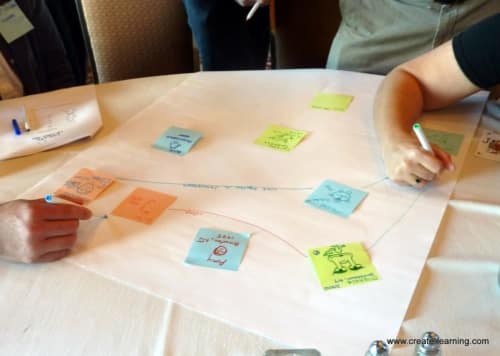
 Contribute ideas and solutions. Team members need to draw on their own expertise and experience and contribute ideas and solutions. Creative input from a variety of member perspectives is the basis of effective problem solving.
 Team members are supportive to achieve results

 When a state creates opportunities for districts to personalize learning for their students, through pilot programs, innovation zones or through other allowances through their state education agency, they send a message to districts that they are committed to growing and sustaining this work over time. They are making a commitment to innovative learning. Such is the case in North Dakota.
 Project based learning, the rising star in the educational firmament, is on the lips of nearly every teacher and district in the U.S. and in many countries abroad. A newly recruited army of PBL experts march to the front of professional development workshops, evangelizing for project-based work and selling the notion that this is what 21st Century education looks like.
 PBL will bloom when PBL teachers define intelligence as psychologists do today: As behaviors that matter in today’s world. Which behaviors matter most?
 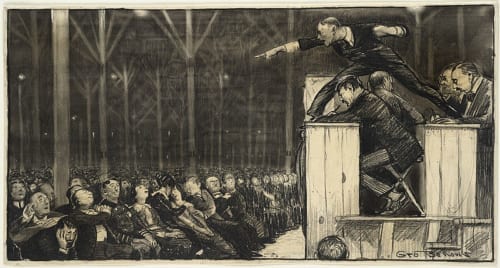 500 years ago, theologians stood at the lectern and shared ‘nearer to God’ content with neophytes. That stereotype clings to the teaching profession, which still focuses on instructional delivery, classroom management, and pacing guides because that’s what teachers do. There is still room for this approach, but we refuse to see what teaching has become: A facilitative profession in which the skills of mentorship, diagnosis, designing, and assessing the deeper aspects of human performance are critical. This is especially true of PBL, which relies on a culture of care and a sincere bond between teacher and student to fuel and support the personalized process of self-motivation and curious investigation that ignites and excites a student.
 Thinking of PBL as a designed learning experience allows us to connect design thinking, maker spaces, inquiry-based learning, personalized learning, and other forward-leaning ideas into the grand unified theory that will serve as the template for 21st Century education. The tenets of PBL — a challenging problem, collaborative inquiry, a design and draft and revise process, and a public sharing of learning — provide a fine structure for any investigative process, whether a project on Shakespeare or an engineering problem. PBL can move forward by becoming a flexible design process applied and personalized for audience and subject, whether a case-based PBL focused on helping students become workforce ready, a science-focused PBL that prepares students for the deep analysis on Advanced Placement exams or a global studies PBL centered on research and solutions to pressing issues.
 Founder of



 Teachers rejoiced at the variety of fun and engaging free digital tools that they could use with their students, the wonderful interaction the tools brought and the great impact on classroom instruction that they had. They were able to see student responses and intervene promptly to correct misconceptions, to give students homework and track the progress through the tasks, they were even able to tag their test questions to learning standards to determine what understanding of the concept that the student had. Schools and district administrators rejoiced at the teacher enthusiasm and student excitement with the digital transition and looked forward to seeing improved learning outcomes.
 We can call this the K-12 Big Data Dilemma. As we well know, the
  In Houston ISD (HISD), we started the digital transition four years ago, and it included 1-1 programs, the implementation of an LMS, a digital content and curriculum initiative that made all high school books available exclusively online, and the circle was completed with a transition from paper and pencil to eAssessments (online testing) on the state and formative assessment platforms. The HISD eAssessment program complements the integration of digital curriculum, which advances the instructional goals of personalized learning, data ownership and improved mastery; this is facilitated by a formative assessment platform, OnTrack, powered by School City, that satisfies our authoring and reporting needs, aside from being nimble with online assessments as it is with paper. All systems and digital tools purchased by HISD are conformant with IMS Global interoperability standards, and facilitate a cohesive data flow.
 Because so much of the student academic data comes from teacher-student interaction in class, and this information is “live,” it is important to learn how to capture it in a meaningful format, which enables for it to be aggregated. It was therefore important to train teachers on how to build digital assessments that are reliable and standards- aligned. In HISD the schools are becoming accustomed to teaching and learning on mobile devices, and online formative assessments are increasing at a vertiginous rate. To support the digital transformation, and prepare for next gen assessment, Digital Assessment Literacy is focused both on the utilization of assessments and data, and on the assessment authoring aspect. Data relevance, heat maps, and Data Driven Instruction (DDI) are elements that campus and district staff are continuously training on and putting in practice when creating assessments, as well as when making data driven learning decisions. To support ease of test authoring for teachers we purchased the new formative assessment platform, School City. School City enables the test authors at all levels to align the test items to learning standards, and embed accessibility features, which mimic the Texas state standardized assessment accessibility features to support all student learning needs. It also provides a reporting feature that is easy to read and helps teachers support students’ learning with personalized learning resources. Maybe the most important and valued feature is the student facing data, which is released at the end of the test where students see what questions they missed and how they are connected to their learning, before they even see the grade.
 Diana Bidulescu, M.Ed. is the Online Assessment Manager for