Changes in How Students Learn Requires Changes in How Teachers Learn
By Kristi Meeuwse and Diane Mason
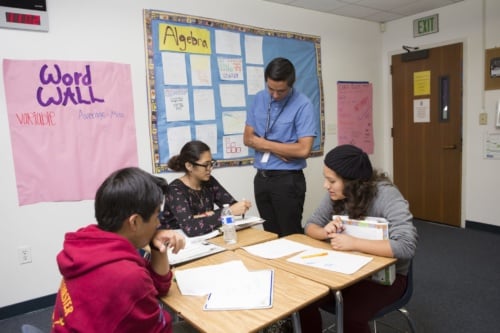 Daily, teachers interact with students in a variety of ways to focus on learning outcomes, but not all teachers are well-equipped with the necessary skills to target specific student needs. For students to learn at higher levels, teachers must also learn at higher levels. In fact, teachers need a learning practice in addition to a teaching practice. Learning practices for teachers must include a focus on student learning, which requires ongoing support from colleagues and the principal. Changes in how students learn requires changes in how teachers learn. Yet, most professional learning opportunities consist of one-shot workshops designed to cover multiple grade levels, leaving busy teachers to scale the content that is provided.
Scaling Content
 This scaling of content is most difficult for early childhood educators. Early childhood, as defined by the National Association for the Education of Young Children, or NAEYC, is the education of children up to age eight. In some districts, early childhood is considered preschool to grade two, and in others, it extends to grade three. Too often, these teachers are grouped together for professional development workshops and webinars in literacy. Grouping these teachers together is problematic, as preschool literacy activities are vastly different from those in second and third grade. In fact, best practices in literacy development for each early childhood grade level build systematically on one another.
Kindergarten students focus heavily on phonemic awareness and concepts of print. Students in second grade are building reading fluency skills and reading longer passages with greater text complexity. Due to the differing nature of literacy practices in these grade levels, combining them for professional development results in confusion and frustration. When teachers have to scale content to fit their teaching context, they are less likely to make these instructional changes. One size does not fit all. Teachers, like students, possess different levels of knowledge and understanding. In teaching, this means individuals vary in their abilities and expertise with implementing new and emerging instructional strategies. One way to broaden knowledge and expertise while building confidence in instructional approaches is through personalized learning.
Personalized Professional Learning
 Research demonstrates teachers are more likely to make instructional changes when professional learning is ongoing, job embedded, and personalized to individual teacher needs. This personalization of professional learning should consider the teaching context, previous knowledge and instructional needs of each educator. The end goal is to build individual capacity and create lasting change in pedagogical practices. Some districts are utilizing instructional coaches to model best practices and work with individual teachers and grade level teams, as veteran teachers do not have the same professional learning needs as first year teachers. Personalizing professional learning with coaching and reflection provides teachers with the ability to see the impact on their students and practice new instructional skills in a safe environment.
Credentialing
 In addition to coaches, a few school districts are incorporating microcredentials and online professional learning platforms that provide individual learning plans for teachers. Microcredentials, or digital badges, are performance-based assessments that allow teachers to showcase their growing skills. Each microcredential is focused in a particular area, has submission criteria, a research base, recommended resources and a scoring rubric. Microcredentials allow teachers to engage in self-paced, job-embedded professional learning that is connected to the daily skills teachers need.
First, the principal and teacher sit together to create a professional growth plan. The teacher then is able to work with the instructional coach, complete online microcredentials, work in an online professional learning platform and/or take courses to demonstrate the learning targets identified in the professional growth plan. With the assistance of an instructional coach and planned personalized professional learning experiences, teachers can hone in on specific teaching needs. For example, the instructional coach can offer suggestions or model ways to incorporate technology integration to meet varied student needs. A coach can also serve as a sounding board and expert to guide practical ways for improving instruction and integrating varied technology tools within curriculum.
Incorporating Technology
 Personalizing professional learning must also include the incorporation of technology. In today’s digital world, our students are more connected than ever. Since anytime learning is both personal and pocketed, students require teachers who are able to integrate technology in meaningful ways to enhance deeper learning. Yet, many teachers are lacking the technological skills to effectively do so. Further, teachers also lack a clear understanding of the connection between teaching, technology and content. To affect change through the implementation of personalized learning through professional development with technology, it is important to consider the perceptions, beliefs, attitudes, and self-efficacy of teachers involved in implementing technology in their classrooms. This is best achieved through instructional coaching and personalized professional learning incorporating technology. Engaging teachers in personalized professional learning is one way to better insure young students are exposed to current day instructional strategies aimed at building foundational skills for success.
As technology continues to daily affect our lives, it behooves educators to learn ways to effectively utilize technology tools to change the landscape of teaching and learning. Through a process of personalizing professional learning, educators can become more adept at shaping instructional strategies to better meet the varying needs of students. Furthermore, personalized professional experiences enable teachers to extend learning to improve their own “craft” of teaching. Combined with a supportive administrator and instructional coach, teachers also develop the necessary collaborative skills to affect overall change in practice deemed appropriate for developing well-equipped, academically renowned students prepared for what the future might hold.
Author
Dr. Kristi Meeuwse is a veteran kindergarten teacher in Charleston, SC as well as an adjunct professor for Lamar University in their Digital Leading and Learning Master’s Degree program. As an Apple Distinguished Educator, Kristi travels extensively sharing her innovative early literacy practices incorporating iPads into instruction. Kristi is the author of the popular blog iTeach With iPads, which is a chronological account of student voice and choice in demonstrating learning. She also authors leveled readers for her students to enhance literacy learning. Research interests include early literacy, technology integration, and professional development.
Dr. Diane Mason is an Associate Professor in the Center for Doctoral Studies in Educational Leadership at Lamar University in Beaumont, TX and is the College of Education Director of Graduate Studies and Research. During her tenure at Lamar University, Dr. Mason has taught numerous online courses in Educational Leadership and Educational Technology Leadership. In her current role in the online doctoral program, Dr. Mason works with an online team to lead a unique cohort of global distinguished educators. Her prior K-12 experience includes serving as a technology training center coordinator, teaching K-8 regular and special education, and leading as a middle school assistant principal and elementary principal.
During Dr. Mason’s tenure as a K-8 teacher, the National Foundation for the Improvement of Education (NFIE) recognized her as a Christa McAuliffe Fellow for innovative online and technology integration practices. Also, she is the past president of the ISTE state affiliate, Louisiana Computer Using Educators, peer reviews journal articles for the National Council of Professors of Educational Administration, and is a member of the Lamar University Institutional Review Board. Research interests include online learning, technology integration, professional development, school improvement, and leadership.
Further Reading

 In a previous
  But why does this rule work? Most students who learn this rule cannot answer the question why. Sadly, most students are not taught why.
 Grades 6 – 8
 1) Knowledge (facts, vocabulary, and formulas)
 Examples of Teaching Math for Understanding



 In too many classrooms, students learn math words, formulas and routines without understanding them. This can lead to patterns of mathematical mistakes, difficulties with problem solving and short retention spans. Without understanding, students are likely to become frustrated in math and lose interest in their math studies.
 Let’s start with the basics. Teachers routinely spend hundreds of dollars on pens, pencils, printer paper, scissors, glue, snacks, even soap and paper towels, which explains why during Teacher Appreciation Week, people set up GoFundMe accounts to help with classroom expenses that would otherwise come from teachers’ pockets. One teacher posted the wry comment, “Teaching is the only job where you steal things from home to take to work.”
 Beyond the lack of material resources there are more serious conditions in education that create an atmosphere of famine, turning teachers’ thoughts from success to self-preservation or simply survival. When the economy goes south, class size swells and professional development days shrink. Even in eras of economic boom, teachers endure low salaries and lower status. According to Linda Darling-Hammond from the Learning Policy Institute, in 30 states a teacher with a family of four is eligible for several sources of government assistance, including free or reduced-price lunch for their own children in school.
 For the latest evidence of this predicament you need look no farther than Arizona which is struggling with a severe teacher shortage. Thousands of teachers have left the state in recent years for reasons including low pay, insufficient classroom resources, and so many testing requirements and teaching guidelines that they feel they have no flexibility and too little authentic instructional time. Arizona’s solution according to the
 Abundance-minded teachers reach out to parents and other adults who can help them tap into the rich cultural resources of the neighborhood. And they routinely connect with colleagues, recognizing them as a superb source of nourishment. Over lunch, during coffee breaks, even in snatches of conversations in the hallway they compound their talents through cooperation and exchange. Rather than sitting in the lounge, listening to a handful of faminists reciting a litany of bad news, like-minded strivers caucus to generate new ideas. They form book clubs or hit the local happy hour, sharing their latest innovations while soaking up much needed social and emotional support. Some of these collegial connections bloom into lifelong friendships.

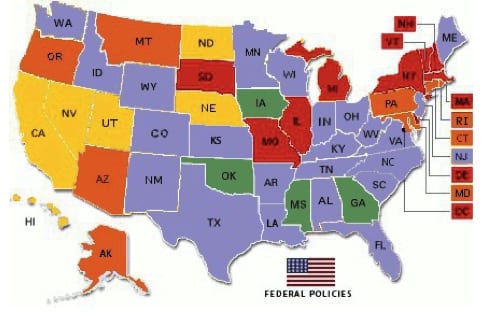
 In addition to each state deciding how they will fund and service gifted education, each state also decides how to identify gifted students. Some states use a list of state-approved tests that are nationally normed which must be used to determine giftedness. Other states are able to set local norms where grades, teacher recommendation and other subjective criteria are used. They can even determine locally what the acceptable score for students is going to be, meaning what is used to identify students in one district might have different criteria in another. This makes it a challenge for students who are changing schools. A child might qualify as gifted in that state and be offered services, but in the new state that identification might not be recognized so the student does not qualify. Some states have operating standards that dictate that whole grade testing must be done. Others simply leave it up to the schools which might do it by request only. This means if a parent is not aware of the testing procedures, they might not think to request the testing and the students will not have the opportunity to be identified.
 There is even disparity as to how one becomes qualified to offer gifted services to students. Teachers of the gifted, just like teachers of all abilities, need specialized training to help them to best reach their students. In some states this amounts to watching a couple of modules online to certify them. In other states, coursework must be followed and a certification added to the state teaching license. In some states, it is determined by the number of hours you have spent in a classroom of gifted students.
 “Let us greet each other with a smile, for a smile is the beginning of love.”
 Today I had a small taste of what Mother Teresa was talking about. Seeing the smiles of the CHAT House children, hearing their answers to our questions and seeing their joy in action was life-changing for me. I am reminded of why I became a teacher. I want every child to have the same hope my parents gave me by telling me the story of the Gospel. Jesus has walked with me every step of my life, and I want all children to have that Gift. Hope that only Christ can give.
 This year’s service project also came to my attention because of We are helping
  Last Spring, three teachers at St. Matthew Catholic School got together to write a grant for social justice. The idea for their grant came when one of our former fourth grade teachers, Patricia Wendover, finished the Just Faith course at St. Matthew Catholic Church. Patricia said that course made her want to put her faith into action. She wanted to come up with an idea that would encourage students to work towards helping those in need and act as the hands and feet of Jesus. Patricia’s idea became a MACS Education grant that she wrote with kindergarten teachers, Pat Frantz and Mary Strauss. Betsy DesNoyer joined the team when Patricia left to teach at another school and do more volunteer work. When the MACS Education Foundation awarded them the funds for their Social Justice Grant, the seeds for Poverty Action Week were planted.
 Poverty Action Week started with a visit from Bishop Peter Jugis on Monday, March 27, 2017. St. Matthew students gathered to hear an inspiring message from Bishop Jugis about the importance of Catholic social teaching. Student Council escorted Bishop Jugis to various classrooms so he could meet with students and hear what they have been doing to help others in need. The Bishop had a firsthand glimpse of each grade’s individual contribution to St. Matthew’s school wide efforts.
 None of this would have happened if one teacher hadn’t shared her idea with a few other teachers. What ideas have you been pondering as of late?