How much agency do we give students?
by JoEllen Lynch
 As educators, our role is to support young people on their developmental journey toward adulthood. In order to help them grow, we must give them autonomy in their learning. Especially in high school, young people must be able to make real choices and experience the consequences of those choices. By giving them these opportunities, we help them become independent, responsive, discriminating thinkers who bring discipline, fortitude, and curiosity to their work.
Still, secondary school educators often run up against a core tension: how much agency do we give students? On the one hand, we want young people to have choice and build independence, but on the other hand we need to enforce certain non-negotiables, like coming to school on time. How do we set rules and boundaries that support their development? Is “discipline” in the traditional sense — merits, demerits, and detention, for example — helpful or harmful to adolescent development? How do we allow students to have voice and choice in their learning while still maintaining cohesion across the school community?
 One example of this tension is the age-old dilemma of hats and hoodies. Years ago as Director of the first nationally recognized transfer school model, South Brooklyn Community High School, I was in the unenviable position of enforcing a no-hats rule throughout our school. While one part of me knew that wearing a hat does not tangibly impact a student’s ability to learn, another part of me knew how critical it was for staff to develop relationships with students. And do you know what a hat does? It allows a young person to not look you in the eye. It’s a barrier to establishing a relationship. A student can walk into your classroom, snuggle into their hat, and you’ll never know what they’re thinking or feeling.
As a staff, we made this rationale clear to students. We wanted everyone in our school community to understand that a hat ban was not an arbitrary vehicle for adult control. Rather, it was a deliberate step toward strengthening relationships between young people and adults. Still, looking back, constantly asking students to take their hats off was an incredible waste of time. Did we make up for it in eye contact? It’s hard to say. If I could do it again, I’m not sure I’d spend so much time on hats.
 Whether we’re talking about hats, homework, or attendance, boundaries are important in the development of any school community. And they aren’t just important for new schools. These are decisions that must be made and recommitted to each year. The key is ensuring that these boundaries respond to the evolving developmental needs of young people — and that they support rather than hinder their learning. At Springpoint, we encourage our partners to have a process in place for building these norms with students at the start of every school year. Adults should engage young people in decisions about the school’s mission, vision, and core values. Teachers and leaders must be able to have open conversations with students about school-wide commitments and priorities. These conversations should be ongoing. The discussion is never over.
In all these decisions, it is important for us to be guided by the developmental needs of young people — rather than by our own need, as adults, for control.
Positive youth development is an approach that brings students’ developmental needs to the forefront, urging educators to build learning experiences that channel young people’s development in a positive direction. In the words of Michele Cahill, a national expert in urban education and positive youth development, “Youth development happens whether we want it or not. That is, it is a human process. So all we’re all trying to do is influence the direction of it.” Our work in schools has shown that a positive youth development approach leads to deeper and more engaging student learning experiences and, ultimately, student success. Youth development-based approaches like restorative justice can give young people a voice in conflict resolution and boundary-setting. Transparency in grading and assessment can also enable student engagement and advocacy. Positive youth development is a holistic approach to teaching, learning, and school design.
 The research on positive youth development theory is broad and deep. It draws from adolescent psychology, brain science research, and learning science. Among the many tenets of positive youth development theory, we believe that these five, drawn from across the field, are especially relevant for the design of learning environments that enable the personal development necessary for academic achievement:
- Young people need caring, trusting, and supportive relationships with adults and young people.
- Young people respond to high expectations.
- Young people need opportunities to contribute (often referred to as “choice and voice”).
- Young people need learning experiences that intentionally engage their interests, offer them opportunities to succeed, and provide feedback to enable them to reflect on their accomplishments.
- These tenets are consistently present—young people know to expect them from the environment.
 We believe school designers should embed these tenets in every decision they make, including those involving boundaries and rule-setting. Positive youth development, when most effective, is not relegated to after-school enrichment or non-academic contexts. It is not a course or a room or a job title. Rather, it is an approach that runs through every experience a student has in school, from the moment they walk through the door to their last interaction at the end of the day.
Our new paper, How Students Thrive: Positive Youth Development in Practice, is informed by current research on positive youth development and features concrete examples of what it can look like in practice. This report also features the voices of young people, who share how positive youth development practices have impacted them in and outside of school. We hope this report will benefit design teams across the field as they develop innovative new school models.
To read the report and more on positive youth development, visit our website: www.springpointschools.org. This report is part of a series of publications exploring what it takes to design and launch innovative new schools that serve all young people. You can read the first publication in this series, Designing New School Models: A Practical Guide, here.
Author
Further Reading
- Competency Works – Making Room for Hardship in Positive Youth Development
- University of Maryland – Best Practices: Positive Youth Development
- The Huffington Post – Student Voices: Moving Beyond “When I Grow Up…”

 There is a high-demand for research-backed educational curriculum. As one recent Mind/Shift article analogizes, “You wouldn’t take medicine that hasn’t been tested.” The logic follows that you wouldn’t take a prescription from a doctor who hasn’t been trained. Fortunately, all medical school students are required to take classes not only on medications but also on how to identify and treat adverse reactions.
 The reasons neuroscience has not historically been part of standard teacher training programs are numerous and varied. Not least of which is that enormous progress has been made in the last decade and schools have not yet caught up. But the progress is promising.
  But that doesn’t solve the here and now problem which is helping our active teachers apply neurocognitive insights into their classrooms. Existing teachers will need several hours of professional development. This could be done at a nearby college, online courses, or a district-led development half-day seminar. Since every teacher (and subsequently every student) would benefit, districts can justify the expense.
 • We know teachers spend a disproportionate amount of time helping students who struggle. Understanding a student’s cognition enables teachers to help each student in less time with better results. Consider the student who seems to understand everything in class and then fails the exam. How valuable would it be for the teacher to know that the student’s weaker memory skills were inhibiting his longer-term retention? And then we give the teacher the very straightforward strategies to help that student more efficiently encode information.
 02/01/2017 | Texas | My Statesman
 02/02/2017 | United States | Engadget
 We know from research that a building administrator’s impact on student achievement is significant.
  A teacher leader is a true expert in the classroom. You may not have all the answers, but you know more about your students, know their data better and understand them as individuals better than anyone else. Experts are always striving to improve – be it an Olympic athlete, a pro basketball player or a master teacher. A teacher leader is always looking to improve not only their personal pedagogy, but also the pedagogy of those they work with.
 Domain I: Fostering a Collaborative Culture to Support Educator Development and Student Learning
 A.) Assists colleagues in accessing and using research to select appropriate strategies to improve student learning
 Start your personal reflection by turning each of these functions into questions. For example, “How do I assist colleagues in accessing and using research. . .?” How can I be more impactful in this area?
 My son was born in 2001. He was born healthy at 6lbs, 6 ounces. He was delivered at 37 weeks and 6 days gestation. I loved him with all my heart. His sucking mechanics were very strange. He had low muscle tone at his sixteen-week appointment and physical therapy was prescribed weekly through fifteen months of age (when he walked.)


 1. There is no clear federal guideline or any accountability on how IDEA and FAPE are carried out (currently, the IDEA website is down since Nancy Devos took office as educational secretary – check for yourself. It isn’t there.) It scares the crap out of me! I fear we will have a significant amount of children who are illiterate.
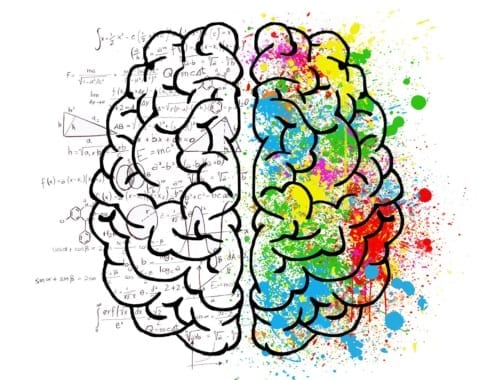 1. We need to look at each child… not as a dollar sign or a trash can that money is poured into, but as a tiny seed that needs to be watered and nourished to grow. We must look at each one’s individual needs and provide for each one differently. (Isn’t that why IEPs are called Individualized?). I don’t see how this can be done fairly without a set of guidelines from the federal government. Even now special needs families move from state to state trying to do right by their children (with whatever state has the best “services.”) All states should provide the same amount of effort, finances, and education to each child if they are truly states of America.

 Over a quarter (of respondents) said they observed “specific incidents of bigotry and harassment that can be directly traced to election rhetoric.” They reported graffiti (including swastikas), assaults on students and teachers, property damage, fights, and threats in the observations. 40 percent heard “derogatory language directed at students of color, Muslims, immigrants and people based on gender or sexual orientation.”
 Good job avoiding the subject. It just doesn’t do anybody any good to hide one’s head in the sand, because when you do, you just kicked in the butt. Ask the ostrich with red backside if you don’t believe me!
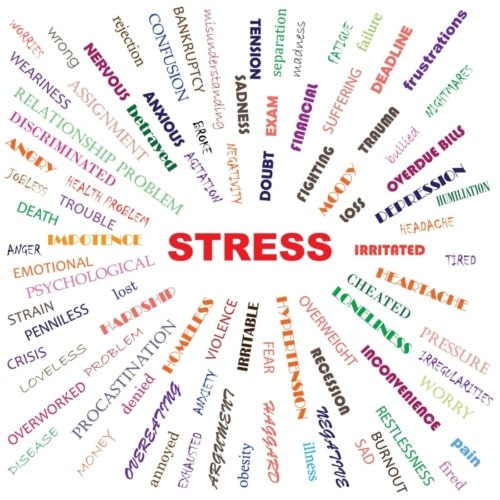 And when the students learn how to manage their emotions and resolve conflicts, imagine what you have just taught them. And it is well proven that solid SEL improves academic performance too.