Many educational institutions are behind the curve with technology
edCircuit Breakdown:
- Many schools and districts aren’t up with the latest tech trends, including simple things like communicating with parents on their mobile devices.
- Smart educators realize that technology, even in one-to-one schools, is just another tool in a teacher’s toolbox to help students learn.
- Some critics say that the trend toward online learning is taking too much personal time from students with their teachers, and is often started too young.
edCircuit Analysis:
While technology moves at a blistering pace in a lot of industries, education is notorious for being behind the curve when it comes to adopting tech solutions. Education has evolved a lot since the beginning of what would become the EdTech industry in the 1990s, the slow pace for implementation in the industry is frustrating for some parents, students and educators.
 That puts quite a burden on the people in charge of technology in schools, districts and institutes of higher learning. They have to be mindful of all the different aspects of having a successful tech program that helps improve student outcomes, including qualified leadership and recognizing cultural difference.
It is not all gloom and doom, it’s just that the education industry is slow to change. But some changes are certainly happening, with positive results. For example, in Mississippi, there is progress being made in assuring that all students have access to high-speed internet, which has opened the doors for some students to use computers and other devices to study subjects like music and foreign languages.
Author
Jim Reams is a senior-level marketing, communications and strategy consultant with over 25 years experience in both in-house and agency settings. He has specialized in EdTech and the education industry since 2009.
Further Reading

 The backlash against standardized testing has been growing in recent years. Parents, students and educators alike are growing frustrated with the amount of testing students must endure in their K-12 academic careers, which some claim averages out to a significant
 Terry Eberhardt is a music teacher at
  But based on my interaction with him, I did a double degree in education and performance at Peabody Conservatory of Johns Hopkins. The whole time I was taking the education courses I was thinking,
  TE:
TE: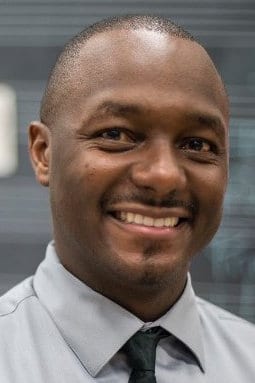 Terry Eberhardt’s love of music began with his church choir and public school chorus. Terry was recruited to a prestigious local private high school on a music scholarship. It was there at DeMatha High School, performing in the chorus, where his love of singing blossomed. It was through the transformative experiences as a music student that he was inspired to share the gift of music with young people.
 Dr. David Vroonland has quite a story to tell. He was born into extreme poverty and bounced from family to family for the first decade of his life. The only real constant during his tumultuous upbringing was going to public school, and it provided the glue that kept his life together. Now
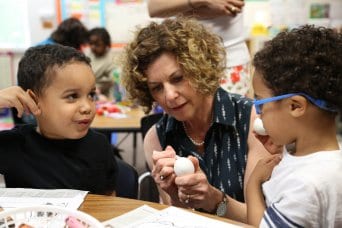 I was born into extreme poverty ─ a single parent, single mom. The father was kind of in and out but I don’t believe they were married. I don’t know the specifics of that because, by age two, I’d left that family. By age three, I’d left another family. Also by age three, I was in a new foster family and, at age ten, I was adopted by an entirely different family. So within the first ten years of my life, I literally had four ─ maybe more ─ different families.
 And I’ve had some wonderful experiences.Thanks to my wife who was a psychologist in the Air Force I was able to go to different places and experience different young people in different settings from Texas to D.C. to even Japan. Those experiences really enlightened my thinking a lot. I’ve learned through those experiences. But, most importantly, my passion just kept growing, especially around the needs of young people who weren’t advantaged by their birth in life. I really serve all kids but I must admit that’s a passion.
  So that whole idea of community engaging and loving their children ─ I guess it is connected to my past. A good observation on your part. I hadn’t thought about it that way. But our past does dictate a lot of our thinking. I think it is such a vital piece.
 He just cared about every single child individually. I don’t know how he was able to do that because I’m sure he had 180 kids, but he was able to show that and he had so much joy in what he did.
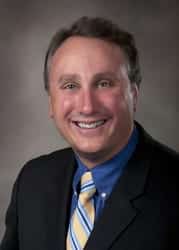 Dr. David Vroonland officially assumed his position as superintendent of
 Prior to being diagnosed as dyslexic, I, like so many, was too often typecast as lazy or lacking certain academic potentials. But this couldn’t have been further from the truth. I was simply practicing my natural ability to think, imagine and express myself differently than the expected norm.
 Learning programs must be designed to meet the equity challenges of those who require assistive technologies and those who don’t. We want to close this gap, not widen it. As a dyslexic who performs best when involved in learning conditions, I struggle with the reading requirements of many of my courses. The act of reading is not only challenging from a process standpoint, but also time-consuming and mentally exhausting.
  The shame is, apart from the hurdles of trying to read, cope and succeed in a linear world, dyslexics are faced with challenges of disclosing their diagnosis in fear of losing their employment or not getting employment in the first place.