
 EdCircuit Staff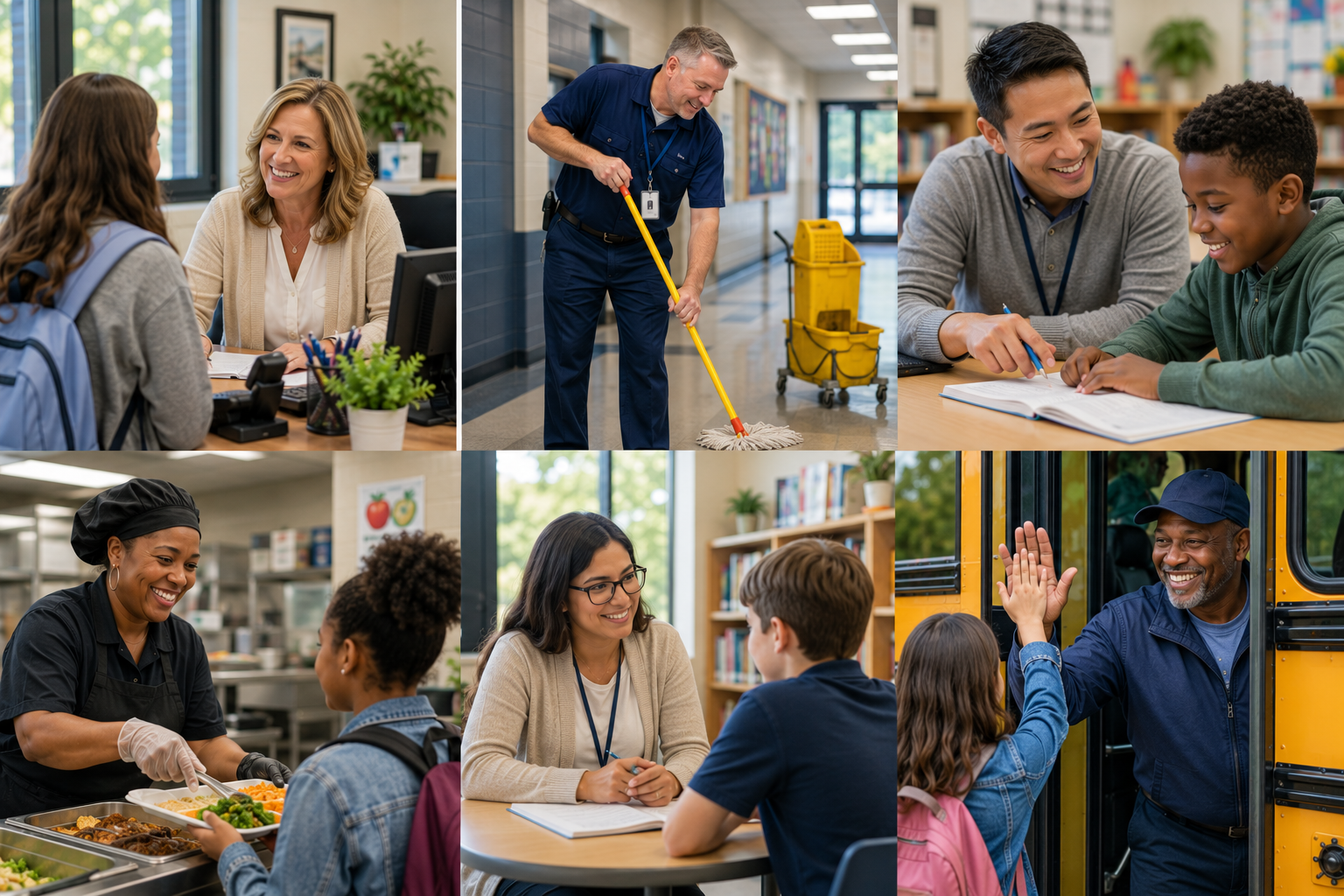
The hidden power of support staff in schools is often revealed in the moments that matter most.
A student forgets their lunch money.
A nervous parent calls the front office after dropping their child off for the first day of kindergarten.
A new teacher struggles with technology minutes before students arrive.
A bus pulls into the parking lot carrying children who need encouragement before the school day begins.
In each of these moments, the person making the difference is often not the principal or classroom teacher.
It is a member of the support staff.
While teachers and administrators frequently occupy the spotlight, the daily success of a school community depends on countless individuals whose work often goes unnoticed. Office professionals, paraprofessionals, custodians, counselors, cafeteria employees, transportation teams, technology specialists, and school resource officers do far more than keep schools operating. They help create the relationships, trust, and culture that define great schools.
Long before the first bell rings and long after students have gone home, support staff members are already hard at work. They prepare classrooms, answer phones, solve problems, provide emotional support, maintain facilities, troubleshoot technology, serve meals, and ensure students arrive safely and ready to learn.
The truth is that schools do not simply function because of schedules and systems.
They function because of people.
The First Faces Students See
For many students, the school day begins with a bus driver’s smile or a warm greeting from someone working in the front office. Those interactions may seem routine, but they often establish the tone for everything that follows.
Students who are struggling, anxious, or facing challenges at home frequently find comfort in the familiar faces that welcome them each morning. A kind word from a cafeteria employee or a friendly conversation with a school secretary can have a lasting impact on a child who needs reassurance and encouragement.
Support staff members often notice changes before anyone else. They recognize when students seem withdrawn, frustrated, or overwhelmed. They observe patterns, build relationships, and provide stability in moments when young people need it most.
Students may not remember every lesson they learned in school.
But they often remember the adults who made them feel safe, seen, and valued.
Building Culture Through Everyday Interactions
School culture is not built solely through mission statements, strategic plans, or professional development sessions. It is created through thousands of interactions that occur every single day.
Culture is found in the custodian who knows students by name. It is found in the paraprofessional who quietly celebrates a student’s success. It is found in the technology specialist who helps a frustrated teacher regain confidence after a difficult morning.
These moments rarely appear in annual reports or improvement plans, yet they shape the experiences students and educators carry with them.
Great schools understand that culture is everyone’s responsibility. Every adult contributes to the climate of a building, and support staff members often play some of the most important roles in fostering belonging, trust, and connection.
When students and staff describe why they love a school, they are often describing the people who make them feel welcome.
The Institutional Memory of a School
In many schools, support staff members become the institutional memory of the building.
They remember traditions, know generations of families, and understand the stories that have shaped the community. They often remain through leadership transitions, staffing changes, and evolving educational priorities. Their presence provides continuity and stability during periods of change.
Ask a new principal where they learned about the school’s traditions and history, and they will often point to the office staff.
Ask a first-year teacher who helped them navigate the building, and they may mention a paraprofessional, custodian, or technology specialist.
Ask a parent who made them feel welcome, and they may talk about the front office team.
These individuals carry a wealth of knowledge that cannot be found in policy manuals or strategic plans. They understand the unique personality of the school and help preserve the culture that makes it special.
Their perspective is invaluable because they see the school through a lens that extends beyond classrooms and calendars.
They see the community.
Unsung Mentors for Teachers and Principals
New teachers and principals quickly discover that some of the best advice in a school comes from support staff.
Administrative assistants understand the rhythms of the building. Counselors possess deep insights into student needs. Veteran paraprofessionals often have decades of practical experience. Custodians frequently know every corner of the school and every tradition that matters to students and families.
These individuals become trusted partners and informal mentors.
They answer questions, offer perspective, solve problems, and provide guidance that helps educators succeed. Their willingness to share knowledge often accelerates the growth and confidence of new staff members.
Wise principals recognize that leadership is strengthened when every voice is valued. They understand that support staff members are not simply employees performing tasks.
They are leaders in their own right.
The Human Connection: Families Remember
Parents and guardians interact with support staff more than they may realize. Whether calling the front office, speaking with transportation personnel, receiving assistance from a counselor, or attending school events, families often form their first impressions of a school through these interactions.
A welcoming office professional can ease the anxiety of a nervous parent.
A patient bus driver can reassure a family during a difficult transition.
A cafeteria employee who knows a student’s name can make school feel more like home.
These moments may seem small, but they help build trust between schools and families. Over time, those relationships strengthen the sense of community that great schools work so hard to create.
People may forget procedures.
They rarely forget kindness.
Supporting Student Success Beyond the Classroom
Educational success is often measured through academic outcomes, graduation rates, and assessment scores. Yet behind every successful student is a network of caring adults working together to support growth and well-being.
Counselors help students navigate challenges and prepare for the future. Paraprofessionals provide individualized support that helps learners achieve their potential. Technology specialists ensure that learning continues without interruption. Custodians maintain environments that are safe, clean, and welcoming.
Each contribution matters because education has never been the responsibility of one person or one role.
It is a collective effort.
Students flourish when they are surrounded by adults who believe in them, encourage them, and create environments where they feel valued.
Support staff members are an essential part of that network.
Investing in the People Who Hold Schools Together
For district leaders and school boards, recognizing the value of support staff extends beyond appreciation events and employee recognition programs.
It means investing in the people who help hold schools together.
Professional development opportunities, pathways for career growth, competitive compensation, and intentional recognition all communicate that support staff members are valued members of the educational team.
Retention challenges are not limited to teachers and administrators. Schools across the country are working to recruit and retain bus drivers, paraprofessionals, custodians, cafeteria workers, and office professionals. Addressing these challenges requires leaders to view support staff not as operational necessities but as strategic contributors to school success.
The strongest school systems understand that when support staff thrives, students and educators benefit as well.
Investing in people is always a worthwhile investment.
Great Schools Are Built by Everyone
It is easy to celebrate championships, academic awards, and major accomplishments. Yet many of the moments that truly define a school happen quietly.
They happen when a secretary calms a worried parent.
They happen when a bus driver greets students by name.
They happen when a custodian stays late to prepare for a special event.
They happen when a paraprofessional helps a struggling student believe in themselves.
Long after students forget a lesson, a test score, or a schedule, they remember the adults who made them feel seen.
They remember the secretary who welcomed them each morning.
The bus driver who asked about their game.
The cafeteria employee who knew their name.
The paraprofessional who celebrated their progress.
The custodian who offered encouragement during a difficult day.
These are the people who help transform buildings into communities.
Great schools are not built by programs, policies, or titles alone.
They are built by people.
And every day, support staff members help make schools places where students, families, and educators can belong.
That is not hidden work.
That is extraordinary work.
Subscribe to edCircuit to stay up to date on all of our shows, podcasts, news, and thought leadership articles.