 EdCircuit Staff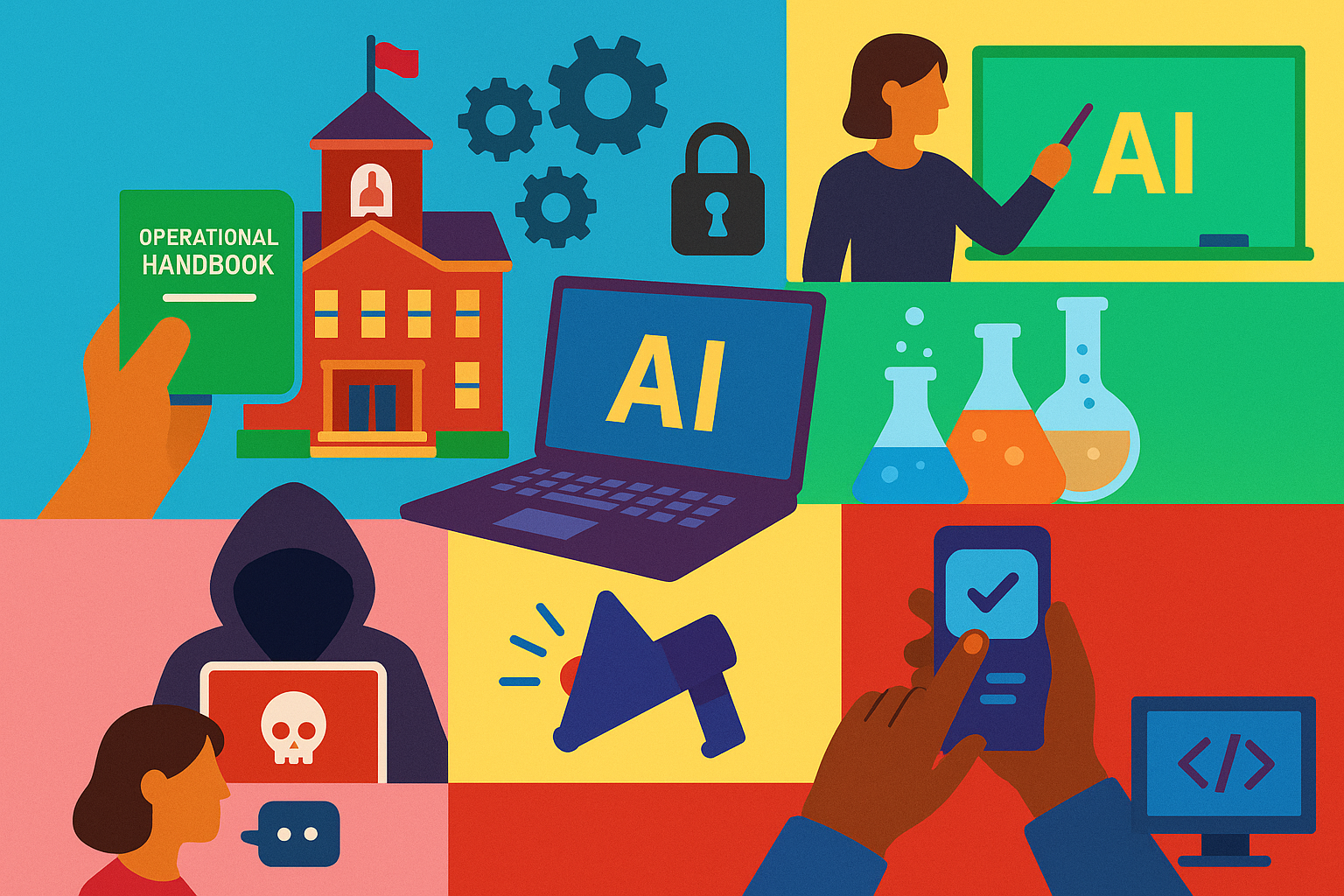
Table of Contents
Stories That Matter this week spotlight the policies, practices, and leadership decisions shaping how school districts navigate AI, cybersecurity, safety culture, and communication in 2025. As innovation accelerates and expectations rise, districts are being pushed to move beyond reactive responses and toward intentional, systems-level planning. From AI operational guidance and classroom adoption to cyber threats, lab safety, and family engagement, this week’s stories reflect the growing need for clarity, preparedness, and trust across every level of education.
Why Every School District Needs an AI Operational Handbook
Read more
Overview
This article explores why districts need a formal AI operational handbook that goes beyond policy statements. It outlines how clear guidance can support educators, administrators, and IT leaders in implementing AI responsibly, consistently, and ethically.
Why it matters
AI is already embedded in classrooms, workflows, and decision-making tools. Without a shared operational framework, districts risk confusion, inequity, and misuse. An AI handbook provides alignment, transparency, and guardrails at a time when adoption is accelerating faster than governance.
The discussion it opens
Should AI guidance live alongside acceptable-use policies, or does it require its own operational playbook? And who should own and update that handbook as tools evolve?
You Don’t Need to Be an AI Expert to Use AI in Classrooms
Read more
Overview
This piece reassures educators that effective AI use does not require deep technical expertise. Instead, it focuses on practical classroom applications, mindset shifts, and instructional confidence.
Why it matters
Teacher hesitation remains one of the biggest barriers to meaningful AI integration. By lowering the perceived entry point, districts can empower more educators to experiment responsibly rather than avoid AI altogether.
The discussion it opens
How can districts design professional learning that builds confidence without overwhelming teachers? And what does “just enough AI literacy” look like for classroom use?
Cyber Attacks on Schools: Why Hackers Target K–12
Read more
Overview
This article examines why K–12 schools have become prime targets for cybercriminals, highlighting vulnerabilities tied to staffing, budgets, and legacy systems.
Why it matters
Cyber incidents disrupt learning, compromise sensitive data, and erode trust. Understanding why schools are targeted is a critical step toward improving preparedness, training, and long-term resilience.
The discussion it opens
Are districts investing enough in prevention compared to recovery? And how can cybersecurity become a shared responsibility beyond IT departments?
Science Safety Culture: Beyond the Break
Read more
Listen to the podcast
Overview
This article and companion podcast focus on science safety as an ongoing culture—not a checklist or seasonal concern. It emphasizes duty of care, leadership commitment, and consistent practices.
Why it matters
Science labs remain one of the highest-risk environments in schools. When safety fades between inspections or breaks, incidents become more likely. A sustained culture protects students, educators, and districts alike.
The discussion it opens
What does it take to move from compliance-driven safety to values-driven safety? And how can schools keep safety top of mind year-round?
Parent Communication in Schools: What Works Today
Read more
Overview
This article explores modern parent communication strategies, examining what works in an era of apps, alerts, emails, and social platforms.
Why it matters
Effective communication builds trust and reduces confusion, while poor communication fuels frustration. As families expect timely, clear updates, districts must rethink both tools and tone.
The discussion it opens
Is more communication always better—or does clarity matter more than frequency? And how can districts ensure messages are accessible to all families?
Public Information Officers: Why Every District Needs One
Read more
Overview
This piece makes the case for dedicated Public Information Officers (PIOs) in school districts, particularly during crises and high-visibility moments.
Why it matters
From cybersecurity incidents to AI controversies, districts are under constant public scrutiny. A trained PIO helps manage narratives, maintain trust, and ensure accurate information reaches the community.
The discussion it opens
Should communication leadership be centralized at the district level, or distributed across schools? And how proactive should districts be before issues escalate?
Computer Science Education Week: Why It Matters in 2025
Read more
Overview
This article reflects on the evolving importance of Computer Science Education Week, highlighting equity, workforce readiness, and digital literacy in 2025.
Why it matters
Computer science is no longer optional. As AI, automation, and data shape every industry, early and equitable access to CS education becomes a foundational issue—not an enrichment activity.
The discussion it opens
How can districts move beyond one-week celebrations toward sustained computer science pathways? And what role should AI literacy play alongside traditional coding skills?
Closing Thought
This week’s stories reinforce a central lesson: schools can’t afford to wait for disruption before acting. Whether it’s AI governance, cybersecurity readiness, safety culture, or communication strategy, the districts that lead in 2025 are the ones building clear systems, shared understanding, and long-term trust—before a crisis forces the conversation.
Subscribe to edCircuit to stay up to date on all of our shows, podcasts, news, and thought leadership articles.