




In this 2016 interview, Lisa Costantino, a music teacher at Washington Elementary School in Trenton, New Jersey, describes what winning a 2014 VH1 Save The Music Keys + Kids piano grant meant for the students and school. A section added below explains where schools can look for music education grants and instrument funding today.
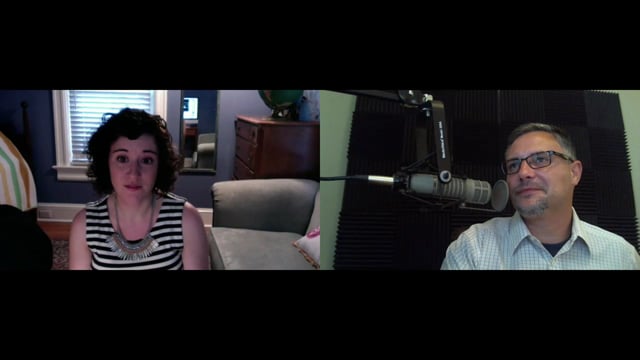
We sat down with 2014 VH1 Keys + Kids grant winner Lisa Costantino, a music teacher at Washington Elementary School, Trenton, New Jersey. She discussed the emotions behind winning and the grant’s far-reaching impact on the students’ lives. Costantino shares her first-hand experience of transforming a bare-bones music classroom into a learning-rich environment with the continued support of VH1 Save The Music Foundation.
Transcript
Host: Well, this is going to be a lot of fun if the conversation we had off-air is anything like it’s going to be on-air. We’re going to be talking to the 2014 winner of the “Keys + Kids Grant” from VH1 Save The Music Foundation. We want to remind everybody that this interview is brought to you by Soundtrap. You can make music and podcasts online, a collaborative tool for the modern classroom and a Google for education partner. Well, Lisa, it’s so nice to spend time with you, and I know it’s been a couple of years since you and Washington Elementary School were winners and recipients of the “Keys + Kids Grant” in 2014. So, take us back to 2014, what was it like then and fast forward to how it’s impacted you today as a music teacher?
Lisa Costantino: Sure. It feels like it was a long time ago. I saw the “Keys + Kids Grant,” my supervisor had brought it to our attention. I filled it out as fast as I possibly could because our school didn’t have a piano. We had one keyboard that was buried in a deep dark closet that was inaccessible. I didn’t have a piano in the classroom at that time. I knew this was a wonderful way to bring our kids together and our school together, so I applied, immediately.
Supporting the Arts
Host: Lisa, talk about it from the perspective of music education, which is often sadly marginalized when we look at the big picture of education and standards. All the different things that are under the microscope and yet we try to find where were we can support the arts. What is like to get that sort of attention paid to you – what you’re doing in your craft as a music teacher and what it means to the kids?
Lisa Costantino: Well, speaking from my district, I only received $200 for all of my supplies for the year. So, that leaves not a lot of room to be able to provide for the kids. Opportunities like VH1, having people care and show concern for kids that don’t have that much, was eye opening. For our kids and our community to see us on this big website and to show how people care so much about us, it just meant so much and the support from everyone. We had people reach out and talk about how amazing it was that people are supporting music education. So, just to get the word out, I feel like we’ve been growing and getting so much bigger from there. We just had a concert with VH1. I was also granted instruments this year from VH1. So, it’s just been an amazing partnership.
Host: That’s incredible.
Lisa Costantino: Yeah.
A Strong Network
Host: So, tell me about the response from other music teachers in other areas of the country when they found out you won? I believe educators within certain disciplines can become rich communities of conversation and learning – a shoulder to lean on. What happened when you found out you won and then, then how did the community help promotion about what you’re doing?
Lisa Costantino: Yeah, I was able to talk to a lot of music educators. Even within my district, no one could believe I won. I’m from a very wide circle of music educators. My parents are music educators. My husband is a music educator. So, the whole community, everyone could not believe how fortunate we were to be offered this opportunity. And then to see that we were chosen from applicants all over the country; this tiny little city in New Jersey, and then there was Texas, and everywhere – just to see our name pop up on TV, was so amazing.
Love of Music
Host: Lisa, what’s been the impact on the school itself? As a music teacher, you’re getting that direct impact on the students in your classroom, but I would imagine that within the school itself, there’s a great sense of pride. I mean, you’re talking about seeing them on TV. What’s been the ongoing feeling in the school, and on the campus after this?
Lisa Costantino: Well, many of the children have never performed with live accompaniment before. So, not having a pre-recorded track, I could sit down and play with my kids, and they could sing to live music. It’s a skill they would never have had otherwise, and I feel a lot of them have blossomed, and it’s given them more opportunities to perform different kinds of music. I have accompanied all of our kids at one time. It’s given them a whole new level of musicianship that they would have never had before.
Passion
Host: What about the kids that you think were drawn to your classroom afterward?
Lisa Costantino: Yeah, it’s crazy now, I had my fifth graders that I’ve had since they were in the first grade – I just don’t know what I’m going to do without them. They are my core group of kids that whenever they have a free second, run to the music room, whether it’s to play the piano or play their instruments, they have just blossomed. They are passionate musicians, which is all I could ever ask for – and it wasn’t there before we were awarded the piano. It has totally impacted all of our kids in such a positive way.
A Starting Point
Host: It’s incredible when you hear stories like yours and to see the growth over time. What advice do you have for those out there that don’t understand the value and the quality of the arts, and what it means to children, besides just sitting at the piano or singing music? What does it mean to their development from your perspective?
Lisa Costantino: Well, I know from my perspective, I came into my school with my kids not having music education for over a year and a half. And just seeing the progression from no classroom, I had nothing, I had a ukulele, and I had a drum. I used to walk around and just starting to sing with the kids, they all lit up, and they came to life. Then we started adding music everywhere. We began adding it in the classroom. We started adding it in the morning. What a change from watching that, to now. We have a piano, I have my classroom, we have all of these wonderful opportunities for our kids and as we continue to grow. I watch our kids blossom because they don’t have these opportunities at their home. And to be able to give it to them, that’s my number one priority. That’s it.
Wrap Up
Host: By bringing the heart, the passion, we understand what matters to kids. I think that’s the amazing thing with music, and it’s nice to see how VH1 Save The Music Foundation is working. It sounds to me like they have continued to support, which is fantastic. We’ve been flushed in our general lives with marketing that is dropped in and then the support leaves. But it sounds like VH1 has done it differently by continuing to support a fantastic cause. I hope that we can continue to connect with you and learn more about you and your students and what they’re doing.
Lisa Costantino: Absolutely, anytime. (dog bark) (laugh)
Host: (laugh) That’s great. Well, we want to thank our sponsors of the interview today – Soundtrap, where you can make music and podcast online, a collaborative tool for the modern classroom, a Google for education partner.
Music education grants in 2026: where schools can look for instruments and funding
Lisa Costantino explains above that the district gave $200 for all of the music supplies for the year, and that a school with no working piano could not offer what Costantino calls a whole new level of musicianship. This situation is common enough that teachers, principals and parent groups regularly ask where music education grants come from and how to apply. This section collects what the main funding routes look like now, based on the organizations’ own pages.
Save The Music Foundation
The foundation that ran the grant Costantino won now describes its work at savethemusic.org. It says it supports partner communities by donating instruments and music technology, providing support services for teachers, and advocating for music education, and that it tailors programs to each district’s needs. The site reports that it has helped more than 2,800 schools start music programs and cites a need of about 4 million U.S. students without access to music education resources. The page focuses on public and underserved schools but does not set out eligibility criteria or an application process. The Keys + Kids program that Costantino received is not mentioned on the page, so a school should contact the foundation to ask what is currently offered and how to be considered, rather than assume the same piano grant is still open.
Mr. Holland’s Opus Foundation
The Mr. Holland’s Opus Foundation gives instrument grants by invitation only. A school first completes a pre-qualification form during an open call, and only qualifying schools may be invited to apply. The listed requirements are a public school (including public charter schools) in the United States, Washington D.C. or a U.S. territory; at least 65 percent of students who are economically disadvantaged; an established music program that is part of the regular school day; a dedicated music teacher who has taught at the school for at least two consecutive years; an existing inventory of instruments or equipment; and a designated music classroom with secure storage. When the page was read for this article it stated that there were presently no open calls, so a teacher needs to check back for the next one.
Federal money that districts control
Some of the largest sources are not grants a teacher applies for directly. The National Association for Music Education (NAfME) publishes toolkits on its advocacy page about federal funds, including Title IV-A, which it describes as the Student Support and Academic Enrichment grants that give school districts supplemental funding in three broad areas. These funds are decided at the district level, so the practical step is a conversation with the district office about whether music instruments, instruction or teacher training can be included in the plan. NAfME’s page lists the toolkits but does not state how much any district receives or exactly which purchases are allowed, so a district’s own grants office is the place to confirm.
What strengthens an application
The Mr. Holland’s Opus requirements show what funders tend to look for, and many other programs ask for similar things. Schools can prepare in advance by:
- listing the instruments and equipment the school already has, with their condition;
- identifying a secure room and storage;
- keeping a record of how many students receive music instruction and how often;
- collecting the share of students who are economically disadvantaged, since some funders use it as a threshold; and
- writing down what students would be able to do with the new instruments, as Costantino does when describing children performing with live accompaniment for the first time.
Realistic expectations
A grant is usually a start and not a full budget. Costantino says a later instrument donation and a concert with the foundation followed the piano, which suggests that a first award can lead to a longer relationship. Even so, a school should plan for repair, replacement and a teacher’s time, and treat a grant as one part of a budget that the district also supports. Families and community groups can also ask the board how music is funded and request a line for instruments in the next budget.
Subscribe to edCircuit to stay up to date on all of our shows, podcasts, news, and thought leadership articles.
Related reading
More on Creativity

