What’s the Biggest Myth About the Common Core?
Education thought leaders discuss the myths and misunderstandings that surround the Common Core State Standards.



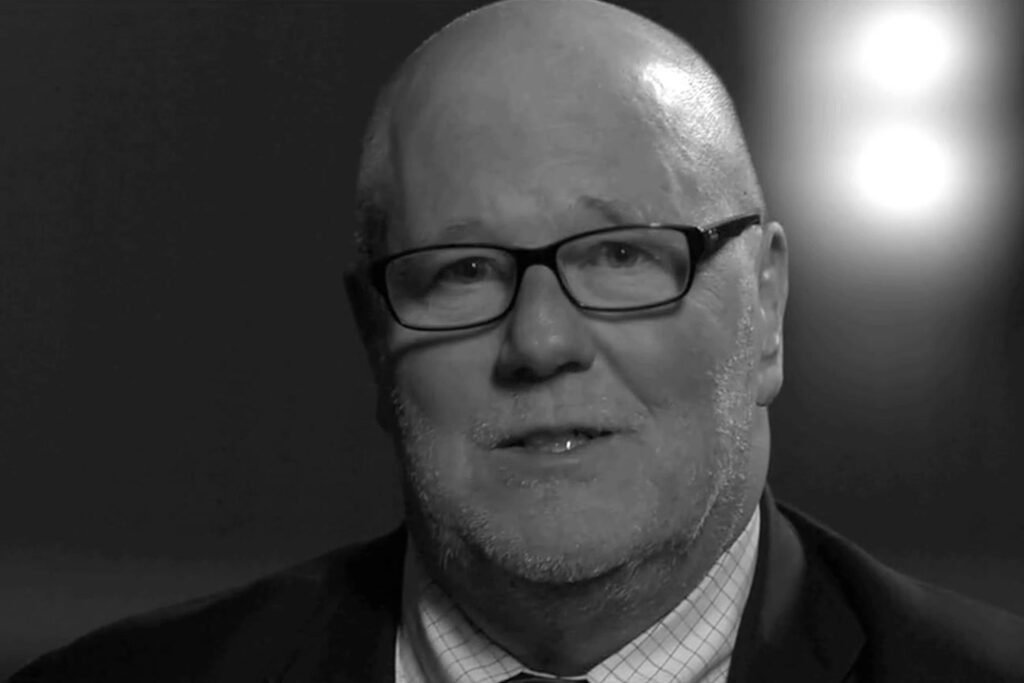
Three education leaders tackle two Common Core myths: that it was a federal program and that it dictates teaching methods, and what has changed since 2015.
Few education policies have been argued over as loudly as the Common Core State Standards. In 2015, three education leaders were asked: what is the biggest myth about the Common Core? Their answers centered on two misunderstandings: who created the standards, and what the standards actually require of teachers.

Myth one: the Common Core was a federal program
Jim Kohlmoos, Principal, EDGE Consulting, was direct. “I think the biggest myth about the Common Core right now is that it’s a federal program,” he said. “It’s really a state-driven and always has been a state-driven activity,” with governors, state boards of education and state legislatures driving adoption within their own states. In his account the federal government “played a minor role in terms of encouragement and some funding support,” while state superintendents and the National Governors Association led the work. He called it unfortunate that people kept describing the standards as a federal takeover of education. “The opposite is true,” he said.
The record supports the core of that account. The standards were released on June 2, 2010, by the National Governors Association Center for Best Practices and the Council of Chief State School Officers, after a process those organizations said was led by governors and chief state school officers in 48 states, according to the launch announcement. Each state then decided for itself whether to adopt them.
Critics saw the federal role as larger than encouragement. The Senate education committee’s summary of the Every Student Succeeds Act argued that the Race to the Top grant competition and No Child Left Behind waivers had pushed states toward the standards. That law, the Every Student Succeeds Act of 2015, settled the question going forward: it bars the federal government from requiring, influencing or incentivizing states to adopt any specific academic standards, the Common Core included, and from acting against a state that withdraws from them.
Myth two: the standards dictate how teachers teach
Kara Kerwin, President, Center for Education Reform, said the biggest myth “really goes to what it actually is and what is being taught.” The standards, she explained, are just that: “a bunch of words on a piece of paper” describing what students should be able to do. They are not necessarily the “fuzzy math” people kept hearing about, and “it’s not about some of the methods that teachers are being told that they have to teach a certain way.” Anyone who tried the practice tests, she suggested, would find that the math she learned two decades earlier still applied. What students experienced, in her view, depended on how each state implemented the standards.
That distinction between standards and curriculum was part of the original design. At the 2010 launch, Florida’s education commissioner, Eric J. Smith, said the standards “do not dictate how teachers should teach.” The release added that the standards enable schools and teachers to decide how best to help students reach them.
Why shared standards, and why standards at all
Joseph Olchefske, CEO, Flex Academies, began by describing himself as “a big believer in standards,” which he defined as “very clear objectives about what you want every student to know and be able to do.” States had set their own standards for years, he noted, and it was a legitimate observation that “the Mississippi standards were different than the Massachusetts standards which were different than the Montana standards.” In his words, “Common Core is simply an effort to create a set of standards that states can share.”
He named two myths. The first, that the Common Core was a federal mandate, he called “absolutely false”: states developed the standards together and decided individually whether to adopt them, and some chose not to. The second, which he said he found offensive, was the argument that schools do not need common standards, or standards at all. As an educator, he called that “a fallacious argument.” A society built on equality of opportunity, he said, should aim for “every kid reading by third grade, every kid doing algebra by eighth grade, every kid being college-ready by 12th grade.” Other standards could be written, he acknowledged, but rejecting the Common Core should not lead to “a world where standards don’t exist.”
What has changed since 2015
This conversation was recorded more than a decade ago, Indiana had already become the first state to withdraw, in 2014, though critics noted its new standards could still draw on the Common Core, as K-12 Dive reported. Since then, Florida announced in 2020 that it was replacing the Common Core with its own B.E.S.T. standards for English language arts and math, Bay News 9 reported.
The questions the three speakers raised are worth asking whenever standards are rewritten. Who sets expectations for students, and how much should they differ from one state to the next? Where does a standard end and a curriculum begin? Leaders who explain the difference between a standard and a curriculum clearly can keep a debate about standards focused on what students should learn. For one educator’s answer to the standards’ critics, see edCircuit’s Educator Challenges Common Core Critics.
Subscribe to edCircuit to stay up to date on all of our shows, podcasts, news, and thought leadership articles.
Related reading
More on Education Industry Questions