
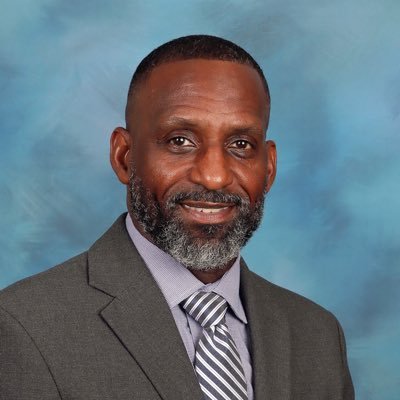

Early in my career, I believed better data systems and tighter intervention protocols could solve chronic absenteeism. But after more than two decades in K-12 education, serving as a classroom teacher, a high school principal, and now as the Director of High School Education in Virginia’s Henrico County Public Schools, I’ve learned that data can tell you who is missing, but cannot tell you why. Even more importantly, I’ve learned that the gap between those two questions is where students fall through the cracks.
Through a recent pilot initiative conducted in collaboration with Concentric Educational Solutions, our team had the opportunity to go deeper. We went into the community and onto front porches to have real, sometimes uncomfortable conversations with our chronically absent students and their families. The ethnographic research that emerged from this work offered a level of context that no attendance dashboard could fully capture. Through this direct, sustained engagement with students and families on their own terms, in their own spaces, without an agenda beyond listening and understanding, our district team learned a number of important lessons, including:
Root causes are rarely what we assume. Transportation barriers, work obligations, housing instability, unaddressed trauma, and real disconnection from school culture were the primary reasons for chronic absences and not apathy or defiance. When you sit across from a family and ask, without judgment, and hear what’s actually in the way of attending school, the answers are both humbling and clarifying. Too often, schools design interventions around the absences they expect to see rather than the ones that are actually occurring. Ethnographic inquiry uncovers what is really coming between kids and school, forces school systems to confront that gap honestly, and then build responses around what’s really happening on the ground, and not assumptions.
Resource allocation has to follow the evidence. Before this work, we were investing in broad-based awareness campaigns, generalized outreach, and a variety of student supports. The ethnographic findings we uncovered through this work helped us zero in on our efforts to provide more targeted, student-specific supports that connect families to community resources that addressed the actual barriers to attendance. When resources are finite, and they always are, precision matters. Understanding root causes at the individual and community levels allowed us to deploy resources where they would have the greatest impact, rather than spreading them thin across interventions that didn’t reach the students who needed them most.
Targeting matters more than volume. Not every chronically absent student needs the same intervention. The research we received through this collaboration helped us build more precise student profiles and deploy the right support at the right time. That kind of intentionality is what separates attendance work that moves the needle from attendance work that generates paperwork. A student missing school due to caregiving responsibilities at home needs a fundamentally different response than one who feels unsafe in the building. Knowing the difference is everything.
Team structure shapes outcomes. Perhaps most practically, this work prompted us to reorganize how our district team operates. Cross-functional collaboration between school counselors, social workers, administrators, and community liaisons grew much stronger. Chronic absenteeism is rarely a single-department problem, and it shouldn’t be treated as one. When the right people are aligned around shared data and a shared sense of urgency, the work accelerates. So do the results.
This work affirmed that effective attendance intervention isn’t built around compliance or consequences. It’s built around connection, a genuine commitment to the human being behind every absence, and to reconnecting students and families with schools, community, and a sense of possibility. That’s what a human-centered approach actually looks like in practice.
We know chronically absent students are seven times more likely to drop out before graduation. We know the pandemic accelerated a crisis that was already building. What we sometimes forget is that behind every data point is a child who, with the right support, can and will come back.
That’s the work. And it starts with showing up for them the way we’re asking them to show up for us.
If you are ready to move beyond dashboard data and adopt a human-centered approach to solve your chronic absenteeism crisis, consider starting with ethnographic research in your own community. It’s time to build intervention strategies that address the real root causes and ensure every student feels connected and supported.
Subscribe to edCircuit to stay up to date on all of our shows, podcasts, news, and thought leadership articles.