 Amy Valentine
What most kids experienced this spring was not online, virtual, or blended education. At best, it was crisis schooling. It’s time to shift to something better.
What most kids experienced this spring was not online, virtual, or blended education. At best, it was crisis schooling. It’s time to shift to something better.
When asked if schools would be able to go back to “normal,” a superintendent recently quipped, “Normal is a setting on a washing machine.” (In actuality, this is such an insightful response.)
Here’s why. Covid-19 shattered our paradigm of normality in education. It became a catalyst for change within our schools and K-12 education system as a whole. Seemingly overnight, homes were turned into classrooms, teachers transitioned to remote instructors, and parents were thrust into the role of learning coach for their children.
The goals were the same: to keep kids engaged in school, focused on learning while keeping them safe and protected from the coronavirus. Using technology was new to many educators, students and their families, and it all happened so quickly. Too quickly to educate people on what they were experiencing.
As such, the pandemic caused America to move into a state of crisis schooling.
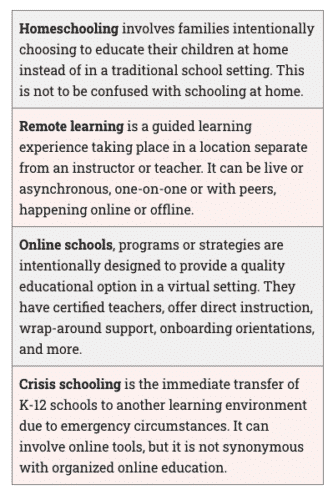 Crisis schooling is very different from online education, virtual schools, blended learning and homeschooling. Crisis schooling was born from exigent circumstances and empowered everyone to embrace a ‘whatever it takes’ mentality to support the needs of children—from delivering meals to preparing remote learning packets to transitioning over to the use of technology as a means of communication. During this time, 70% of teachers indicated that their main modality of communicating with families was through e-mail.
Yet online education is so much more than e-mail messaging back and forth.
K-12 online schools have been around for two decades. They are actual schools, with learning experiences that have been developed and designed to be delivered fully online. Administrators set policies; certified, qualified teachers design course content and teach students; opportunities abound for peer collaboration, and high-quality special education services are provided, among other supports.
My experiences as both an in-class and online educator of students in grades 6-12 and at the university level have given me keen insight into the different types of educational models out there. There are benefits to all of them. But if we lump them all together into one category, we will never appreciate what makes them unique, or relevant for different types of learning styles.
Online and virtual schools are getting a bad rap right now. While these types of innovative schools are not new to America, they are new to most Americans. Think about it—the average school in America has existed, relatively unchanged, since one-room schoolhouses emerged in the 1600s. How can we expect that people, especially teachers and students, would be able to adopt such major operational changes, in such a short period of time?
Covid-19 has changed all of that. Due to the swiftness by which decisions were made, we did not stop to talk about this shift at the time. Now, as districts and schools across the country work to determine what school will look like this coming year, there is an imperative need to educate our country about the difference.
What most kids in our country experienced this past spring was not online, virtual or blended education. It was crisis schooling at best. And the time has come to shift from reactive to proactive regarding how we use technology and innovative practices to most effectively reach our students.
Understanding the nature of crisis schooling will help everyone, especially those leading brick-and-mortar schools that were catapulted into new ways of functioning. When we look forward at what the future of school will be in our country, we must do exactly that: look forward, not back.
Crisis schooling has undoubtedly challenged our education system, and now, we have an amazing opportunity to support the redesign of school to better serve the needs of all students. But this cannot be done with a frantic mindset. We must shift to the next phase of ‘new school’ in order to make this happen. Together, we can thoughtfully craft an approach toward a new normal that will get us there.
This article originally appeared on The Daily Yonder
Further Reading
- New York Times – New Jersey Gives Schools an All-Remote Option
- edCircuit –
- Los Angeles Times – Back to School in a Pandemic: The Basics of Remote Learning
Subscribe to edCircuit to stay up to date on all of our shows, podcasts, news, and thought leadership articles.