

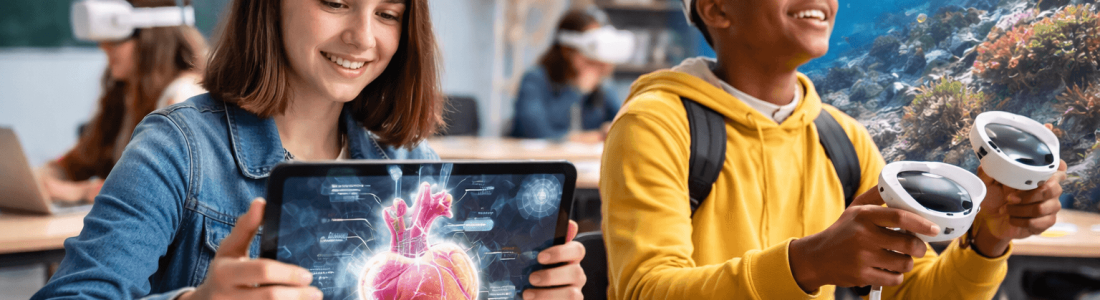
Virtual reality places students inside a simulated environment through a headset; augmented reality lays digital images over the real world through a phone, tablet or glasses. In schools they are used for virtual field trips, science simulations, career training and building empathy, often for experiences that would be too costly, distant or dangerous to have in person.
edCircuit's coverage is written for teachers, technology leaders and school decision makers. It looks at immersive learning in middle and high school, how VR and AI are opening the world to K-12 students, what the research says about learning in VR, AR apps that change how students study biology, and using AR and VR to build soft skills, along with the questions of cost, age limits and screen time. For wider classroom technology, see EdTech.
Start with the articles below, then browse the full archive, newest first.