
 EdCircuit Staff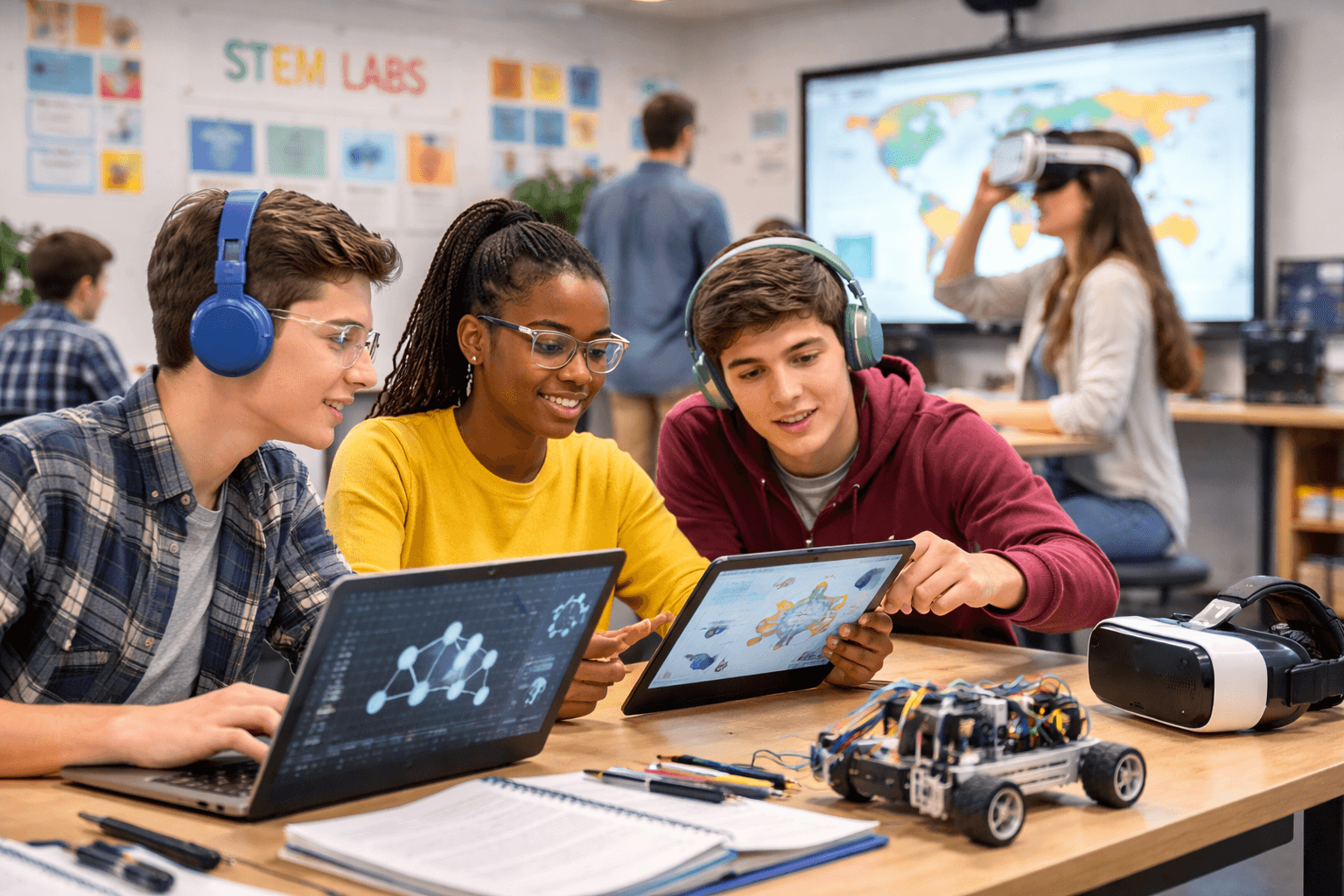
Table of Contents
EdTech in high school is transforming classrooms as students use digital tools, artificial intelligence, and collaborative platforms to learn, create, and explore ideas in entirely new ways. What once began as occasional computer access in school libraries has evolved into a dynamic ecosystem of digital tools that shape how students research information, complete assignments, and interact with peers and teachers.
Today’s high school students have grown up in a digital world. From smartphones and gaming systems to streaming media and social platforms, digital interaction is a natural part of their daily lives. As a result, schools are increasingly integrating educational technology into classrooms in ways that extend far beyond traditional computer labs.
Modern classrooms now blend instruction, technology, and creativity to support deeper engagement and expanded learning opportunities. Rather than replacing traditional teaching methods, educational technology allows teachers to expand the ways lessons are delivered, and students demonstrate understanding.
From Computer Labs to Digital Classrooms
The presence of technology in schools has evolved dramatically over the past two decades.
In the early 2000s, computers in schools were often limited to dedicated labs where students learned typing, basic research skills, and productivity tools. Internet access was still developing, and digital learning platforms were relatively limited.
As wireless internet and mobile devices became more accessible, schools began integrating laptops and tablets directly into classrooms. Learning management systems enabled teachers to organize assignments digitally and gave students access to course materials outside the classroom.
Today, technology is woven into everyday instruction across nearly every subject area. Students use digital platforms for writing, research, collaboration, and project development. Teachers incorporate multimedia resources, simulations, and interactive tools to make lessons more engaging and adaptable to different learning styles.
This shift has created learning environments that look very different from classrooms just twenty years ago.
Digital Tools Are Expanding Classroom Possibilities
One of the most noticeable changes in modern high schools is the wide range of digital tools available to teachers and students.
In many classrooms, students collaborate on shared documents in real time, analyze data sets using online platforms, or create multimedia presentations that combine research, storytelling, and visual design. Instead of relying exclusively on textbooks, students can access primary sources, videos, interactive maps, and digital archives that bring lessons to life.
For teachers, these tools create opportunities to design learning experiences that are both interactive and flexible. A history teacher might guide students through digital archives of historical documents, while a science teacher may incorporate simulations that allow students to experiment with environmental or chemical systems.
Assignments themselves have evolved. Students may now create podcasts, digital portfolios, interactive presentations, or short documentaries that demonstrate their understanding of a topic.
These experiences allow students to move beyond memorization and actively engage with ideas.
Artificial Intelligence Is Entering the Classroom
Artificial intelligence has quickly become one of the most talked-about technologies in education.
Early discussions about AI often focused on concerns about academic integrity and the possibility that students might rely too heavily on automated tools. While those concerns remain important, educators are increasingly exploring how artificial intelligence can support teaching and learning.
Students may use AI-powered tools to brainstorm ideas for writing assignments, review challenging concepts, or receive step-by-step explanations when solving difficult problems. For example, a student working through a complex algebra problem may use an AI tool to better understand the reasoning behind each step.
Teachers are also experimenting with AI in ways that support instruction. AI tools can assist with generating practice questions, organizing lesson ideas, or providing quick feedback on written work.
At the same time, many schools are placing a growing emphasis on AI literacy. Students are learning not only how to use artificial intelligence tools but also how to evaluate their accuracy, recognize potential bias, and understand their limitations.
These conversations are helping students develop responsible and informed approaches to emerging technologies.
Creativity and Media Production in the Classroom
Educational technology is also transforming how students express creativity and communicate ideas.
Digital media tools now allow students to produce podcasts, video documentaries, digital artwork, animations, and interactive presentations as part of classroom assignments. These projects combine research, storytelling, and design in ways that extend beyond traditional written work.
For example, students in a history course might create documentary-style videos examining key historical events. In a science class, students may create digital presentations that explain environmental research findings. Technology and media courses may involve designing websites, building mobile apps, or producing short films.
These types of projects encourage creativity while also helping students develop communication and media literacy skills that are valuable in many modern careers.
Collaboration in a Connected Learning Environment
Technology has also transformed how students collaborate with one another.
Cloud-based platforms allow students to collaborate on shared documents, presentations, and projects regardless of their physical location. Students can contribute ideas, revise work, and provide feedback in real time.
In many classrooms, group assignments now involve collaborative research, shared writing projects, or digital presentations where each student contributes to a final product.
These collaborative tools mirror the types of teamwork students will encounter in modern workplaces. Many professions require employees to collaborate across teams, departments, and geographic locations using digital platforms.
By working together in connected digital environments, students gain valuable experience with communication, collaboration, and project coordination.
Preparing Students for a Digital Future
The growing role of educational technology reflects a larger goal: preparing students for a world where digital skills are essential.
Many careers now require familiarity with digital communication, data analysis, online research, and creative problem-solving using technology. Students entering college or the workforce will be expected to navigate digital environments with confidence.
By integrating technology into everyday learning experiences, schools help students develop digital literacy skills that extend far beyond individual assignments.
Students learn to evaluate information, communicate ideas through multimedia formats, collaborate digitally, and adapt to emerging technologies.
These capabilities are becoming essential for success in both higher education and professional environments.
The Future of EdTech in Schools
As educational technology continues to evolve, classrooms will likely become even more interactive and personalized.
Emerging tools such as virtual reality and augmented reality may allow students to explore historical locations, conduct simulated science experiments, or visualize complex engineering designs in immersive ways.
Adaptive learning platforms may provide more personalized instruction tailored to individual learning needs, while artificial intelligence tools may continue expanding their role in tutoring and instructional support.
At the same time, educators remain focused on maintaining the human connections that define meaningful learning. Technology can support instruction, but teachers remain central to guiding discussions, encouraging critical thinking, and helping students interpret information thoughtfully.
Technology as a Tool for Engagement
The growing role of edtech in high schools reflects a broader shift in how educators approach learning. Technology is no longer viewed simply as a supplement to instruction—it has become a powerful tool for exploration, creativity, and collaboration.
When used thoughtfully, digital tools can help students engage with ideas in ways that make learning more dynamic and meaningful.
As schools continue to innovate, educational technology will remain an important tool for helping students explore ideas, collaborate with others, and prepare for the rapidly changing world beyond the classroom.
Subscribe to edCircuit to stay up to date on all of our shows, podcasts, news, and thought leadership articles.