
 EdCircuit Staff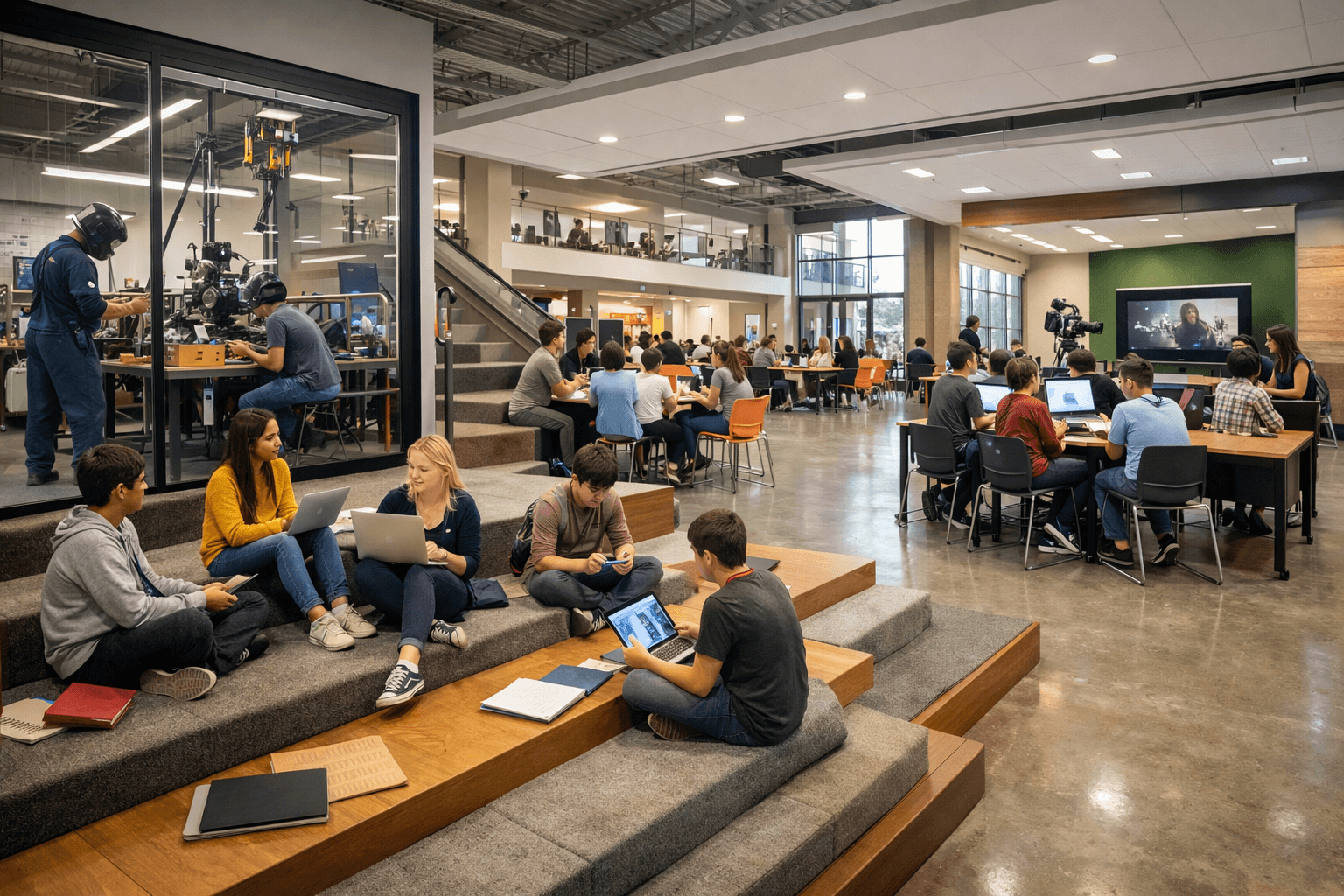
Table of Contents
Flexible and future-ready school design is taking center stage in 2026 as districts rethink how learning environments support modern instruction. Walk into a newly built or recently renovated school, and the difference is immediate. Instead of long hallways lined with identical classrooms, students gather on learning stairs, work in open collaboration areas, and move between flexible spaces designed for active, technology-driven learning.
As school buildings undergo new construction or major renovations, architecture is no longer just about housing classrooms. It is increasingly viewed as a strategic tool that shapes how students engage, how teachers instruct, and how schools adapt over time. District leaders are recognizing that the physical environment must evolve alongside instructional models.
Across the country, this has led to a move away from rigid, single-purpose rooms and toward adaptable spaces built for collaboration, career readiness, and long-term flexibility.
Why School Design Is Shifting
Traditional school buildings were designed for predictable schedules, quiet individual work, and teacher-centered instruction. While that model still has value, it no longer reflects how many students learn today.
Project-based learning, interdisciplinary instruction, career pathways, and expanded technology use require spaces that support movement, teamwork, and hands-on work. At the same time, districts are planning for longevity, knowing that buildings must remain functional for decades despite rapid changes in education and workforce demands.
Future-ready school design is less about following trends and more about creating environments that can adapt as instructional needs evolve.
Learning Stairs as Everyday Collaboration Spaces
One of the most visible elements of modern school architecture is the rise of learning stairs. These open, tiered seating areas are often located in central parts of a building and are designed for daily use rather than occasional assemblies.
Learning stairs support:
-
Group discussions and presentations
-
Informal collaboration and study
-
Community gatherings and school events
-
Flexible instruction outside traditional classrooms
Unlike auditoriums, learning stairs are intentionally informal and accessible. They encourage interaction, visibility, and shared ownership of space. For students, they feel less institutional. For educators, they provide new options for engaging larger groups without relying on fixed seating.
Specialized Labs for High-Demand Career Pathways
As career readiness becomes a core focus, flexible, future-ready school design increasingly includes specialized labs aligned with high-demand trades and industries.
These spaces often support:
-
Advanced manufacturing and robotics
-
Health sciences and medical pathways
-
Construction, welding, and skilled trades
-
Media production and digital design
Rather than resembling traditional classrooms, these labs are designed to mirror real-world work environments. Equipment, layouts, and safety features reflect industry standards, helping students build practical skills while still in school.
For districts, these labs also strengthen partnerships with local employers, community colleges, and workforce organizations, positioning schools as active contributors to regional economic development.
The Evolution of the Media Center
The role of the media center has changed dramatically in modern school design.
While books remain part of the space, flexible and future-ready school design prioritizes:
-
Technology access and device support
-
Collaborative work zones
-
Small-group project spaces
-
Multimedia creation and presentation areas
Quiet, individual study is no longer the sole purpose. Instead, media centers function as learning commons where students research, create, collaborate, and problem-solve together. This shift reflects how students access information today and how learning increasingly happens through shared inquiry.
Flexibility as a Core Design Principle
Adaptability is one of the defining features of future-ready schools.
Movable walls, modular furniture, and multi-use spaces allow rooms to change function throughout the day. A space used for direct instruction in the morning may support project teams in the afternoon and host community events in the evening.
This flexibility helps districts:
-
Adjust to changing instructional models
-
Respond to enrollment fluctuations
-
Launch new programs without major renovations
For school boards and superintendents, flexible design represents a long-term investment that reduces the need for costly updates as priorities shift.
What This Means for Educators and Students
For teachers and principals, flexible spaces can support more dynamic instruction when paired with clear expectations and professional development. Districts that succeed with modern design involve educators early in the planning process to ensure spaces enhance teaching rather than complicate it.
For students, these environments feel more connected to the real world. Learning takes place in spaces that resemble workplaces, studios, and collaborative hubs instead of rows of desks. That sense of relevance can increase engagement and ownership of learning.
Designing Schools for the Future
Flexible and future-ready school design reflects a broader shift in education toward adaptability, relevance, and student-centered learning. As districts plan for 2026 and beyond, the focus is no longer on whether school buildings should change, but on how intentionally they are designed to support evolving learning experiences.
When architecture aligns with instructional goals, school buildings become more than facilities. They become active participants in how students learn, collaborate, and prepare for life beyond graduation.
Subscribe to edCircuit to stay up to date on all of our shows, podcasts, news, and thought leadership articles.