 EdCircuit Staff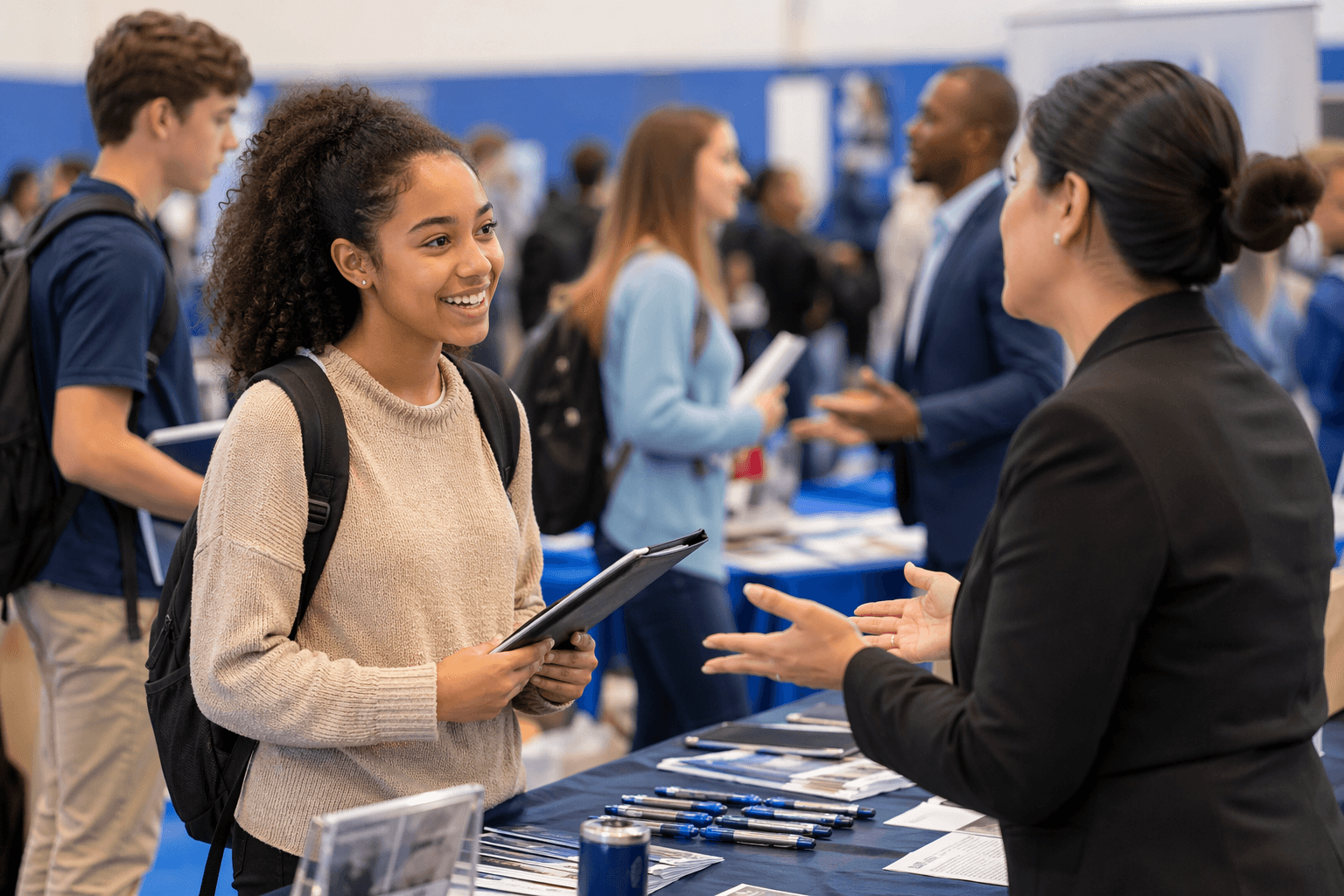
High school career fair benefits are no longer optional—they are essential in a school system that is being asked to prepare students for a workforce that is evolving faster than curriculum can keep up. While schools continue to emphasize academic achievement, many still struggle to answer a fundamental question from students and families alike: What comes next?
A well-executed career fair doesn’t just attempt to answer that question—it brings the answer directly into the building.
The Gap Schools Can’t Ignore
Across the country, school districts are investing heavily in technology, curriculum, and assessment. Yet, there remains a persistent disconnect between what students learn and how they apply it beyond graduation.
Students are often told to “be ready,” but rarely shown what readiness actually looks like.
This is where career fairs become more than a calendar event—they become a strategic response to a real problem. Without exposure to careers, industries, and professionals, students are left to make life-altering decisions based on limited information. That gap is not just an inconvenience—it’s a risk.
A career fair closes that gap in a way few other initiatives can.
When the Gym Becomes the Real World
There is a moment at every well-run career fair that matters.
A student approaches a table—hesitant at first. Maybe it’s a local engineer, a healthcare professional, or a skilled tradesperson. The conversation starts simple:
“What do you do?”
Five minutes later, that same student is asking:
- “What classes should I take?”
- “Do I need college for this?”
- “How did you get started?”
That shift—from curiosity to clarity—is the power of a career fair.
In that moment, the gymnasium stops being a school space and becomes something else entirely: a bridge between education and the real world.
Exposure That Changes Trajectories
For many students, especially those without built-in professional networks, career fairs provide their first meaningful exposure to the workforce.
This matters more than ever.
Today’s students are navigating:
- Careers that didn’t exist a decade ago
- Industries being reshaped by AI and automation
- Multiple post-secondary pathways beyond traditional college
Without exposure, students default to what they know—or worse, what they think they know.
Career fairs expand that lens.
They introduce:
- Skilled trades alongside four-year degree paths
- Local opportunities alongside global industries
- Emerging careers in technology, cybersecurity, and innovation
And perhaps most importantly, they show students that success is not one-size-fits-all.
Preparation Is Where the Real Value Lives
The most impactful career fairs don’t start the day the booths are set up—they start weeks before.
This is where schools have an opportunity to shift from passive participation to intentional preparation.
Resume Building: Telling Their Story
Many students believe they “don’t have anything to put on a resume.” That belief changes quickly when guided correctly.
Career fair preparation teaches students how to frame:
- Athletics as teamwork and discipline
- Clubs as leadership and collaboration
- Volunteer work as initiative and service
It’s not just about building a resume—it’s about helping students recognize their own value.
Communication Skills: Learning to Show Up
In a digital world, face-to-face interaction is becoming less common—and more valuable.
Career fairs force students to step into that space.
They learn how to:
- Introduce themselves with confidence
- Ask meaningful questions
- Engage in professional conversation
The first handshake may feel awkward. The second feels better. By the third, something shifts.
That growth is immediate—and lasting.
Professional Presence: Understanding First Impressions
For many students, this is the first time they think about how they present themselves in a professional setting.
What they wear, how they carry themselves, how they speak—it all matters.
And more importantly, they begin to understand why it matters.
This isn’t about enforcing a dress code—it’s about building awareness of professional environments and expectations.
Moving Beyond the “Walk and Collect” Model
Too many career fairs fall into the same trap: students walk around, collect brochures, and leave.
That’s not impact—that’s activity.
To truly deliver on the promise of a career fair, schools must be intentional.
That means:
- Setting expectations before the event
- Providing guiding questions for students
- Requiring reflection afterward
Imagine a student leaving with:
- Three meaningful conversations
- One potential mentorship connection
- A clearer understanding of their next step
That’s a different outcome entirely.
A Community Investment, Not Just a School Event
One of the most overlooked aspects of career fairs is their impact on the community.
When local businesses, organizations, and professionals step into a school, something important happens: education becomes a shared responsibility.
Employers gain insight into the future workforce.
Students gain access to real-world knowledge.
Schools gain partners.
These connections often extend beyond the event:
- Internship opportunities
- Job shadowing experiences
- Mentorship programs
What starts as a conversation at a table can turn into a pathway after graduation.
Equity in Action
Career fairs are one of the most practical ways schools can address equity.
Not every student has:
- A parent with a professional network
- Access to career guidance outside of school
- Exposure to diverse career paths
A career fair levels that playing field.
Every student walks into the same space. Every student has access to the same conversations. Every student has the opportunity to ask questions and build connections.
That access matters.
And for some students, it can be the moment that changes everything.
Aligning with a Changing Workforce
The workforce is not what it was five years ago—and it won’t be the same five years from now.
Employers are increasingly prioritizing:
- Skills over degrees
- Adaptability over specialization
- Communication over technical knowledge alone
Career fairs provide a direct line between what schools are teaching and what employers actually need.
When students hear it directly from industry professionals, the message lands differently.
It becomes real.
The Risk of Not Doing It
Schools that do not prioritize career exposure are leaving students to navigate their future on their own.
That leads to:
- Mismatched college choices
- Unnecessary student debt
- Workforce gaps
- Disengaged learners
In a time when districts are being asked to prove outcomes, career readiness cannot be an afterthought.
It must be visible. It must be intentional. And it must be experienced.
The Bottom Line
A high school career fair is not about filling a gym with tables—it’s about filling students with direction.
It’s about helping them connect what they are learning today with where they can go tomorrow.
It’s about giving them the confidence to walk up, ask questions, and see themselves in a future they may not have imagined.
Because when students can see it, they can begin to believe it.
And when they believe it, they can pursue it.
That’s the real impact of a career fair—and that’s why it matters now more than ever.

Subscribe to edCircuit to stay up to date on all of our shows, podcasts, news, and thought leadership articles.