Topic Channel
Higher Education
Articles, insights and analysis on Higher Education from EdCircuit.
Latest · page 17

CreativityMusic for Education Picking Up STEAMEducation has become an experience, for a great number of students, that embodies a doctor’s visit and less like a visit to your local Science Center. Students are basically poked and prodded for data to satisfy funding allocation procedures by the very adults charged with forging a new and exciting path of study.
Online Certificate ProgramsMOOCs and Credentialing: A Revolutionary PerspectiveBy Gordon Rogers During the American Revolutionary War, the Continental Congress issued paper money known as Continental Currency. The notes were backed by the "anticipation" of tax revenues. However, without solid backing and since they were easy to counterfeit, the notes quickly became devalued, giving rise to the phrase "not worth a Continental.”A number of parallels exist between the new frontier of Massive Open Online Courses (MOOCs) and their recognition as “academic currency” and the fate of the doomed Continental. Just as the revolutionary banknotes lacked credibility, the assessment instruments used by students to prove knowledge and mastery of MOOCs continue to face an uphill battle for authenticity. Until these issues are overcome, online education will be, in the eyes of many, “not be worth a Continental”.Efforts are underway to achieve wider recognition and acceptance of alternative forms of credentialing. They are taking place in universities, community colleges and coding “boot-camps.” They generally fall into a framework known as “Competency Based Education” (CBE), representing the first significant step in the unbundling of American higher education. This trend could be compared to the introduction of iTunes, which offered consumers the option to purchase a single track instead of the entire album. Reinventing a credentialing system that has remain largely unchanged for a century is not going to happen in a semester, but cracks are beginning to appear in the ivory tower’s foundation.One of these initiatives has recently been undertaken by the American Council on Education (ACE) the umbrella organization for higher education. It’s a pilot project in which 25 colleges joined “an alternative credit consortium” to create a more flexible pathway toward a college degree. Participants have agreed to accept transfer credits from students who complete low-cost general-education online courses, potentially benefiting more than 35 million adults who lack a degree.MOOC platform players like EdX, Udacity and Coursera are taking a more disruptive approach. They have created their own flavor of tracks, packs and projects aimed at bridging the credentialing gap. Introducing radical concepts such as “XSeries”, “Nanodegree” , and “Micro-credential”, these upstarts are chipping away at higher-ed’s hegemony that has put a college degree out of reach for too many people.The growing gap in the millennials’ college-to-career life plan is starting to be bridged as more hiring managers recognize these types of credentials as authentic qualifications for employment. The momentum created by the sheer demand of employers for workers with hard to find skills will force colleges to overcome their institutional inertia and offer content that meets this demand. The institutions that push further into the field of so-called “microdegree” specializations will be well-positioned to withstand the erosion of their core undergraduate, full service revenue stream.Examples of such industry-academic collaboration can be found all along the collegiate spectrum. At one end, Georgia Tech, Udacity and AT&T have together developed an online Masters in Computer Science, which costs under $7000. Starbucks is partnering with Arizona State University to facilitate degree completion for all of its employees who have started, but not completed a Bachelors. In addition, SNHU, University Now, and others have developed programs on based on CBE, making it possible to earn a degree for under $10,000.Some critics dismiss this wave of so-called new models of college completion by pointing out that The College Board has for decades been offering the College Level Exam Program (CLEP). It allows anyone with $80 take an exam which is “recognized by 2,900 colleges and universities.” They are available for over 30 different subject areas, potentially cutting up to two years off a four year degree program.Why don’t we see a mass exodus of students bailing out of colleges and saving themselves tens of thousands of tuition dollars by testing out of their core courses? Simply put, navigating the opaque and Byzantine system of credit transfer rules makes discovering the Higgs-Boson particle look like kindergarten. While one college may grant credit for 13 tests, another may recognize only two. The underlying factor in this patchwork approach can be attributed to the way that FTE’s are calculated, which can have a direct impact on the allocation of state funding to universities. Being too generous with transfer credits could cost a university crucial funding and jobs.Resourceful students can easily find plenty of free online resources to prepare for any of these tests. One reason this not commonplace is the inherent resistance most universities have to sharing access to their crown jewels. These precious gems are not, however, the knowledge conveyed through lectures, slides, and readings, but the stamps of approval, verifying students’ mastery of that knowledge. So, while all of the top institutions are falling over themselves to open access to their courses through MOOCs and their ilk, they are less anxious to grant full, transferable credit for these same courses, for the same reasons that the U.S. Treasury isn’t about to recognize Bitcoin as a legal form of currency.An argument can be made that higher education lags about a decade behind cable TV in its evolution. Most people under 30 are unlikely to subscribe to cable when they move; their only requirement is a high-speed internet connection and a Netflix or Hulu account. This unbundling trend is spilling over into education. It will accelerate as more twenty somethings find secure and lucrative employment with a resume or LinkedIn profile that is stacked with hyperlinks to courses, certifications and hands-on project work. The leakage around the fringes of the educational dominion will continue to gain momentum as digital certifications become the coin of the realm in the millennials’ career path.The opinions expressed here are solely those of Gordon Rogers.
Market TrendsInsider: Technology Trends Impacting Education SectorChristopher Chute, Research VP at International Data Corporation (IDC), discusses trends in technology. Chute translates market trends to the education sector with Dr. Rod.
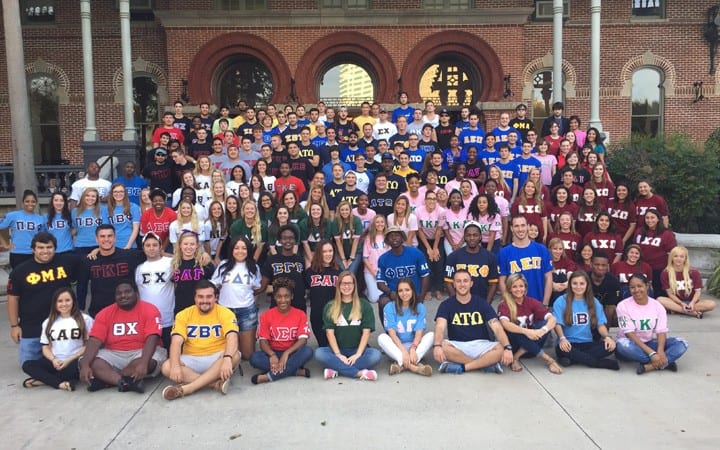
StudentsCSCF Announces Advancements for Fraternity/Sorority Assessment and ResearchBLOOMINGTON, November 19, 2015 -‐ The Center for the Study of the College Fraternity (CSCF) is proud to announce significant advancements towards fraternity and sorority assessment and research. This includes a new survey, a new relationship with the Indiana University Center for Postsecondary Research (CPR) and the 2015 Association of Fraternity | Sorority Advisors/CSCF research grants and research award winners.
Higher EducationTuition.io Secures $5M in Series A Financing from MassMutual Ventures and Wildcat Venture PartnersEmployer Student Loan Contribution Platform Enables Companies to Attract & Retain Millennial Talent. At the intersection of Fintech and Education, Tuition.io Addresses the $1.3 Trillion U.S. Loan Crisis
Higher EducationUN News Centre: Access to higher education doesn’t always lead to lower unemployment — UN labour agency17 November 2015 – Workers with post-secondary education are more likely to be unemployed in lower-income countries, reflecting a “mismatch” between skilled persons and the number of available jobs matching their competencies and expectations, according to the International Labour Organization (ILO).
Education Policy and GovernmentFor-Profit College System Expected to Pay MillionsThe nation’s second-largest for-profit college operator, Education Management Corporation, is expected to agree to pay nearly $90 million to settle a case accusing it of compensating employees based on how many students they enrolled, encouraging hyperaggressive boiler room tactics to increase revenue.
Market TrendsInstructure Goes PublicToday, Instructure became a public company (we’re INST on the NYSE). So what does that mean exactly? Well, it really just means that instead of having a handful of venture…
EducatorsFive Professors Who Drove You Batty in CollegeFrom the philosopher who turns lectures into therapy sessions to the super-intellectual who can’t explain simply, every student remembers these professors.