
Modern College Search Guide for Families
Artificial intelligence, personalized admissions experiences, career outcomes, and changing student priorities are transforming how families find the right college.

Modern college search strategies help families use AI, campus visits, admissions interviews, and career planning to find the right college fit.
Modern college search strategies have transformed nearly every aspect of how students and families find the right college. What was once a process built around guidebooks, brochures, and a handful of campus visits has evolved into a personalized journey powered by technology, meaningful conversations, and a growing emphasis on finding the right fit rather than simply the biggest name.
Twenty years ago, many families gathered around the kitchen table with stacks of college catalogs, a notebook, and a highlighter. Weekend road trips were planned using printed maps, and much of what students learned came directly from admissions brochures. Today, a rising junior can compare dozens of colleges in an afternoon, explore residence halls through virtual tours, ask artificial intelligence to explain differences between engineering programs, and connect directly with an admissions counselor before ever stepping onto campus.
The tools have changed.
The expectations have changed.
Even the definition of a successful college search has changed.
Yet one thing remains exactly the same: every student is searching for a place where they can learn, grow, build lasting relationships, and begin writing the next chapter of their life.
The Search Begins Long Before Senior Year
For many students, the college search no longer starts during senior year. Increasingly, families begin exploring options during sophomore year, and many students spend their junior year refining their list rather than creating it.
That extra time allows students to focus on what truly matters. Instead of rushing to submit applications, they can visit campuses, explore academic programs, consider career interests, and discover what type of learning environment will help them succeed.
This shift has also changed the role of school counselors and educators. Rather than helping students simply meet application deadlines, they are guiding conversations about purpose, interests, financial planning, and long-term goals much earlier in a student’s high school career.
The college search has become less about checking boxes and more about thoughtful planning.
Students Are Looking Beyond Prestige
Not long ago, conversations about college often centered on rankings and reputation.
Today’s students are asking much different questions.
Will professors know my name?
Can I participate in undergraduate research?
Will I have opportunities for internships during my first or second year?
Is there support if I struggle academically?
Can I see myself belonging here?
Families are increasingly discovering that the “best” college is rarely the same for every student. A nationally recognized university may be the perfect fit for one learner, while another student may thrive at a smaller institution where class sizes are smaller, professors are more accessible, and leadership opportunities arrive much earlier.
The conversation has shifted from “What is the best college?” to “What is the best college for this student?”
That may be the most important change of all.
Admissions Offices Have Become Educational Partners
Perhaps one of the biggest misconceptions families still have is that admissions offices exist only to process applications.
Today’s admissions professionals do much more.
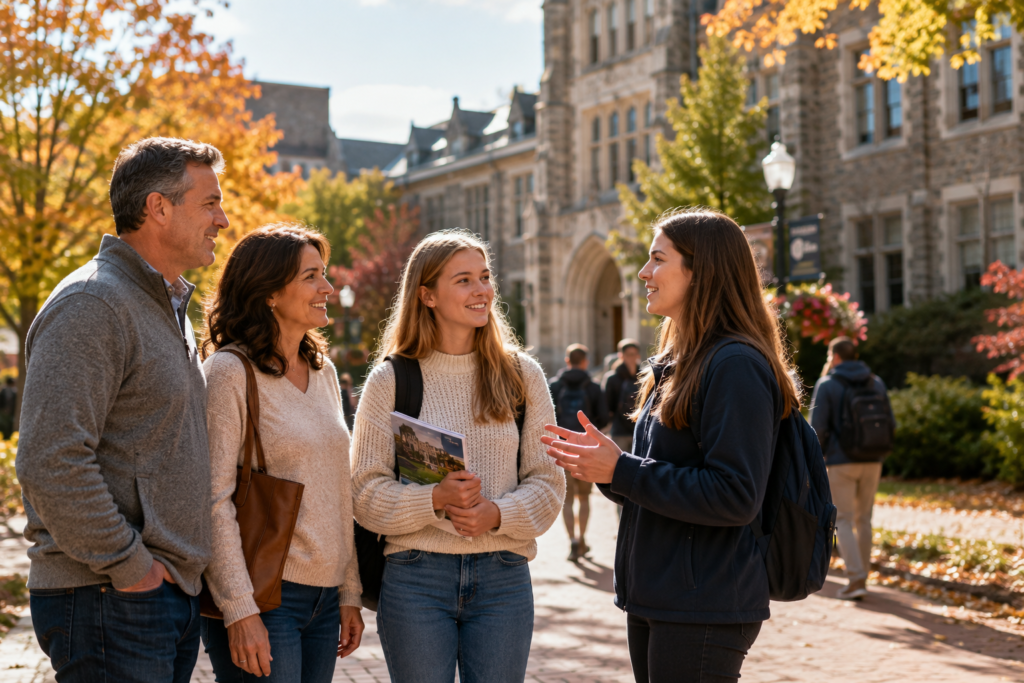
Many colleges encourage prospective students to contact the admissions office months before they apply. Those conversations can help families personalize campus visits, arrange meetings with faculty members, schedule admissions interviews, connect with academic departments, visit honors programs, speak with financial aid specialists, or even meet current students who share similar interests.
Rather than simply arriving for a scheduled campus tour, students can create an experience tailored to their academic goals.
An aspiring engineer may spend time inside engineering labs.
A future teacher may meet faculty within the College of Education.
A student-athlete might arrange time with the coaching staff.
A student interested in cybersecurity could speak directly with professors about research opportunities and internship partnerships.
Those personalized experiences often leave a much stronger impression than any brochure ever could.
Fall Has Become the Season to Visit
Summer campus visits remain valuable, but many admissions professionals believe the most meaningful visits happen after students return to campus.
During the fall, colleges come alive.
Residence halls are full.
Student organizations are recruiting.
Faculty members are teaching classes.
Marching bands rehearse.
Athletic events energize the campus.
Dining halls buzz with conversation.
Prospective students experience college as it truly exists.
Many institutions now host large preview days that include admissions presentations, classroom observations, financial aid workshops, faculty panels, academic showcases, student-led tours, and opportunities to attend campus events.
Students leave with something far more valuable than photographs.
They leave with a feeling.
Can I picture myself here?
Artificial Intelligence Is Changing the Conversation
Artificial intelligence has quickly become one of the most valuable planning tools available to families.
Students are using AI to organize research, compare majors, summarize admissions requirements, identify scholarship opportunities, build travel itineraries, and prepare thoughtful questions before campus visits.
Instead of asking generic questions online, students can now request customized comparisons based on academic interests, career goals, campus size, geographic location, or extracurricular opportunities.
AI can help families narrow their choices, but it should never replace personal conversations or firsthand experiences.
The most meaningful discoveries still happen while talking with professors, meeting current students, walking across campus, and imagining what everyday life might feel like.
Technology can make the search smarter.
People make the search meaningful.
Students Are Researching Colleges Differently
The college website is no longer the only source of information.
Students want authentic perspectives.
They explore student-created videos showing “a day in the life.”
They read campus newspapers.
They browse LinkedIn to see where graduates begin their careers.
They watch student organization videos.
They participate in virtual information sessions.
They compare graduation rates, internship opportunities, research experiences, and alumni success stories.
They even ask AI to organize everything into side-by-side comparisons.
Today’s students expect transparency, and colleges are responding by sharing far more about campus life than ever before.
Career Outcomes Matter More Than Ever
Families continue asking an increasingly important question.
“What happens after graduation?”
The answer extends far beyond employment statistics.
Students want to know whether internships are guaranteed, whether employers actively recruit on campus, whether undergraduate research is available, and whether graduates leave prepared for careers that continue evolving alongside technology.
This focus has encouraged colleges to strengthen partnerships with employers, expand experiential learning opportunities, and better demonstrate the long-term value of their academic programs.
Choosing a college has become as much about future opportunity as it is about the next four years.
Parents Are Guides, Not Drivers
Parents remain one of the most important influences during the college search, but their role has evolved.
Rather than making every decision themselves, successful families often approach the process as partners.
Parents ask thoughtful questions.
Students provide honest answers.
Together, they compare campuses, discuss finances, evaluate opportunities, and reflect after each visit.
Admissions counselors consistently encourage students to lead conversations whenever possible. When students ask questions themselves, introduce themselves confidently, and engage with faculty and admissions representatives, they begin demonstrating the maturity colleges hope to see in future applicants.
Parents help students prepare for the journey.
Students ultimately choose the destination.
There Are More Pathways to Success
Another important change is the growing recognition that success looks different for every student.
Four-year universities remain an outstanding option, but they are no longer viewed as the only pathway.
Community colleges, technical education, apprenticeships, military service, industry certifications, transfer programs, and dual-enrollment opportunities have expanded educational choices in meaningful ways.
Families are increasingly asking not, “Which college has the biggest name?” but rather, “Which pathway gives my student the greatest opportunity to succeed?”
That shift reflects a broader understanding of higher education and workforce preparation.
The Search Is Becoming More Personal
Despite all the advances in technology, admissions strategies, and digital resources, the college search still comes down to something deeply human.
Somewhere this fall, thousands of families will pull into campus parking lots before sunrise. They will walk across unfamiliar quads, listen to admissions presentations, peek inside residence halls, and quietly observe students hurrying to class.
Most visits will end with conversations over lunch or during the drive home.
“What did you think?”
Sometimes the answer will be immediate.
“I loved it.”
Sometimes it will be uncertain.
“I’m not sure.”
And occasionally, a student will simply smile and say, “I could see myself here.”
That feeling cannot be measured by rankings, enrollment numbers, or glossy brochures.
It comes from finding a community where a student feels challenged, welcomed, supported, and inspired.
Technology has changed how families search for colleges. Artificial intelligence has made research faster. Admissions offices have become more personalized. Career outcomes have become a larger part of the conversation. Students have more information than any previous generation.
But the heart of the journey has never really changed.
The goal is not to find the most famous college.
The goal is to find the place where a student will discover who they are, who they hope to become, and where they will begin building a future filled with possibilities.
And that is a search worth taking.
Subscribe to edCircuit to stay up to date on all of our shows, podcasts, news, and thought leadership articles.
Related reading
More on College Admissions