

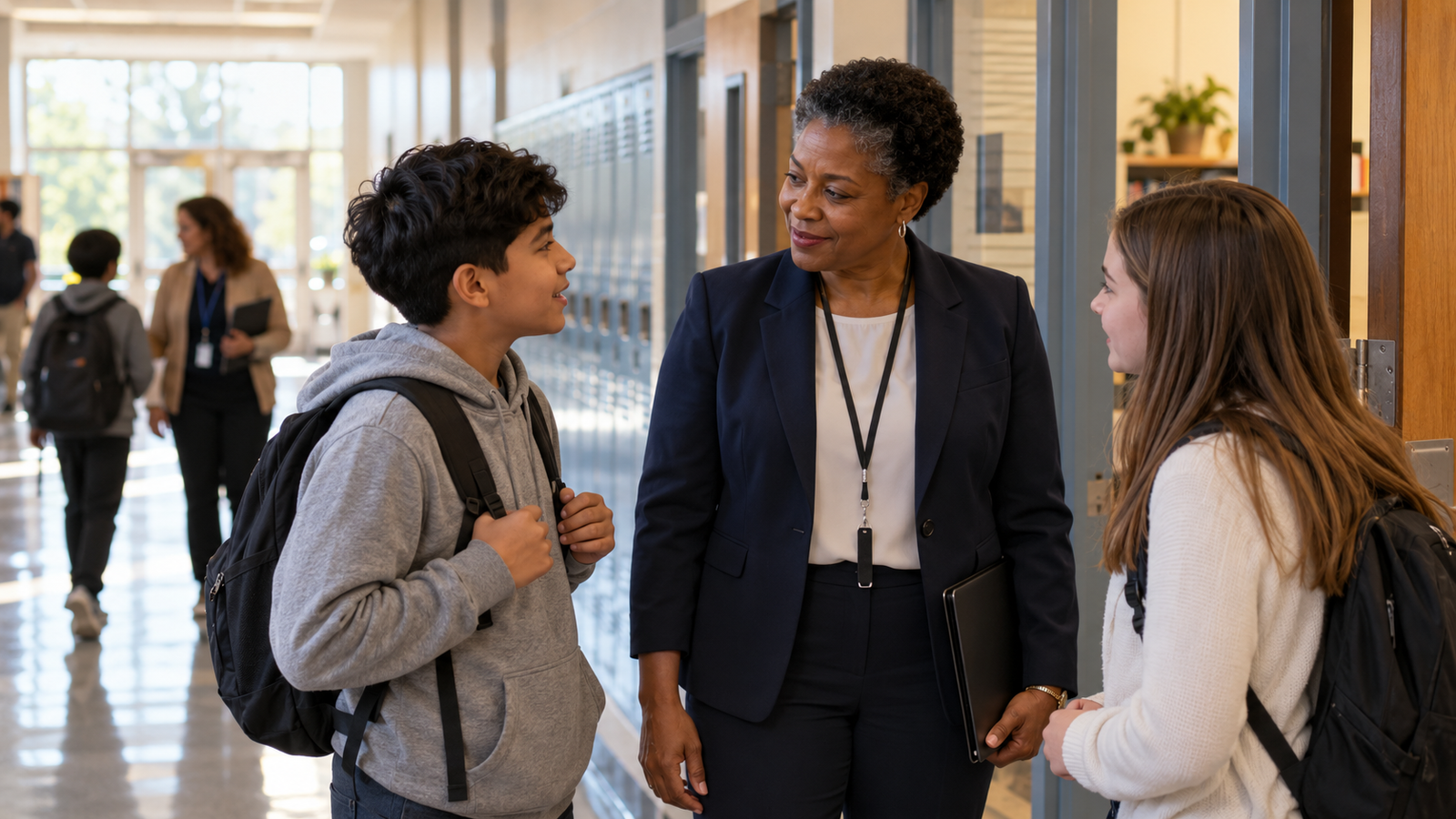
National Principals Month, observed each October, honors school leaders whose work reaches into nearly every part of a student’s day.
Consider an ordinary school morning. A teacher calls in sick, a parent arrives with an urgent concern, and a student needs help settling into class. Before the first lesson begins, the principal and school team are already making decisions that affect whether the day starts smoothly.
Later, that same principal may discuss reading instruction with teachers, review a safety concern, meet with a family, and attend a student performance. A difficult personnel conversation may sit between two events that require a warm smile and full attention.
The official National Principals Month campaign invites communities to recognize the difference these leaders make. Understanding that difference means looking closely at the preparation, judgment, and care behind the moments people see.
Keeping Teaching and Learning at the Center
Strong principals understand that their decisions should help students learn and give teachers the conditions to teach well.
That starts with knowing what is happening in classrooms. Student work, assessment results, observations, and conversations with teachers offer different pieces of the picture. A principal needs to help bring those pieces together and decide where additional support will make a difference.
The Wallace Foundation’s 2021 synthesis, How Principals Affect Students and Schools, reviewed 219 studies. It connected effective leadership with student achievement and attendance, as well as teacher satisfaction and retention. Four practices emerged: focusing work with teachers on instruction, building a productive school climate, encouraging collaboration and professional learning, and managing people and resources effectively.
In practice, those responsibilities are closely connected. A principal who identifies a need for stronger reading instruction must also consider training, instructional materials, staff assignments, and time for teachers to plan together.
Classroom visits need similar follow-through. An observation becomes useful when it leads to a specific conversation about teaching and student understanding. Teachers need feedback they can use and access to support when a change requires it.
Principals also help schools stay focused. When several new initiatives compete for attention, leadership requires deciding what deserves time, what needs refinement, and what the school can realistically sustain.
Supporting Teachers and the Whole School Staff
A teacher’s relationship with school leadership can influence how comfortable they feel asking for help, sharing an idea, or raising a concern.
For a new teacher, meaningful support might include an appropriate mentor, help with classroom routines, and regular opportunities to discuss what is working. An experienced teacher may need specialized training, time to develop a course, or additional assistance with a demanding classroom situation.
Principals also address performance concerns. When instruction needs improvement, a teacher deserves clear expectations, specific feedback, and appropriate opportunities to improve.
Behind these interactions is substantial personnel work: interviewing candidates, coordinating assignments, resolving disagreements, and making difficult recommendations. A principal’s authority varies by district, but staffing decisions have immediate consequences for students and colleagues.
The same attention belongs to employees throughout the building. Paraprofessionals, custodians, office staff, nurses, counselors, librarians, and food service employees all bring knowledge about how the school functions.
A custodian may notice a developing maintenance problem. An office employee may recognize a pattern in late arrivals. A paraprofessional may identify something that helps a student participate more successfully.
Principals strengthen the school when they take that knowledge seriously and ensure staff have the information and resources their work requires.
Seeing the Student Behind the Concern
A missing assignment or repeated absence tells a school that something needs attention. It does not explain the cause.
Consider a student who begins missing first period. Transportation, anxiety, caregiving responsibilities, peer conflict, or difficulty in the class could each be contributing. The response needs to fit the circumstances.
Principals work with teachers, counselors, nurses, families, and student support teams to understand those circumstances and coordinate help. That might involve an academic intervention, a schedule adjustment, or a connection with an appropriate community resource.
For students receiving specialized services, leadership also has practical consequences. Staff need time to collaborate, support arrangements need to function within the school day, and families need someone to contact when a concern remains unresolved.
Attention should reach students whose difficulties are less visible, too: the quiet child who has stopped completing work, the teenager who no longer participates, or the new student eating lunch alone.
A principal cannot personally manage every student’s needs. Building a school where adults notice changes, share concerns appropriately, and act on them is an important part of the job.
Setting Expectations for Respect and Fairness
Students learn about a school’s culture through what adults do.
They notice whether mistakes lead to humiliation or constructive correction. They see whose achievements receive attention. They remember whether an adult listened when they reported a problem.
Principals help establish expectations for those interactions and address situations in which the school falls short.
Discipline requires particularly careful judgment. Leaders must respond to behavior, protect the learning environment, review the circumstances, and follow appropriate procedures. They also need to examine whether expectations and consequences are being applied fairly.
The work continues after a consequence. A student returning to class may need help repairing a relationship, catching up academically, or developing a plan to prevent another incident.
The Professional Standards for Educational Leaders recognize this broad responsibility. They connect leadership with ethical practice, student care, instruction, staff development, family engagement, operations, and school improvement.
A school’s values become credible when students and staff experience them consistently, including during the difficult moments.
Preparing for Safety Across the School Day
Safety preparation requires attention long before an emergency.
Working with district personnel and appropriate specialists, principals help coordinate emergency plans, staff preparation, supervision, visitor procedures, and responses to reported concerns.
Everyday routines deserve scrutiny. A crowded dismissal area, a damaged fixture, or uncertainty about who supervises students after an activity can require immediate attention and a longer-term adjustment.
Different programs also bring different needs. Science laboratories, career and technical education spaces, athletics, field trips, performances, and after-school events require appropriate resources, preparation, and supervision.
A principal’s role includes involving qualified people and ensuring that concerns reach the right decision-makers. When a teacher reports potentially unsafe equipment, someone must determine how it will be assessed, whether its use should pause, and how instruction can continue.
The principal also needs to know whether the issue was resolved.
Drills and incidents offer opportunities to review preparation. Were directions clear? Did staff understand their roles? Were students and adults who needed additional assistance adequately supported?
Careful preparation includes asking those questions while there is time to improve the response.
Solving the Problems That Keep a School Running
Families may never hear about a substitute shortage resolved before arrival or a room reassignment completed before a class begins. Students still benefit from that work.
Principals and their teams manage disruptions while keeping the rest of the school operating. Staff coverage, room availability, bus delays, repairs, and event supervision all compete for attention.
Scheduling is especially complex. Classes, planning periods, intervention time, student services, meals, and available space must fit together. Secondary schools also have to account for course access and graduation requirements.
One change can create several others. Adding intervention time should not quietly prevent a student from receiving another needed service or participating in an elective.
Budget decisions bring another set of tradeoffs. Within their authority, principals help identify needs, establish priorities, request resources, and explain the educational value of an expenditure. District funding and approval processes shape what is possible.
These details matter because they determine how much of the school day remains available for instruction. A workable schedule and a timely repair can have a direct effect on what happens in a classroom.
Building a Working Relationship With Families
Parents and caregivers often approach a principal when they are worried about something that matters deeply to them.
A child feels unsafe. A classroom concern remains unresolved. A disciplinary decision seems unfair. A support arrangement has broken down.
Handling those conversations well requires listening, clarifying what happened, explaining the review process, and giving families a realistic sense of what comes next.
A principal may be unable to offer the outcome a family wants. A clear explanation and timely update still matter.
Accessible communication is part of that responsibility. Interpretation, flexible meeting arrangements, and straightforward explanations can help families participate. School employees should not assume that parents already understand course selection, student services, attendance procedures, or graduation planning.
Relationships also benefit from contact about progress and accomplishments. A positive call gives a family another reason to feel connected to the school and creates opportunities to learn more about the student.
Carrying Responsibilities That Cannot Be Shared Publicly
Some of a principal’s most demanding work takes place in private.
A sensitive student situation, a family crisis, or a personnel matter may require hours of attention while leaving little that can responsibly be discussed outside the process.
That can be difficult for a community to understand. People may know about an incident without knowing the circumstances or the response underway.
Principals need to communicate what they can about procedures, available support, and next steps while protecting information that should remain private. Families also deserve an appropriate response to concerns affecting their own children.
The emotional demands can be considerable. A principal may leave a painful meeting and walk directly into an assembly or classroom visit. Students and staff still need an attentive leader, even when an unresolved concern weighs heavily.
Recognizing this responsibility helps explain why some important work is absent from newsletters, public meetings, and social media. It also underscores the value of colleagues and district support that allow principals to work through difficult decisions thoughtfully.
Making Opportunities Possible Beyond Class
A student’s connection to school may begin in a classroom and deepen through a club, team, performance, or service project.
Principals help make those opportunities possible by supporting staff, advocating for resources, and working through practical obstacles.
An activity needs an adviser, a place to meet, appropriate supervision, and a plan for getting students home. Participation may also depend on costs, scheduling, or whether families receive information in time.
Looking closely at those barriers can reveal students who want to participate but cannot.
Principals also work with counselors, teachers, and community partners to expand access to college planning, career exploration, and experiences that help students imagine what comes next.
Their presence carries meaning, too. Attending a presentation or recognizing a service project tells students their effort deserves attention.
Teachers, coaches, advisers, families, and community members share this work. Principals help give their ideas a practical path forward.
Making Appreciation Specific—and Support Lasting
National Principals Month is an opportunity to recognize contributions people might otherwise leave unspoken.
A student can describe a moment when a principal helped them feel included. A teacher can explain how timely support changed a difficult week. A family can acknowledge a conversation that made a confusing situation easier to understand.
Personal notes, student messages, and school celebrations can make that appreciation meaningful without disclosing anyone’s private circumstances.
Districts can pair recognition with support that lasts:
Protect time for principals to work with teachers and students.
Provide mentoring and professional learning that address the school’s needs.
Ensure access to appropriate administrative, operational, and student support staff.
Set clear priorities and review demands that compete with them.
Make district expertise readily available when a problem exceeds a principal’s authority or training.
Dedication is easier to sustain when the people doing the work have help. Assistant principals, teacher leaders, support staff, district administrators, and families all contribute to that foundation.
This October, thank a principal for something specific. Name the concern they took seriously, the opportunity they helped create, or the support that made a difference.
Then consider the preparation behind it: the schedule that had to change, the resources that had to be found, the conversation that required care.
A principal’s contribution becomes clear in those details. Recognizing them gives National Principals Month its meaning—and gives a school community a reason to keep showing its appreciation throughout the year.
Subscribe to edCircuit to stay up to date on all of our shows, podcasts, news, and thought leadership articles.
Related reading
More on edLeaders