Education In Prison Can Change Lives
Jim Reams' 2017 account of college programs in prisons, updated with research on recidivism and the 2023 return of Pell Grants.

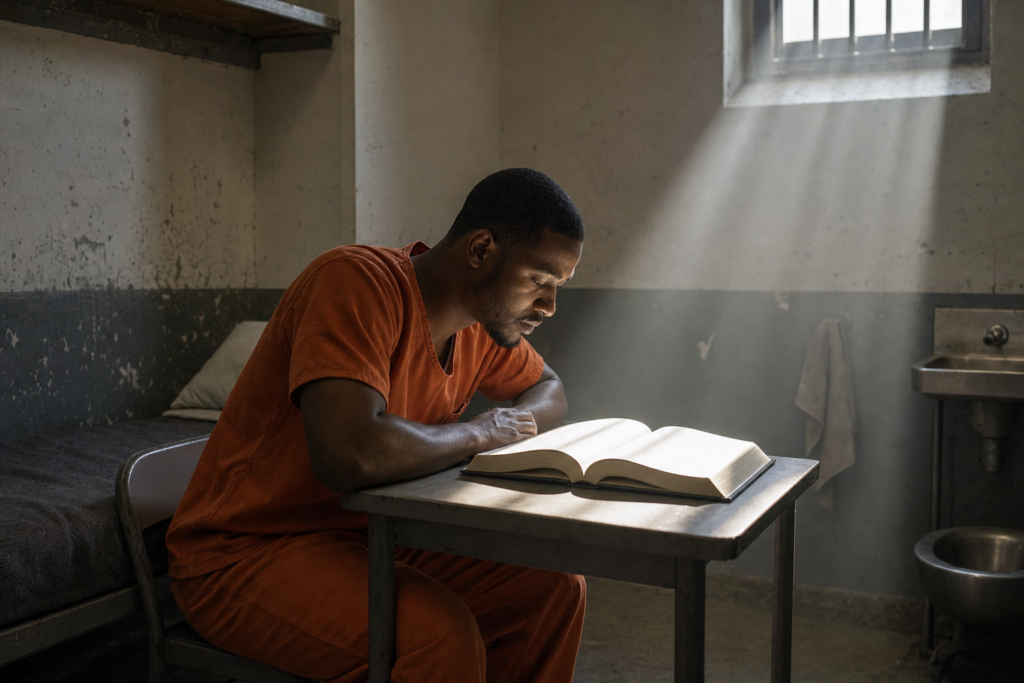
Prison education explained: what the research says about recidivism and employment, and how Pell Grants returned in 2023.
In 2017, edCircuit writer Jim Reams described college programs inside prisons and argued that education helps people avoid returning to prison. The section below the original sets out what the research on prison education shows, how federal Pell Grant access changed in 2023, and where to read more in edCircuit’s prison education series.
A quality education can reduce return rates
edCircuit Breakdown
One woman in Indiana “was disruptive, self-harming, and sold drugs in jail” when she started her sentence. She decided to better herself through education. She especially liked public policy courses. She recently spearheaded a program in Indianapolis that hires former prisoners to rehab abandoned buildings.
A 20-year-old inmate education program developed at Temple University called the Inside-Out Prison Exchange Program lets inmates take classes with local college students. At Lake Superior College, more than 300 students have taken courses since the program was established there in 2012.
The Education Justice Project at the Danville Correctional Center in Illinois has been offering colleges classes with credits to inmates since 2016. The prisoners are offered the same courses as the University of Illinois, which are taught by the same professors and grad students. The program recently received a $1 million grant from the Andrew W. Mellon Foundation, which the program’s founder wants to use to be able to award degrees to qualifying students.
edCircuit Analysis
Many people think of our huge incarcerated population as out of sight, out of mind. But a majority of these inmates are going to get out at some point, and we need to take a look at educational opportunities they have at their disposal to help them deal with post-prison life.

Education has been shown to reduce the rate at which former prisoners return to prison. A proper education is often something that was lacking in a prisoner’s life to begin with – a major factor in the criminal path that they chose to go down.
The best way to decrease recidivism rates is to provide inmates with marketable skills that will help them build careers upon their release. We need to keep looking at ways to make prison education happen and stop the brutal cycle of release and return for prisoners.
Prison education in 2026: what the research shows and what has changed
Jim Reams wrote in 2017 that education reduces the rate at which former prisoners return to prison, and that programs such as Inside-Out and the Education Justice Project deserved attention. Prison education has since gained both stronger evidence and a change in federal funding, and this section sets out what a reader should know about each.
What the research says about recidivism
The most cited study is a 2013 meta-analysis by the RAND Corporation, Evaluating the Effectiveness of Correctional Education, written for the U.S. Bureau of Justice Assistance. A meta-analysis combines the results of many earlier studies. RAND’s authors reviewed studies of education programs for incarcerated adults in U.S. state prisons published between 1980 and 2011. Among the higher-quality studies, people who took part in correctional education had 43 percent lower odds of returning to prison than people who did not, which RAND translates into a 13 percentage point reduction in the risk of being re-incarcerated within three years. Programs that led to a high school equivalency had a smaller association, 30 percent lower odds, and the authors found a reduction across adult basic education, vocational training and college-level courses.
The same report states its limits plainly. The studies compared people who chose to take classes with people who did not, so motivation may explain some of the difference, and RAND points to methodological weaknesses in the research that limit what it can say about which program features work. On employment, the odds of finding work after release were 13 percent higher for participants, but only one study met RAND’s higher-quality standard, so the authors describe a positive association rather than a firm result. Vocational training showed 28 percent higher odds of employment and academic programs 8 percent higher, though the difference between them was not statistically significant.
RAND also compared costs. For a hypothetical group of 100 people, it estimated that providing education cost $140,000 to $174,400, and that three-year re-incarceration costs were $0.87 million to $0.97 million lower for those who received it. These figures count only direct costs to the corrections system. They are 2013 estimates, so a reader planning a budget should use current local costs.
Pell Grants for incarcerated students returned in 2023
Reams mentioned that the Education Justice Project had received a $1 million grant from the Mellon Foundation. The larger funding change came later. Congress cut off Pell Grants for incarcerated students in 1994, and the FAFSA Simplification Act restored them. According to The 74’s September 2023 report, the change took effect in July 2023 and about 767,000 incarcerated people were potentially eligible. The report notes that a program must be designed by a college and a prison, approved by an accreditor, and authorized by the U.S. Department of Education before students can use Pell funds, and that incarcerated students often cannot obtain the documents needed to file the federal aid form.
Approvals have been slow to arrive. The Vera Institute of Justice reported in 2024 that Cal Poly Humboldt’s bachelor’s degree in communications at Pelican Bay State Prison in California was the first program the department approved for Pell Grants, with a first cohort of 16 students. Vera also reported that 44 state corrections departments and the Federal Bureau of Prisons had set up processes to approve college partners, and that these agencies oversee about 97 percent of incarcerated people. No current national count of approved programs was found for this section, so a school or college planning a program should check the Department of Education’s current list.
Why this matters to schools and colleges
Prison education programs depend on partnerships: a college that supplies instructors and credit, a corrections agency that supplies space, security and approval, and often a funder. The Inside-Out and Education Justice Project examples in Reams’s original are of this kind, with credit-bearing courses taught by the same faculty who teach on campus. For community colleges and universities weighing a program, the practical questions are who approves it at the state level, whether credits transfer to a campus degree when a student is released, and what support students need for the financial aid forms.
The 2017 article said the best way to decrease recidivism is to give inmates marketable skills. The research supports a more careful statement, which is that participation in education, including vocational training, is consistently associated with lower return rates and with a favorable cost comparison, while the strongest causal evidence is still limited.
More in the edCircuit prison education series
- Prison Education: Workforce Skills vs. College
- Prison Education: The Small Wins Matter
- Prison Education: Improving the Technology Time Warp
- Prison Education: Virtual Reality Setting Up Good Life Decisions
- From Shackles to School: Should Prisoners Have Access to Education?
Related reading
More on Diversity, Equity, Inclusion