



 Alex Terego
In this 2016 essay, Alex Terego, a technology executive turned teacher of critical thinking, describes a Socratic education, argues that machine-scored tests narrowed what schools teach and calls for critical thinking to be added to the curriculum. An updated section below adds 2025 and 2026 research on critical thinking and AI, student and teacher use of AI tools, and a closer look at the 47 percent automation figure.
First some background. When I was eleven I was given an IQ test. I must have passed since I was sent to a different kind of school, than most of my classmates. This was post-war England and someone in the British Government had woken up to the fact that Britain had lost an enormous number of men between 1914 and 1945 and urgently needed to train replacements.
The scale of the problem was huge. In a little over 30 years, Britain lost almost a million men and women in the First World War, and almost half a million in the Second World War, out of a population of roughly 45,000,000. Not only had Britain lost a lot of men and women, soldiers and civilian, but there had been a large number of non-fatal casualties that rendered the victims ‘unproductive.’ And the vast majority of all casualties of war came from the ranks of young undereducated men and young educated men. Losing 3% of the best and brightest in a single generation was rightly seen as a national security issue.
Britain had been left with an alarming lack of suitably trained young men and women to fill the gaps left in the civil service, medicine, law, education and business. Compounding the problem, prior to 1945 those jobs were reserved for people with the education that only wealthy parents could afford.
The 1944 Education Act, the brainchild of Lord Butler, came about after he wondered, why not start educating the plebeians such as me as well as the patricians? Hence my IQ test.
A Grammar School Built on Questions
That IQ test was my last encounter with structured testing that measured how much I had retained. Upon entering into the Grammar School – a cap, a blazer with a badge and shiny briefcase in hand – at age eleven I discovered a world of questioning and answering and then questioning again.
Along with questioning, written essays were the currency of my experience. The essays we wrote in answer to questions were not the end of the discussion either, to be marked with an A- or a C+ and recorded in a ledger of progress. No, they were the beginning of a dialog. You see, at the end of each essay we had to write the initials Q.E.D. and sign our name. Quod erat demonstrandum, loosely translated as “I proved it.”
What happened next was a discussion. Had I indeed proved my thesis to the satisfaction of my teacher and crucially my classmates? I would find out as they all declared open season on my ideas: never on me. “What more proof do you have?” “Where are your sources for that statement?” I could either defend my thesis or I could not. And it did not really matter. I was learning to think.
It was no coincidence that my teacher choose to frame his interactions with me as questions. “What on earth gave you the idea that I am here to do all the work involved in you becoming an educated man, Mr. Terego?” Yes, I was addressed as Mister Terego for the first time ever at age eleven. “What on earth makes you believe that I am here to educate you?” Same question different phrasing.
After a couple of years I knew it was hyperbole; of course they were there to teach me. They were after all members of a teaching order of the Roman Catholic Church that specialized in educating the underprivileged. They had taken a vow to educate me – just in the Socratic way.
The point of the question about whether or not my teacher was there to teach me was this: I began to realize that I was part of the equation; a teacher plus a student – me – plus the other students were all complicit; we were a team engaged in a project, and that project was to learn how to think; how to make meaning. The ultimate goal of education.
He did not say, “I’m not here to teach you.” He questioned me. What did I think about the situation? And in doing so started me on a lifelong love of learning.
The Socratic Style of Teaching
It is my mission in life to breathe new life into this style of teaching. The Socratic style where a question is asked and answered, and then iterative questioning and answering takes place until all are satisfied that a valid, well thought-out opinion has been formed.
Those same teachers did not spend a lot of time on making sure I memorized facts: the periodic table, multiplication tables or irregular verbs. Instead they lit the lamp, and then I understood the need to memorize those facts; I bought into the idea, and gladly memorized the facts, mostly on my own time as part of my homework. The classrooms were largely for discussion. Today we would call this a flipped classroom.
In those classrooms I learned how to think, and how to value thinking. I learned how to make meaning by uncovering how I felt and what I believed about subjective –unprovable – issues such as the true role of a teacher. By using facts and newly-discovered information through questioning, and then synthesizing the two, I learned how to come to an informed a point-of-view.
In those days I thought everybody had the benefit of that kind of Socratic education. How wrong I was then. I am even more in the wrong now. Let me explain.
How Testing Technology Changed Schools
In the 1960s a new technology came along – the Optical Character Recognition scanner. OCR changed schools forever, and not for the better. Suddenly, a cheap device could check how well a student did on a test. All the schools had to do was to re-format the way they transmitted knowledge. As long as the questions asked could be answered by a student filling in the ovals alongside multiple choice options with a #2 pencil, the machine could replace grading, an admittedly tiresome chore historically reserved for the teacher. This was the thinking: Much cheaper to use OCR, and the teacher was relieved of a chore. Literarily a no-brainer.
In the history of the computing revolution dating back to the 1950s no other institution, enterprise or organization has ever been asked to change the way it conducts its business to suit the limitations of technology. If a computer salesman – and I was one – showed up at any enterprise and told them they could buy the technology but they would have to change the way they conduct business, he would be shown the door. Not the schools. They swallowed the OCR ‘solution’ hook, line and sinker.
The truly horrifying law of unintended consequences in all this is that the only way OCR can work is on facts. So, the schools decided to only teach facts: that way they could have metrics on performance and demonstrate mastery of facts. Obviously it has not worked out for the best. We are even failing at teaching and testing facts; if we were scores would be going up.
Compounding all this is the fact that employers want employees who can think; memorization and retention is no longer a requirement, it is a given; the floor not the ceiling.
Preparing Students for an Automated Future
The USA has not seen 3% of its population lost to war, but it has seen them lost to inadequate schooling. For 9,000,000 of our best and brightest the only education they have known is memorization and test-taking. This as the world braces for the Fourth Industrial Revolution with the onrush of Artificial Intelligence, Machine Learning, Data Generation, Robotics and more, all adding up to the fact that 47% of all jobs in the USA are at risk for being replaced by a machine.
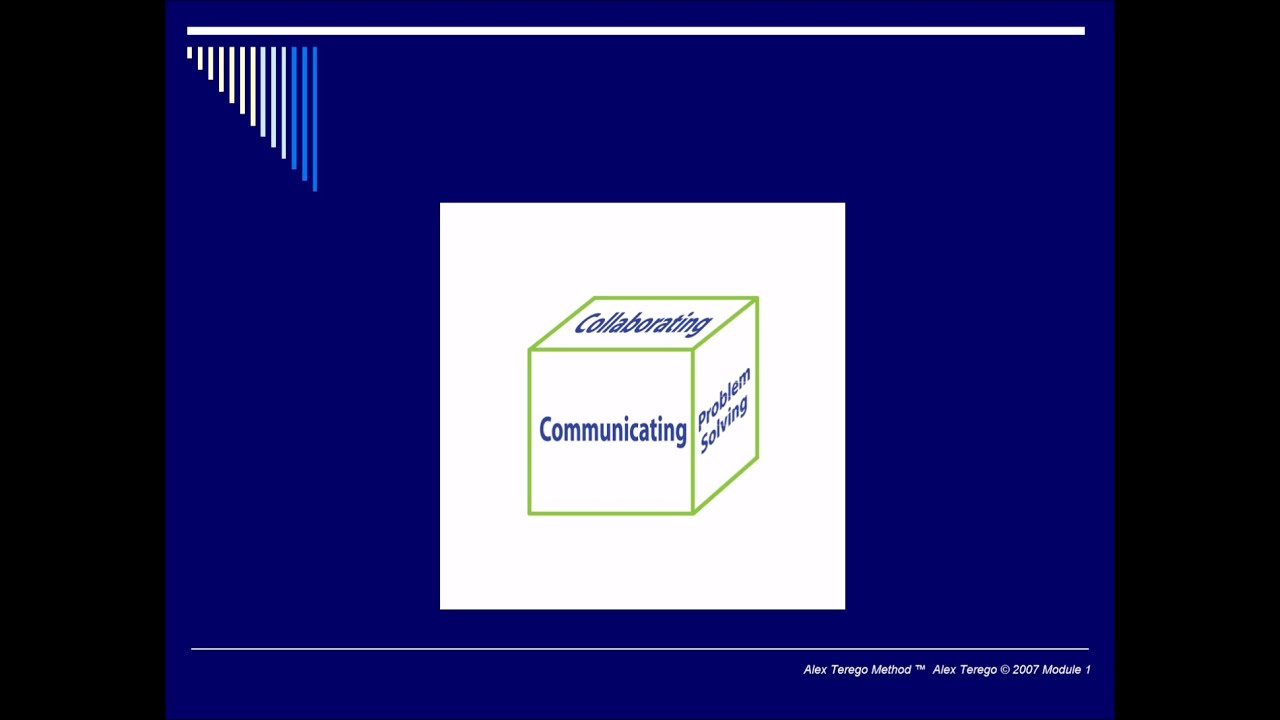
There is only one solution: add Critical Thinking, Collaboration, Problem-solving and Communications to the curriculum. That is going to take a grass roots movement.
Alex Terego After 40 successful years in the hi-tech business, during which he participated in all phases of computing, beginning with IBM and culminating in selling his voice mail company, Alex became an early thought-leader in 21st Century skills development. He developed his Terego Method™ when teaching Critical Thinking at the Thunderbird School of Global Management and the Eller Graduate School of Business at the University of Arizona.
The program is now available at no cost for schools. Click to see this narrated video https://www.youtube.com/watch?v=KnumpVhywfs It is an investment of seven minutes of your time to discover how you can teach students to think for themselves and in teams.
Follow me on Twitter @alex_terego
Critical thinking and AI: what research says about students, jobs and generative tools in 2026
Critical thinking and AI are now discussed together because a student can ask a chatbot for an answer in seconds, and teachers want to know whether students still do the reasoning themselves. Alex Terego wrote the essay above in 2016, before generative AI tools reached classrooms. Terego argued that test-scoring technology narrowed what schools teach and that critical thinking, collaboration, problem-solving and communication have to be added to the curriculum. The question has changed shape since then, and new data from schools, teachers and universities help show what has and has not been established.
What the job-risk figure measured
Terego cites the estimate that 47 percent of jobs in the United States are at risk of being replaced by machines. That figure comes from an occupation-based method proposed by Carl Frey and Michael Osborne in 2013. A 2016 working paper for the Organisation for Economic Co-operation and Development (OECD) by Melanie Arntz, Terry Gregory and Ulrich Zierahn used a task-based method instead. Because occupations labeled high-risk often still contain many tasks that are hard to automate, the authors estimated that on average 9 percent of jobs across 21 OECD countries are automatable, from 6 percent in Korea to 12 percent in Austria. They add that a share of jobs at risk should not be equated with actual job losses, since new technology spreads slowly, workers shift tasks and technology creates new jobs. They also conclude that workers with lower qualifications are likely to bear the largest adjustment costs. The difference between 47 and 9 percent comes from method, so a reader should treat any single percentage with caution. It does not weaken Terego’s central point that schools should teach students to reason, collaborate and solve problems, which does not depend on the exact number.
How students and teachers use AI now
RAND survey results reported by K-12 Dive in March 2026 show how quickly use has grown. Between May and December 2025, the share of middle schoolers using AI for homework rose from 30 to 46 percent and of high schoolers from 49 to 63 percent. About one in three students said their school had a schoolwide rule about AI for homework, and only 9 percent of middle schoolers and 7 percent of high schoolers said their schools permit it. RAND recommends that principals and district leaders say explicitly when AI use is and is not allowed, and that schools discuss with students how AI affects their development and critical thinking.
Teachers share some of those concerns. In a Gallup survey with the Walton Family Foundation of 2,232 public school teachers, reported by The 74 in July 2025, nearly two-thirds had used AI in the past school year and weekly users saved almost six hours a week. Fifty-seven percent expected weekly student use of AI to reduce independent thinking and 52 percent expected it to reduce critical thinking. Only 19 percent worked at a school with an AI policy, and 68 percent reported no training on AI tools in 2024-25. These are opinions and self-reports, not measurements of learning, and the article does not describe the survey’s methods in detail.
What studies suggest about AI and critical thinking
Two recent studies look at the question directly, with limits worth stating. Hao-Ping Lee and colleagues at Microsoft Research surveyed 319 knowledge workers, who gave 936 examples of using generative AI at work, in a paper presented at the CHI conference in 2025. Higher confidence in the AI tool was associated with less critical thinking, and higher confidence in one’s own ability with more. Critical thinking also shifted toward verifying information, integrating AI responses and overseeing the task. The data are self-reported, so they show how workers perceived their own effort.
A January 2026 preprint by Rudrajit Choudhuri and colleagues at Oregon State University surveyed 299 STEM students at five North American universities in April to June 2025. Routine use of generative AI was negatively associated with reflection, need for understanding and critical thinking. The authors state that the cross-sectional design shows association and not causation, that all measures were self-reported, and that the sample was mainly American. A preprint has not yet been through peer review. Neither study tests whether a particular classroom practice protects thinking, and neither involved younger students.
What teachers and schools can do to build critical thinking skills for students
Taken together, the evidence suggests a few practical steps:
- Teach verification as a skill. The finding by Lee and colleagues that critical thinking moves toward checking AI output suggests asking students to test an AI answer against sources they find themselves.
- Keep questioning at the center of class. Terego describes essays defended aloud against classmates who asked for more proof and sources. A discussion in which a student must defend a claim cannot be handed to a chatbot.
- Say plainly when AI is allowed, as RAND recommends, and discuss why the rule exists.
- Assess reasoning as well as the finished product, for example through drafts, short oral explanations or in-class writing. This is a practical step consistent with the studies and not a result any of them tested.
- Teach students to ask how they would know an answer is right, because confidence in the tool was linked to less checking.
For the workforce side of this discussion, see edCircuit’s article on preparing students for an AI-driven workforce.
Related reading
More on Future of Education


