

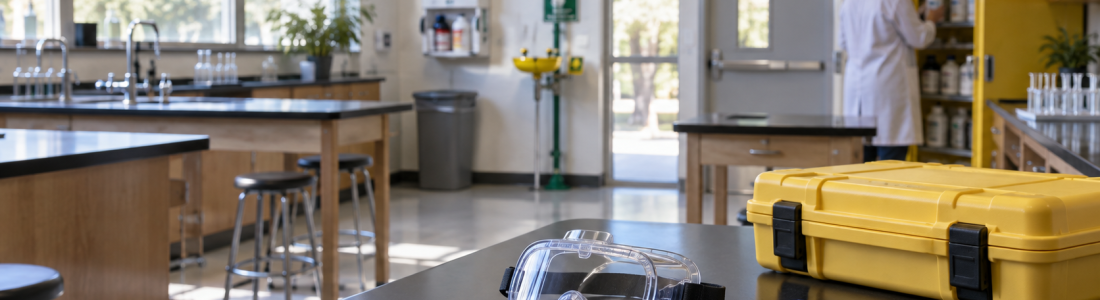
Science labs are where students handle real chemicals, open flames, glassware and living specimens, and where a school’s duty of care is tested most directly. edCircuit’s science and lab safety coverage is written for the people who carry that duty: science teachers, department heads, chemical hygiene officers and the administrators who answer for compliance. The articles here cover the parts of lab safety that districts most often leave to chance. They explain what a chemical hygiene plan must contain and who should own it, how OSHA’s laboratory standard bears on schools, why occupancy load limits matter in crowded science rooms, how to run inspections that find hazards before students do, and how to store, label and dispose of chemicals. Reporting on real incidents, including school lab fires, shows how small lapses turn into injuries and what schools changed afterward. If you are building or reviewing a district program, start with the articles below. The full archive follows, newest first. Start here: Chemical Hygiene Officer: Why Every District Needs One · Science Lab Safety Inspections Save Lives · OSHA Compliance in Schools: Hidden Safety Risks · Why Occupancy Load Matters in Classrooms and Science Labs · Why 9th Grade Science Labs See the Most Accidents and What Schools Can Do About It · When the Science Lab Catches Fire: Duty of Care, Prevention, and the Barnegat High School Wake-Up Call
Professional DevelopmentScience and Lab SafetyTrade Schools and Career EducationSTEM and STEAM EducationK-12School SafetyEducatorsAdministrators
Safety Training in STEM and CTE Programs a Necessity
Safety Training in STEM and CTE, why is it necessary and why you should do it.