



 EdCircuit Staff
Special education is instruction designed for an individual child with a disability, provided at no cost to the family, along with the related services the child needs to benefit from it, such as speech-language pathology, counseling or transportation. Under federal law, states must make it available to every eligible child from age 3 through 21. It reaches a large share of American students: in 2022–23, 7.5 million students ages 3–21, or 15 percent of all public school students, received special education or related services under the Individuals with Disabilities Education Act (IDEA), according to the National Center for Education Statistics. The Congressional Research Service put the figure at approximately 7.9 million for the 2023–24 school year.
This guide to special education explains who qualifies, how evaluations and IEPs work, how a 504 plan differs from an IEP, where students with disabilities are taught, how special education is funded, why special education teachers are hard to find, what has changed at the federal level in 2025 and 2026, and what rights families have. It is written for school leaders, teachers and families alike. Each section links to edCircuit’s more detailed coverage.
Updated October 2026.
In this guide
- The basics: What special education is · How many students · Who qualifies · The IDEA
- Plans and process: Evaluation · What an IEP is · The IEP team · Timelines · What a 504 plan is · 504 plan vs. IEP
- Schools and policy: Inclusion · Funding · Teacher shortages · Federal changes · Parents’ rights · Technology and AI · A note on terms · Questions to ask
What is special education?
Federal regulations define special education as “specially designed instruction, at no cost to the parents, to meet the unique needs of a child with a disability” (34 CFR 300.39). It can take place in a classroom, at home, in a hospital or in another setting, and it includes physical education. Alongside it, students may receive related services such as speech-language pathology, psychological services, physical and occupational therapy, counseling, school nurse services or transportation (34 CFR 300.34).
The legal promise behind it is a free appropriate public education, known as FAPE: special education and related services provided at public expense, meeting state standards and delivered in line with the child’s individualized education program, or IEP (34 CFR 300.17). States must make FAPE available to children with disabilities from age 3 through 21, including students who have been suspended or expelled. Infants and toddlers from birth through age 2 receive early intervention services under a separate part of the law, IDEA Part C.
Two federal laws do most of the work. The IDEA funds special education and sets detailed rules for evaluations, IEPs and parents’ rights. Section 504 of the Rehabilitation Act of 1973 is a civil rights law that bars disability discrimination by schools receiving federal money and covers a wider group of students, usually through a 504 plan (see 504 plan vs. IEP). edCircuit’s Special Education section collects its coverage of both.
How many students receive special education?
About one in seven public school students receives services under the IDEA, and the number has grown over the past decade. National figures from federal sources:
- Students served. The number of students ages 3–21 served under the IDEA rose from 6.4 million in 2012–13 to 7.5 million in 2022–23, or from 13 to 15 percent of public school enrollment (NCES, 2024). The Congressional Research Service reported approximately 7.9 million in 2023–24 (CRS, February 2026).
- Differences between states. In 2022–23 the share ranged from 12 percent in Idaho and Hawaii to 21 percent in Pennsylvania, New York and Maine (NCES).
- Most common disabilities. Among students served in 2022–23, 32 percent had specific learning disabilities, 19 percent speech or language impairments, 15 percent other health impairments and 13 percent autism, followed by developmental delays (7 percent), intellectual disabilities (6 percent) and emotional disturbance (4 percent) (NCES).
- Students with 504 plans. In 2020–21, students with disabilities made up 17 percent of public school enrollment: 14 percent served under the IDEA and 3 percent, or 1.6 million students, served only under Section 504, according to the Office for Civil Rights’ Civil Rights Data Collection (released February 2024).
What disabilities qualify for special education?
A child qualifies under the IDEA when an evaluation finds one of 13 disabilities named in federal regulations and the child, because of it, needs special education and related services (34 CFR 300.8). The 13 categories are:
- Autism
- Deaf-blindness
- Deafness
- Emotional disturbance
- Hearing impairment
- Intellectual disability
- Multiple disabilities
- Orthopedic impairment
- Other health impairment
- Specific learning disability
- Speech or language impairment
- Traumatic brain injury
- Visual impairment, including blindness
Two conditions matter in practice. A diagnosis alone is not enough: a child who has one of these disabilities but needs only a related service, not special education, is generally not covered by the IDEA, though the child may still qualify under Section 504. And states may use a 14th category, developmental delay, for children ages 3 through 9.
Several common conditions fall inside these categories:
- Dyslexia is named in the federal definition of a specific learning disability, the largest category. See edCircuit’s Dyslexia coverage.
- ADHD is listed as an example of an other health impairment. An estimated 7 million U.S. children ages 3–17, or 11.7 percent, had a current ADHD diagnosis in 2024, the Centers for Disease Control and Prevention reports. See AI for the Neurodiverse Classroom: How AI Tools Help Students With ADHD and Dyslexia.
- Autism is its own category. About 1 in 31 children aged 8 had been identified with autism spectrum disorder in 2022, according to the CDC’s Autism and Developmental Disabilities Monitoring Network. See Autism, Artificial Intelligence, and EdTech.
What is the Individuals with Disabilities Education Act (IDEA)?
The IDEA is the federal law that funds special education and requires states that accept the money to provide a free appropriate public education to every eligible child. It began in 1975 as the Education for All Handicapped Children Act (P.L. 94-142) and was last reauthorized in 2004 (P.L. 108-446), as the Congressional Research Service’s IDEA funding primer recounts. Part B covers children and youth ages 3 through 21, Part C covers infants and toddlers, and Part D funds national activities to improve the education of children with disabilities. For the law’s history and what it has meant in classrooms, see Over 50 Years of IDEA: Impact on Educators and Families.
How does a child get evaluated for special education?
A parent or the school can request an initial evaluation, and the school must have the parent’s consent before conducting it (34 CFR 300.301). The evaluation must be completed within 60 days of receiving consent, or within a different timeline if the state has set one, and it has two purposes: to decide whether the child has a disability under the IDEA and to identify the child’s educational needs. A request made in writing gives the family a record of the date it was made.
If parents disagree with the school’s evaluation, they can ask for an independent educational evaluation by a qualified examiner who does not work for the school, at public expense. The school must then either pay for it or file for a due process hearing to show its own evaluation was appropriate (34 CFR 300.502). For how evaluation results shape a child’s plan, see How the Evaluation Team Report (ETR) Shapes Individualized Education Plans (IEPs).
What is an IEP?
IEP stands for individualized education program: a written plan, developed and reviewed in a meeting, that sets out the special education and services a particular child will receive. (“Individualized education plan” is also widely used, including in edCircuit’s own headlines, but the term in federal law is program.) Under 34 CFR 300.320, every IEP must include:
- Present levels. How the child is doing academically and functionally, and how the disability affects progress in the general curriculum.
- Measurable annual goals, academic and functional, and how and when progress will be reported to parents.
- Services. The special education, related services, supplementary aids and supports for school staff the child will receive.
- Time apart from classmates. An explanation of any time the child will not be in regular classes and activities with students without disabilities.
- Testing accommodations, or the reasons for an alternate assessment.
- Logistics. When services begin, and how often, where and for how long they are provided.
- Transition planning. Beginning no later than the IEP in effect when the student turns 16, measurable goals for life after school and the services to reach them.
The IEP is a legal commitment, and the school must make it accessible to every teacher and provider responsible for carrying it out. For a fuller account of how evaluations feed into IEP goals, see edCircuit’s ETR and IEP explainer.
Who is on the IEP team?
The IEP team must include the child’s parents; at least one of the child’s regular education teachers, if the child is or may be in regular classes; at least one special education teacher or provider; a school district representative who can commit resources; someone who can interpret evaluation results; others with knowledge of the child, invited by the parent or the school; and, when appropriate, the student (34 CFR 300.321). Students must be invited when the meeting will consider transition goals. Schools must schedule meetings at a mutually agreed time and place, arrange an interpreter if parents need one, and give parents a copy of the IEP at no cost (34 CFR 300.322).
How often is an IEP reviewed?
An IEP is reviewed at least once a year, and a child is reevaluated at least every three years. The federal timelines are:
- 60 days from parental consent to complete the initial evaluation, unless the state sets its own timeline (300.301).
- 30 days from the eligibility decision to hold the meeting that develops the first IEP, with services starting as soon as possible after (300.323).
- At least annually, the IEP team reviews whether goals are being met and revises the plan (300.324).
- At least every three years, a reevaluation, unless the parent and school agree it is unnecessary, and no more than once a year unless they agree otherwise (300.303).
What is a 504 plan?
A 504 plan describes the accommodations, aids and services a student with a disability needs to have equal access to school under Section 504 of the Rehabilitation Act of 1973. Section 504 applies to every school that receives federal funds and is enforced by the Department of Education’s Office for Civil Rights (OCR). To be covered, a student must have a physical or mental impairment that substantially limits one or more major life activities, such as learning, reading, concentrating, breathing or walking, or have a record of such an impairment or be regarded as having one, as OCR explains in its Section 504 FAQ.
OCR’s guidance makes several points families and schools often miss:
- Services under Section 504 can range from education in a regular classroom with supplementary services to special education and related services.
- A medical diagnosis alone does not qualify a student or substitute for an evaluation; the school must draw on a variety of sources, and a group of knowledgeable people decides eligibility.
- Schools may not consider the benefit of “mitigating measures,” such as medication or hearing aids, when deciding whether an impairment substantially limits a student, a rule that has applied since the ADA Amendments Act took effect on January 1, 2009.
- A student with a disability named in the IDEA who does not need special education may still be eligible under Section 504.
- Schools must reevaluate periodically and before a significant change of placement, which OCR says includes an exclusion of more than 10 school days.
One lawsuit has drawn attention to Section 504 since 2024. Texas v. Kennedy (formerly Texas v. Becerra) challenges the Department of Health and Human Services’ 2024 Section 504 rule for programs that department funds; it does not challenge the Department of Education’s school regulations at 34 CFR Part 104. The states that brought it dropped their claim that Section 504 itself is unconstitutional in April 2025, and the case now centers on the rule’s community-integration requirements, AJMC reported in August 2026.
504 plan vs. IEP: what is the difference?
An IEP provides special education under the IDEA, while a 504 plan provides accommodations and services under a civil rights law, and more students qualify for the second than the first. The main differences, drawn from the federal regulations and OCR’s guidance:
| IEP | 504 plan | |
|---|---|---|
| Law | IDEA, a grant statute that funds special education | Section 504, a civil rights law that provides no funding |
| Who qualifies | A child with one of 13 listed disabilities who needs special education because of it | A student with any impairment that substantially limits a major life activity |
| Ages | 3 through 21 (Part C serves birth through 2) | Students at every level, from elementary school through college, in institutions receiving federal funds; colleges owe academic adjustments rather than FAPE |
| What the plan contains | Detailed contents set by 34 CFR 300.320, including measurable annual goals | The Section 504 regulations do not prescribe its contents; typically accommodations, aids and services |
| Review | At least annually; reevaluation at least every three years | Periodic reevaluation, and before any significant change of placement |
| Disputes | Detailed IDEA procedures: prior notice, mediation, state complaints, due process hearings | Notice, records access, an impartial hearing and review (34 CFR 104.36); complaints may also go to OCR |
The two overlap. A student eligible under the IDEA must have an IEP, and a school does not need to write a separate 504 plan for that student, because carrying out an IEP is one way of meeting Section 504’s requirements (34 CFR 104.33). In the other direction, OCR notes that a student with a disability named in the IDEA who does not need special education may still be eligible under Section 504 and receive, for example, adjustments in the regular classroom. Which plan fits depends on the individual evaluation, not on the diagnosis.
Where are students with disabilities taught?
Most students who receive special education spend most of their school day in regular classes. Federal law requires that children with disabilities be educated with children without disabilities “to the maximum extent appropriate,” and that separate classes or schools be used only when education in regular classes with supplementary aids and services cannot be achieved satisfactorily. This is the least restrictive environment, or LRE, requirement (34 CFR 300.114).
Inclusion has grown. In fall 2022, 67 percent of school-age students served under the IDEA spent 80 percent or more of the school day in general classes, up from 61 percent in fall 2012 (NCES). The picture differs by disability: 89 percent of students with speech or language impairments and 76 percent of students with specific learning disabilities spent most of the day in general classes, compared with 21 percent of students with intellectual disabilities and 16 percent of those with multiple disabilities. The law sets a presumption, not a single placement; the IEP team decides for each child, and the IEP must explain any time the child will spend apart from classmates without disabilities. For the practical side of inclusion in specific settings, see STEAM for Students with Additional Needs and Safer Learning for Students with Additional Needs.
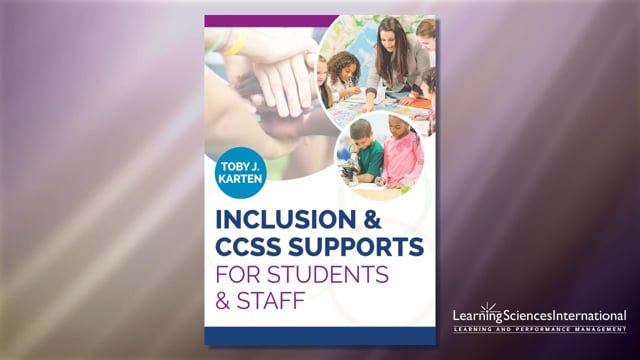
Inclusion is also a question of how schools think about it. In a 2017 edCircuit CoffeED interview, inclusion specialist Toby Karten, author of Inclusion Strategies That Work!, argues that inclusion should be defined by each student’s particular skills and the supports the school provides, approached as a universal commitment to setting students up for success rather than as one more requirement to meet.
How is special education funded?
Federal funding for special education has never reached the level Congress set in 1975, so states and school districts cover the difference. In FY2025, the IDEA received about $15.4 billion, of which $14.21 billion went to Part B grants to states, $420 million to preschool grants and $540 million to Part C early intervention, the Congressional Research Service reported in February 2026.
When the law was written, Congress said the federal government would pay up to 40 percent of the national average per-pupil expenditure for each child served, an amount known as “full funding.” CRS found that the FY2025 Part B appropriation equaled approximately 10.2 percent of that average, just over 25 percent of the full-funding level. The closest the program has come was FY2009, when stimulus funds brought it to almost 35 percent. In May 2026, the Department of Education announced an additional $144 million across IDEA Part B and Part C programs, and new FY2026 appropriations language allows Part C funds to support expectant parents of children with disabilities. The gap between costs and federal aid is an old concern on edCircuit; see In Denial: Lack of Funding Means Lack of Services.
Is there a special education teacher shortage?
Yes. Special education positions are the hardest teaching jobs for schools to fill, according to federal survey data. Heading into the 2024–25 school year, 74 percent of both elementary and middle schools reported difficulty filling a special education teaching vacancy with a fully certified teacher, and the National Center for Education Statistics said special education positions remain the most difficult to fill. By October 2024, 34 percent of school leaders said their school was understaffed in special education.
The shortage affects services directly, because related services and specially designed instruction depend on specialists: special education teachers, speech-language pathologists, school psychologists, occupational therapists and paraprofessionals. NCES notes that its School Pulse Panel is an experimental data product, so the figures are best read as a consistent signal rather than precise counts. edCircuit has covered the case for preparing every teacher to work with students with disabilities in One Big Idea: Nicole Biscotti on Special Education Training.
What is changing in federal special education oversight?
The federal offices that oversee special education have been reorganized since 2025; Congress has not amended the IDEA or Section 504, and the Department of Education says its new partnerships do not alter its obligations under them. The main steps:
- March 20, 2025. An executive order directed the Secretary of Education to take steps to facilitate the closure of the Department of Education, “to the maximum extent appropriate and permitted by law,” while ensuring uninterrupted delivery of services.
- October 10, 2025. During the government shutdown, the department laid off about 460 people, including almost everyone in the Office of Special Education and Rehabilitative Services (OSERS). A federal judge blocked the layoffs, and the November 2025 funding deal that reopened the government reinstated the employees, Understood reported.
- June 16, 2026. The department announced four new interagency agreements, following 10 signed over the previous year. Under one, the Department of Health and Human Services (HHS) will support the administration of OSERS programs, including IDEA Parts B, C and D grants; under others, the Department of Justice will partner on civil rights enforcement and student privacy.
The department’s fact sheet says HHS will support grant administration, monitoring, data collection and drawdowns of funds “in coordination with and at the direction of OSERS,” that FY2026 grants will still be awarded through the Education Department’s system with later awards managed through HHS systems, and that the Education Department “will maintain all statutory responsibilities.” Critics read the same agreements differently. The National Center for Learning Disabilities said on June 16 that the plan would split federal protections across agencies, that HHS lacks experience enforcing the IDEA, and that the announcement left open how families will file complaints and who will be accountable; it asked Congress to suspend the agreements.
For families and schools, the legal duties are the same as before: evaluations, IEPs, timelines and procedural safeguards are set by statute and regulation, and districts remain responsible for them. What may change is how quickly federal guidance, monitoring and complaint handling reach states. For how district leaders are preparing, see How Federal Special Education Changes Affect Schools.
What rights do parents have in special education?
Parents are members of the IEP team and have procedural rights that schools must explain to them in writing. Schools must give parents a procedural safeguards notice once a year, and also at the first referral or request for evaluation, at the first complaint in a school year, in certain discipline cases and whenever parents ask (34 CFR 300.504). The notice must cover:
- Independent educational evaluations at public expense when parents disagree with the school’s evaluation.
- Prior written notice and parental consent.
- Access to the child’s education records.
- Mediation, state complaints and due process complaints, which generally must be filed within two years of when the parent knew or should have known of the problem, unless state law sets a different limit (34 CFR 300.507).
- The child’s placement while a dispute is pending.
Free help is available. Nearly 100 Parent Training and Information Centers and Community Parent Resource Centers across the states and territories work with families of children and youth with disabilities from birth to 26; the Center for Parent Information and Resources lists them by state. Schools must also tell parents about free or low-cost legal services when a due process complaint is filed.
Technology, AI and accessibility in special education
Assistive technology is part of special education law: IEP teams must consider whether every child needs assistive technology devices and services (34 CFR 300.324). Artificial intelligence now adds text-to-speech, captioning, reading support and planning tools, and it raises its own cautions. In August 2025, Common Sense Media rated AI teacher assistants “moderate risk” and advised against using them to write IEPs or behavior plans, finding that some showed bias based on perceived student backgrounds. edCircuit covers AI and accessibility in detail:
- AI in Special Education: Smarter Student Services Now
- The Role of AI in Supporting Diverse Learners in Schools
- AI and Accessibility in K–12 Education: A Turning Point
- AI for the Neurodiverse Classroom: How AI Tools Help Students With ADHD and Dyslexia
- Autism, Artificial Intelligence, and EdTech
For AI in schools more broadly, see edCircuit’s AI in Education guide, and for families, AI for Students: A Parent’s Guide by Age.
Special education, special needs education and other terms
“Special needs education” and “special needs” are common everyday phrases, but they are not legal terms in the United States. Federal law speaks of special education, related services and a “child with a disability,” and eligibility, rights and funding all attach to those defined terms. Some schools and writers, including edCircuit at times, use “additional needs.” When a family or school is deciding what a student is entitled to, the defined legal terms are the ones that count.
Questions to ask about a child’s special education
For families
- Has the request for evaluation been made in writing, and what is the deadline for completing it in our state?
- What did the evaluation find about my child’s strengths and needs, and do I agree with it?
- Are the IEP goals measurable, and how and how often will I hear about progress?
- How much of the day will my child spend with classmates without disabilities, and why?
- Would a 504 plan or an IEP better fit my child’s needs, and why?
- Where is the nearest Parent Training and Information Center?
For school leaders
- Are evaluations, initial IEP meetings, annual reviews and reevaluations tracked against their deadlines?
- Do general education teachers know which students have IEPs or 504 plans and what those plans require of them?
- Which special education and related-service positions are vacant, and how are services being covered meanwhile?
- How will we tell families what has and has not changed as federal oversight is reorganized?
- Who reviews any AI-generated content before it goes into an IEP or a behavior plan?
The shared work of special education
Special education rests on a simple idea written into federal law in 1975: every child with a disability is entitled to a free education designed around that child’s needs. Fifty years later, the core of that framework, evaluations, IEPs, 504 plans and parents’ rights, remains in place, while the pressures around it, from staffing and funding to the reorganization of federal oversight, have grown. The process works best when families, teachers and school leaders understand it well enough to use it together, and keep their attention on what each child needs to learn.
Related reading
Subscribe to edCircuit to stay up to date on all of our shows, podcasts, news, and thought leadership articles.
More on Special Education and IEPs


