 by Matt Ridenour
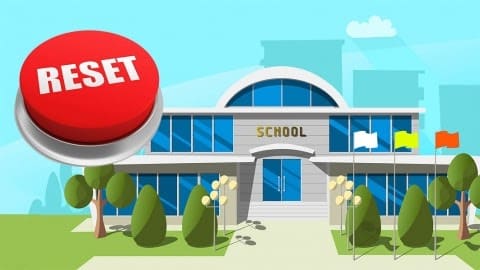
The current public education system has stagnated. The information and technology explosion has exposed a behemoth that is not able to pivot and adapt. Without massive action, the United States will continue to lose traction in our ever-shrinking global learning community. Is it time to push the Hard-Reset button and start over?
Here are the basic tenets of the paradigm shift:
1. Eliminate the concept of age tied to grade
2. Eliminate structure of hourly periods and teachers/students in a box
3. Establish a clear progression of skills and check points
4. Create modules of learning that:
a. Help guide students to their clearest path of interest
b. Provide a thorough, verifiable understanding of a subject or topic
c. Are sequential and upon completion provide a complete set of knowledge applicable to a career or higher education study pathway
d. Provide a comprehensive mix of experiences, both mental and physical, that encompass individual, small group, large group, and cyber learning
e. This system should be created with an OPEN SOURCE mentality so that it is perpetually being redesigned and refined. This will ensure highest and best practices for an ever-evolving knowledge base.
The 30,000 Foot View
• Establish “Rivers of Learning”
• Each river represents a major field of human interest
• Each river is divided into subsets or streams that provide a more specialized learning mode.
• All rivers flow to the same “ocean” which is a learner who is prepared for one of 2 things:
• Further specialized study
• (Doctor, lawyer, engineer, etc.)
• Entrance into the labor/workforce
The 20,000 Foot View
• Define all skills necessary for success in every area/profession.
• Provide a published visual roadmap to completion
• Define both horizontal and vertical parameters for progress in each study area.
• Each stream of study contains modules that spiral in complexity until the student has mastered the entire skillset.
• These modules/learning packets accumulate to a complete body of knowledge.
• Each stream shares the common human elements that all students need in order to become successful adults
• Health and human function, including diet and exercise knowledge
• Common sense tools
• Financial tools
• Communication tools
• Etc.
The 10,000 Foot View
• Begin each student with a common play-based curriculum.
• Use well designed early childhood modules to determine learning types and interests.
• Guide students to the stream that best suits their interests.
• At a certain point, a stream of learning is declared and followed. Until that point, all modules are general in format.
• Students may transfer to different streams if interests change, and all modules are weighed for compatibility for that new stream. If early modules are well designed, student interests are accurately identified and changing streams would be rare.
The 5,000 Foot View
Changes necessary at the basic level of our current system:
• Eliminate structured classrooms
• Eliminate mandatory lecture format
• Eliminate mandatory period structure
• Create open learning centers
• Create single study centers as well as small and large group study/collaboration centers
• Create modules that require both mental and physical maturity.
• This is a safeguard against gifted students completing all modules at a very young age and entering the workforce before they are physically mature.
• Modify the role of teacher to the role of mentor/teacher.
• Teachers would provide labs, lectures, office hours, and single, small group and large group instruction as needed.
• The school would provide the space and the mentors, but the students would use them a la carte.
• Define module completion with subjective and/or objective criteria.
• A panel of mentors/facilitators would determine any subjective completion questions, with a governing body system.
• OR
• Objective criteria would be based on standard assessments and official proctors. (However, it would be much preferable to eliminate the concept of exit exams and replace them with sequential measurable completion tasks. For example, Module 1 has an objectively defined completion point that unlocks module 2.
Part of completion would be student involvement in furthering the library of modules available for that stream of study.
This open source mind set would help refine best practices and create an ever upward evolving pillar of knowledge.
Barriers to entry:
Our current system is massive and unable to pivot. Infrastructure and labor pools represent daunting obstacles to change. I recommend that we begin with study models to refine this approach as a means to transition our school system to its next highest function.
Further, models of 2-year sprints would provide the quickest accountable results. A program beginning with Kindergarten or young five candidates studied over 2 years, alongside another model of 11th and 12th grade students would provide much needed data to roll out on a larger scale.
This article was originally published by The Learning Counsel
Author Matt Ridenour is a 25-year veteran band director from Michigan. He has taught in the same school district his entire career with experience at both secondary and elementary levels. Ridenour is a graduate of Central Michigan University.
Along with his co-teacher, Ridenour created an assessment system used across the country to help band directors assess their students.
Additionally, he and his team created a school safety and behavior tracking system called TABS. They are still in the final development and testing stages of that program. Ridenour is a creative thinker in the education world and draws his inspiration from the trenches of the classroom and the school district he serves.
Further Reading
- Patch.com – Goucher Poll: Education Reform Popular But Cost Raises Questions
- The New York Times – Bringing a New Vibe to the Classroom
- edCircuit – CoSN Podcast: S1E2, What New K-12 CTOs Need to Know

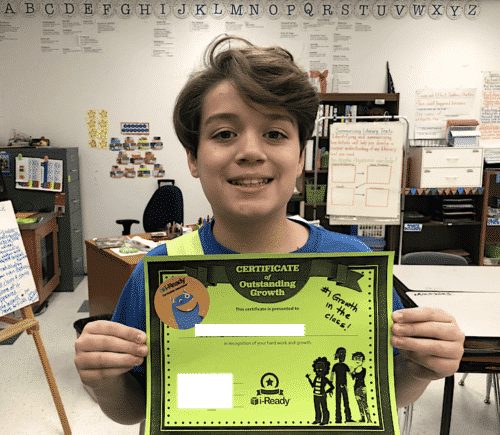 In a gamified classroom, students compete against themselves and each other in a high-energy environment that motivates them to improve their academic skills. Playing games and earning awards can also serve as an instant confidence booster for diverse learners. It’s important to offer different types of games to engage students at various skill levels so they can all work at their own pace and experience success with this approach. Some students can handle a longer-term marathon competition where it takes some time to acquire an award while others do better with short-term games that result in instant awards.
 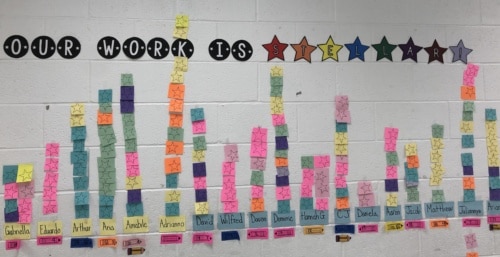 Our themed i-ReadyMania display outside of our classroom provides a visual for students to track their progress. When they pass a quiz, they advertise their success by sticking a star above their name on ‘Our Class is Stellar’ board outside the room. This display is accessible to every teacher that works with these students, including ESE, ESOL, remedial reading instruction teachers, and even administrators. It also serves as a reminder for teachers to pull aside students who may need further assistance.
 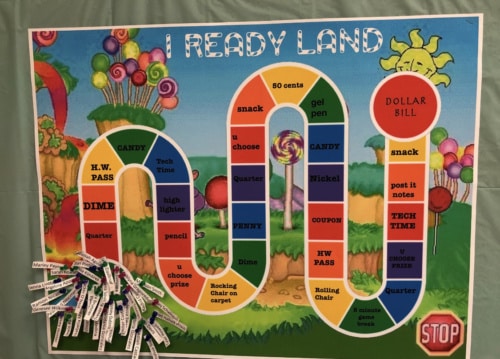 When students pass a quiz, they move their game piece around the board. Each stop includes rewards for students. Examples of rewards include skipping the lunch line, lunching with the teacher, receiving special school supplies, taking shoes off for the day, and moving their desk for the day. These instant rewards make the game exciting daily! And for the most part, these prizes are free, and no expense to the teacher. When students haven’t moved their game piece in a few days, “flash sales” appear on the game bulletin board. Students can take advantage of these flash sales by earning rewards when they pass a quiz, even if they don’t receive 100%. This way, prizes are plentiful and constant.
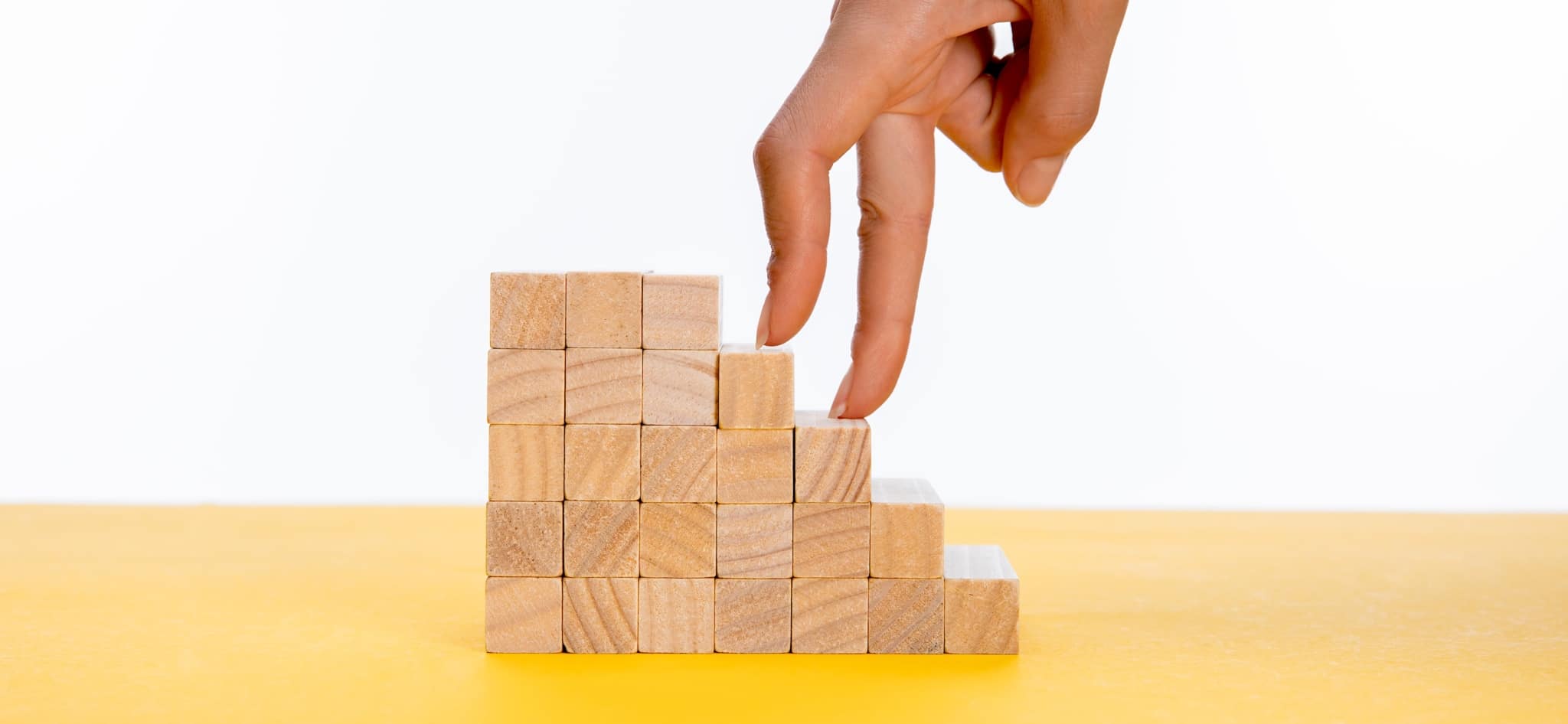
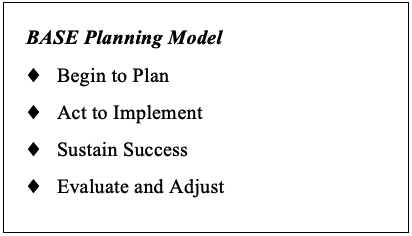 The model provides a way to organize the steps you will take to achieve your vision for school improvement. It is circular in nature and assumes that to sustain improvement you must study how you have done and that this study will naturally lead to identifying additional ways your school can continue to improve.
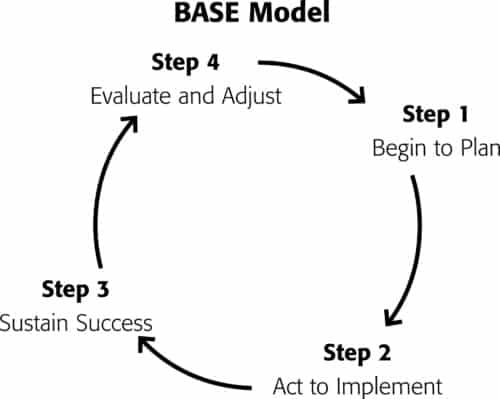 The very best schools constantly monitor their performance and identify ways to continue to make improvements. The final stage of our BASE planning model is to “Evaluate and Adjust.” As we said, the planning process is circular. The decisions you make during this stage will naturally lead you to continue planning to become even better.
 Eric Kalenze’s career in education has included posts in teaching, coaching, administration, and consulting. He is the author of 2019’s