https://vimeo.com/285505479
Helping special needs students express their creativity 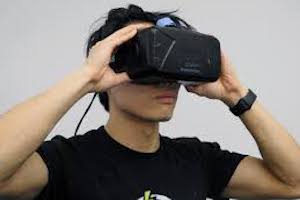 Christopher Bugaj is the expert on assistive education technologies for Loudoun County Public Schools outside of Washington, DC. This knowledgeable educator will be a featured presenter at FETC 2019 in Orlando from January 27th through the 30th. I had the chance to sit down with him and talk about education technology’s past, present, and future.
While our modern society is starting to accept having Siri and Alexa listening in at home, Chris reminds us that Amazon Echo and Google Home are the result of advances in assistive technology for the disabled. Software and hardware engineers have been working with people with disabilities using voice-to-command devices like voice diction for a long time, and those advances have simply found their way into our everyday life.
For the future, Chris sees the greatest advances coming with augmentative communication devices (ACDs). What are ACDs? Think of Stephen Hawking, probably the most famous user of an augmentative communication device. “The price point, going back to the point earlier for those, has come way down,” Chris notes. “You’re talking about someone having a voice that  has never had one before. You can have a very robust solution for under a thousand dollars; you can have an iPad and an app.” Those tools are being used in special education classrooms to teach people who have not traditionally had a voice, how to express themselves.
Chris sees the advances in edtech coming in what he terms “microtransactions;” small bits and pieces of information and progress. Chris thinks this is why so many people gravitate toward education because the science and the craft of teaching progresses in these little microtransactions that help shift our thinking gradually, rather than a seismic shift. “I think that mindset is why Twitter is such a powerful tool,” Chris says. Even professional development is ever-evolving. “Professional development is not this comet that comes down and strikes the earth,” Chris says. “Rather it’s the river that’s carving out the Grand Canyon in all these little micro-moments.”
About Christopher Bugaj
 Christopher R. Bugaj, MA CCC‐SLP is a founding member the Assistive Technology Team for Loudoun County Public Schools. Chris hosts The A.T.TIPSCAST a multi‐award winning podcast featuring strategies to design educational experiences and co-hosts the Talking With Tech podcast featuring interviews and conversations about augmentative and alternative communication.
Chris is the co‐author of The Practical (and Fun) Guide to Assistive Technology in Public Schools published by the International Society on Technology in Education (ISTE) and has designed and instructed online courses for ISTE on the topics of Assistive Technology and Universal Design for Learning. Chris is also the author of ATEval2Go, an app for iPad that helps professionals in education perform technology assessments for students.
Chris co-authored two chapters for a book published by Brookes Publishing titled Technology Tools for Students with Autism. Chris co‐produces and co‐authors the popular Night Light Stories podcast which features original stories for children of all ages. Chris has presented over 250 live or digital sessions at local, regional, state, national and international events, including TEDx, all of which are listed at here. His latest book The New Assistive Tech: Making Learning Awesome For All, also published by ISTE, is available now.
Follow Chris on Twitter.
Christopher Bugaj will be a presenter at FETC 2019, January 27-30 in Orlando, Florida. The conference will bring together thousands of educators and technology leaders for an intensive, highly collaborative exploration of new technologies, best practices and pressing issues. Registration is now open.

AuthorDr. Berger is a staff education correspondent for the Mind Rocket Media Group, an educator and former school administrator. His video interview work and conversational podcasts have been featured in various media outlets. He often hosts education panel discussions and develops strategic content. As an academic Dr. Berger is a guest lecturer at Vanderbilt University’s Owen Graduate School of Management. A former assistant principal, he has been an adjunct undergraduate professor and developer of online college courses. He is a passionate Detroit sports fan who has also adopted Nashville sports teams as his own.
Contact the Mind Rocket Media Group if you are interested in an industry interview and a placement on EdCircuit.
Further Reading
- Braille Works – Accessibility in the Classroom
- Common Sense Education – 3 Steps to a More Accessible Classroom
- The Atlantic – How Teacher Training Hinders Special-Needs Students

 Knowing that anything was possible in the early days of space exploration allowed thinking to be free from the conventional. Young people were inspired to think of how we might go to the stars. High schoolers became college students, who became the engineers in mission control when we landed on the moon. They were encouraged to not just think outside the box, but to discard “the box” altogether.
  That lack of the fear of “rocking the boat” of convention will be critical to innovation in the future. “I think it’s going back into that mindset of realizing there is no box and you can create solutions to global and local challenges,” Nancy says. She says that the sweet spot for the work the Conrad Foundation does is simply opening the aperture of a student’s own mind to what is possible by tearing down conventional barriers and obstacles. “We’re prisoners of our own minds if we don’t open that gateway to learning,” Nancy says. “I think that’s the real opportunity for education.”
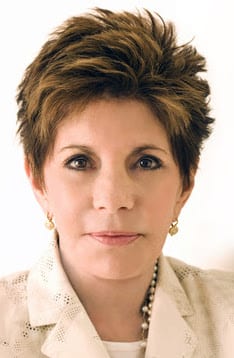 Nancy Conrad created the


 Last week, we listened to a podcast about the concept of success – the This American Life episode titled “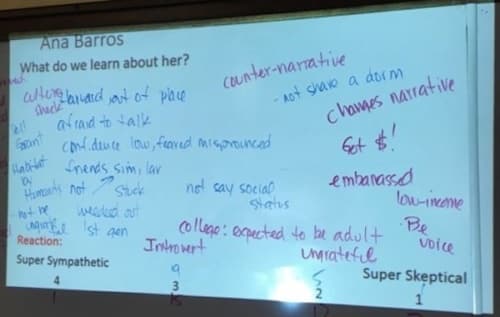
 After we discussed each student in the article, I asked my students to rate the struggle again. There was always a change in the ratings. We briefly discussed students’ rationales for their ratings as well. At one point, when many in the class criticized one of the low-income, Ivy-League students for not self-advocating, one student–the only one who expressed sympathy in this case–said, “But it’s criticism like that that prevents people from asking for help.”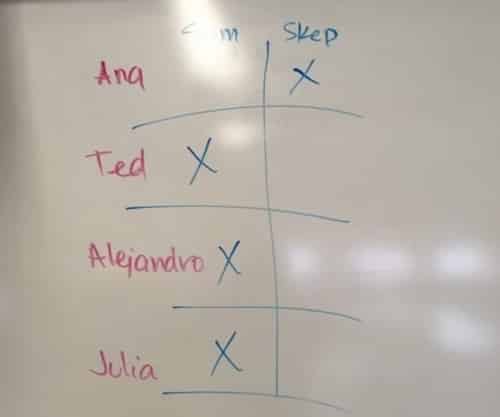
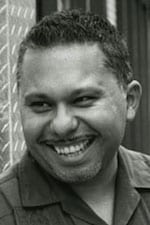 Ray Salazar has been an English teacher in the Chicago Public Schools since 1995. He is a National Board Certified Teacher. His blog, The White Rhino, tied for second place in EWA’s Community Members Best Blog category in 2012. National Public Radio and Chicago Public Radio aired his essays and the Chicago Tribune and CNN’s Schools of Thought Blog published his editorials. Salazar earned a bachelor’s degree in English/Secondary Education and master’s degree in writing, with distinction, from DePaul University.
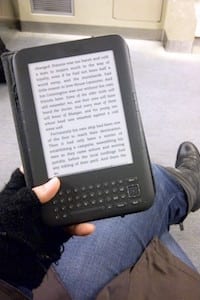 Digital readers unconsciously read text on a page or on a screen in an F or fast pattern. Most adults in the western world have been conditioned to unconsciously read text in a Z pattern. Today’s digital generations read in a pattern that’s very different from the way we learned in school.
 Image: Z Pattern courtesy of Vanseo Design
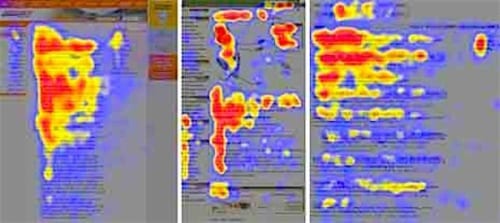 Image: F Pattern Heat Maps courtesy of Nielson Norman Group
 As a professor, author, blogger, consultant, and keynote speaker, Ryan L. Schaaf wants to help educators reach the learners of the digital generations. His book, Reinventing Learning for the Always-On Generation: Strategies and Apps that Work co-authored with Ian Jukes and Nicky Mohan, recently received an IPPY Award for its contributions as a resource book for educators. You can find Ryan on

 “That’s why you practice. Anyone who is really good at a sport practices…a lot,” I explained.