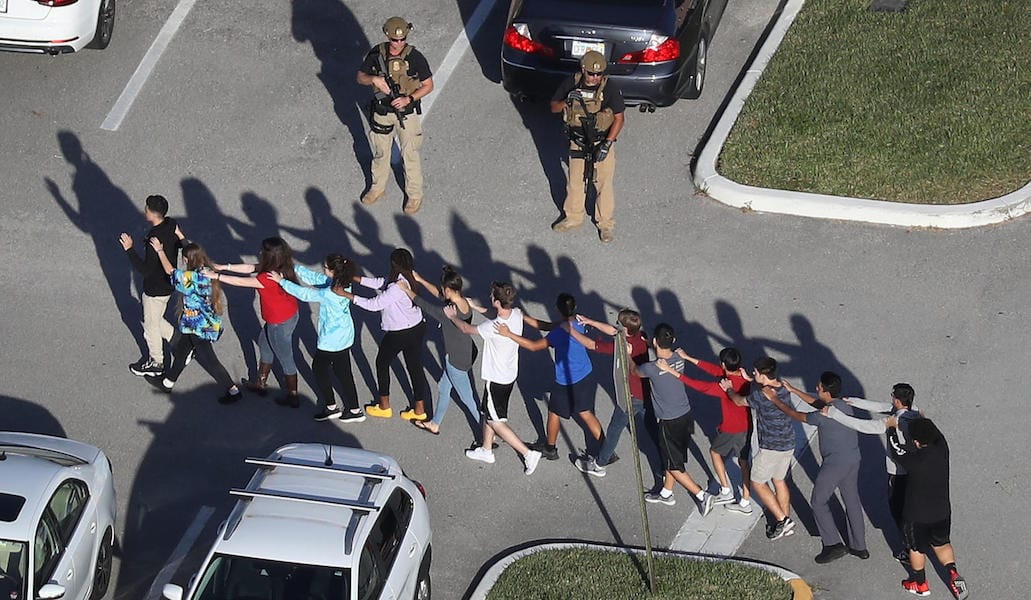
A message from the Student Voice Coalition after yet another school shooting
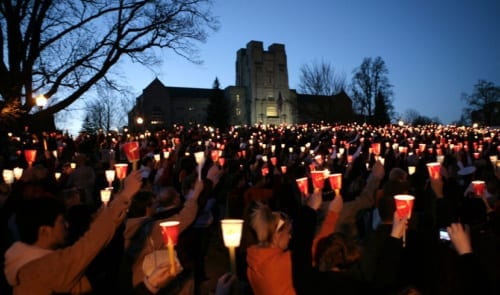 As our grade numbers went from single to double digits, we watched in horror as the number of shootings in American schools did the same. Today’s college freshmen were babies when twelve students and one teacher were shot and killed at Columbine High School by their classmates. Current high school juniors were in kindergarten when twenty-six students and six professors were killed at Virginia Tech by another student. This year’s graduating twelfth graders were in seventh grade when twenty first-graders and six teachers were murdered at Sandy Hook Elementary school by an armed intruder.
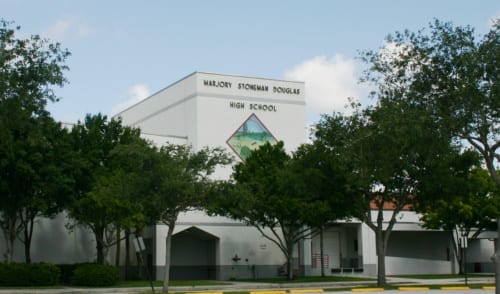
Now, the students of Stoneman Douglas High School, who came of age as gun-assisted massacres of children were normalized in the American psyche, have become the victims and survivors of yet another attack. These students are determined to make sure that no other student, teacher, or parent has to experience the terror and grief they suffered. They won’t let their fourteen peers and three teachers die in vain.
We, the Student Voice Network, a coalition of student-led groups working to empower students to take action on issues that most impact them, stand shoulder to shoulder with the students of Stoneman Douglas High School. We applaud their activism, courage, and determination to make sure that school shootings happen “Never Again,” in the face of politicians, pundits, and others who have opposed these students in expressing their voices.
 We have watched attempts to co-opt this student movement by older people with ulterior motives. Nonetheless, we support these students’ activism in the face of such fierce resistance.
Such resistance should come as no surprise. Much of our traditional education system is built on the notion of students as passive consumers of their education experience, rather than as the partners and co-creators we can and should be. This is reflected in the fact that schools all too often succeed in teaching students how the federal government works without presenting any opportunities for student engagement in local or school governments. Students are rarely supported to use our voices to make change and participate in our democracy.
Nevertheless, students lead by example.
In 1963, it was students who gathered at the 16th street Baptist Church in Birmingham, Alabama to peacefully protest segregation in their schools. The world watched in horror as the children, many as young as 7 and 8, were attacked by adults wielding dogs and fire hoses.
In 1967, thousands of students in Philadelphia walked out of school to protest racial discrimination they faced both inside their school and out in their community. Their requests for a more relevant and diverse curriculum and less racist school policies were met with police brutality and incarceration.
 In 1970, after 28 adult US National Guardsmen fired over 60 rounds in less than 15 seconds, killing four students as they protested the Vietnam War, 4 million students from around the country refused to attend school in resistance and solidarity.
Now, in 2018, students are trained for school shootings with regular lockdown drills, left wondering whether they will be next. Like the students that came before us, we refuse to accept the status quo.
We stand with all students who are taking action to make their schools safer. As students, we can create school cultures where learning and inclusion prosper together. This is about more than any one single policy. We cannot continue paying lip service to fixing the policies and circumstances that enable these tragedies to take place in our schools. We can, and will, begin acting as individuals and communities to ensure inclusion over isolation by listening to others, influencing policymakers, and ultimately, creating safer schools for students. Now is the time, once again, for students to take the lead in determining the course of action in our political sphere.
We did not choose the designation of “mass shooting generation,” but we must, and will, be the ones to end it. We stand with the students of Parkland High School.
If you stand with us, we invite you to join our Student Voice Coalition group on Facebook or add to the conversation on Twitter by using #StuVoice.
 Collectively Authored By:
Student Voice
Oregon Student Voice
UrbEd Advocates
Prichard Committee Student Voice Team
Iowa Student Learning Institute
TEDxYouth@Columbia Organizers
About Student Voice Action Coalition:
Student Voice Coalition is a group of student-led organizations across the U.S. that are engaging students in issues that most impact their education. These coast-to-coast organizations focus on affecting change at local and state levels while belonging to the nationwide Student Voice Coalition. As a collective, our numbers empower the student voice movement by providing a platform, resources, and support to students. To join the Student Voice Coalition, request membership on the Facebook group or contact Coalition Coordinator, Ben Gurewitz.
Further Reading

 However, what if you want inspiring pedagogy and amazing student outcomes, but don’t have the ability to create a state-of-the-art school building to house it?
  As enrollment grew, we had to accommodate a variety of different student needs and skill levels. Because of this, the administration felt it was time to rethink the instructional model. Administration asked the question “is fully virtual the best solution for our students or is there another way to meet students’ needs for nontraditional education while better supporting them?”
  To help parents effectively support their child during virtual learning days, we created several training opportunities. In addition to successful learning coaches mentoring new families, parents participate in a Jump Start Week where they practice correspondence with their learning coach mentors and their child’s teachers, and they attend a half-day onsite orientation to overview policies and procedures. Learning coaches who have children in grades K–8 also have the option of attending a monthly learning coach academy.
  Teacher-Teacher relationships
 Parent-Parent
 As a class, we would watch a clip from a popular movie and then analyze it scientifically. For instance, when Spider-Man holds Mary Jane and swings from the left of the screen to the right of the screen, which direction should her hair fly? Is it possible for Tony Stark to create a new stable element when all the positively charged protons would repel each other? If light is shining through the invisible girl’s body, including her eyes, doesn’t that mean she is blind since her eyes cannot act as receptors of light?
 When I moved on to teach math at the elementary level, I realized if I make the examples something students can relate to, they are able to understand it better. Instead of asking them to divide 25 imaginary apples, if I ask them to put their 25 classmates in teams, they can visualize the problem and understand what operation to use. With my high school students, they start paying extra attention if the word problem deals with money in a scenario they might encounter. Most students enjoy hearing stories to which they can relate, and tend to remember the lessons associated with an experience.
  your current boyfriend/girlfriend. In biology, mutualism is an equal relationship while parasitism is like that friend who keeps eating your food but never brings any to share.
  Joy Lin attended the


 It’s no secret that technology follows finances. In a world that’s increasingly connected by social media and runs off web-based systems, technology is currency, literally. From manufacturing motherboards to creating software, it costs money to develop and maintain an infrastructure that supports access to digital devices and tools, which means that if you find yourself born into a wealthy or middle-class household, you’re more likely to benefit from having easy access to both the tech as well as the education to put it to use. On the other hand, if you happen to live on the opposite end of the educational and financial spectrum, it’s more likely that you’ll find yourself lacking the technology skills to keep up with job market demands, and thus eventually find yourself in a less privileged position socially, educationally, and financially. Experts have christened this growing gap between the tech-savvy and the less-than-savvy the “Digital Divide.”
  According to the
  It’s important to frame best practices for afterschool providers in terms of engagement and participation in the world, not simply proficiency with computers and the Internet. It’s not about having a laptop or a smart phone, it’s about using the laptop or smartphone to translate a child’s worldview into content. It’s about giving them the creative space to digitally develop a voice. Here are a few examples:
 As the digital divide continues to widen as a result of the rapid evolution of technology, it’s critical that in-school and out-of-school time work together to ensure that all youth have the opportunity to become content creators, develop their digital voice, and make connections beyond their physical community. By investing in these opportunities to level the playing field for today’s young people, we’re investing not only in their future but in the future of our communities, our nation, and our world.
  Edwin Link, M.Ed. is the