One idea that has permeated education for the past few years is that of data, and using it to drive and shape instruction. This is a great idea because you as the teacher find out what is working effectively in your classroom and what might not be getting students where you want them to be. In essence, it allows you to get the biggest bang for your buck.
Schools have embraced this, turning to data teams to analyze all of the information we collect on students and figuring out how to teach them better. We make SMART goals to accomplish this:
S – Specific
M – Measurable
A – Assignable
R – Realistic
T – Time-related
The basic premise of a SMART goal is that it is something that can be measured, either through an assessment, evaluation, or observation. Like many things in education, we seem to have taken this concept to the extreme where we are not letting anything into the classroom unless it can be measured. As a result, there are certain unmeasurable intangibles that have been left by the wayside.
For example, I can remember when I was setting goals for my gifted students on their Written Education Plans. Some of the goals were, “would like to see him taking on more of a leadership role”, “would like her to become more comfortable with speaking in public”, and “would like to see him push himself to the next level of thinking”, all things that gifted students should be doing. My principal refused to sign the plans. He said, “these aren’t things I can measure.” I argued that they could be informally measured through observation which he batted away like King Kong does biplanes. He wanted me to link the goals to their STAR results.
For those of you who aren’t familiar with STAR, it is a reading and math program where students take a test three times a year and are compared with everyone else who took the test. It gives them a percentile rank and a grade level they are performing at. These assessments rarely ever contain any higher level questions, and gifted students many times will score in the 99+ on the first test. Where can they go from there? This measured test was not designed for gifted students but rather the typical student, so this data while measurable, was not particularly valuable or informative for me. Nonetheless, my principal insisted.
This is what can happen many times in the educational system. People who are making the decisions lack a fundamental understanding of the needs of gifted students. It is not necessarily their fault. They lack training and professional development in this area. Most teacher and administration training programs rarely ever talk about how to serve the needs of gifted students. This is where my principal was coming from. While I was balancing both academics with social/emotional needs, he was focused on only the academics, and then only the academics that could be measured. I think this is a big mistake because there are some very valuable skills that are going to be ignored that would be way more helpful to children than a lot of the content we teach them.
What I propose is that instead of writing just SMART goals, we might want to consider writing some DUMB ones. That principal would have argued my goals were already dumb, but what I mean by this is:
D – Discipline/Professional Skills
U – Used to
M – Make one
B – Balanced
These DUMB goals are the 21st-century skills that we should be equipping all of our students with and yet because of the focus on data; these are not being addressed. Some of these skills include:
- Collaboration and teamwork
- Creativity and imagination
- Critical thinking
- Flexibility and adaptability
- Oral communication skills
- Leadership
When you look at this list, there isn’t a test that can be given to determine mastery of these. And yet when Pathways to Prosperity reached out to employers to see what attributes they were looking for in regard to incoming workers, this is list they created:
I would argue that out of this list of 19 skills, 14 of them would be very difficult to measure in a classroom using a SMART goal; leadership, teamwork, verbal communications, strong work ethic, initiative, analytical skills, flexibility, interpersonal skills, organizational ability, friendly, creativity, tactfulness, and risk-taker. If we stop teaching these in the classroom, we will be sending our students out into the workforce grossly unprepared and at a clear disadvantage.
I would also argue these are not just skills that we should be teaching to our gifted students. Every student could use these skills. Think about your own adult life, how often are you using content you learned in school? I work in a school, and I would say very rarely. Instead, I am using the 21st-century skills that I learned over a lifetime in my day-to-day tasks in order to learn what I have to do to accomplish my job.
I am by no means suggesting that we ignore the content. Students still should be taught the basics of a given subject matter. What I’m suggesting is that in order to have balanced students, ones that will succeed in whatever they choose to do because we are preparing them for jobs that do not even exist yet, we need to give them the skills needed to do any job. That is where the 21st-century skills come into play. I would feel a whole lot better about a student who left my classroom with the ability to speak publically or collaborate with others than I would about him memorizing facts about our Constitution or knowing the dates or names of battles during the American Revolution.
With that in mind, I will continue to look for SMART goals to grow my students and to make my teaching more effective, but I will definitely balance them with some DUMB goals that prepare my students for life after school.
Subscribe to edCircuit to stay up to date on all of our shows, podcasts, news, and thought leadership articles.
 Turnaround Arts: California was founded in 2014 as a nonprofit organization established to administer the Turnaround Arts program of the John F. Kennedy Center for the Performing Arts and the President’s Committee on the Arts and the Humanities statewide in some of California’s lowest-performing elementary and middle schools.
  The Principal
 Barbara and Turnaround Arts: California envision a statewide network that has different schools at different stages of the process of transformation that support each other and are connected to the resources and tools of the national Turnaround Arts network. One of the things that Turnaround Arts wrestles with is fatigue from boards, parents, and staff because the process of transformation is a long one. While a small number of schools might be able to accomplish a turnaround in about 3 years, published research on ed-reform says it’s more of a 5 to 7 year process for the average district.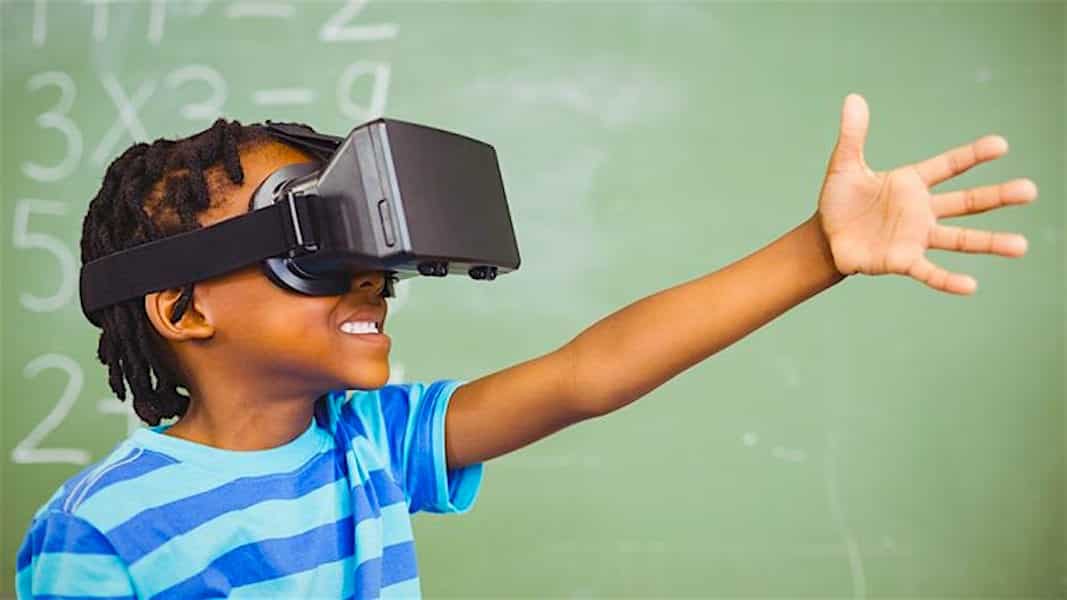

 1.) Be especially selective when it comes to what students play.
 VR is a bit of a wild west in terms of its effects, especially when it comes to kids and their brain development and health. Since VR has shown some significant impacts on adults, and kids are a different story in terms of their needs, It’s best to use it in moderation (i.e. 20-minute chunks) until more research has been done.
 Tanner Higgin is Director, Education Editorial Strategy at
 When it comes to technology in our schools, we have to ask the question, “Are we getting a return on our investment?” Sadly, the preponderance of research evidence strongly suggests that not only are we not close to educational technology having a desirable impact on student achievement, we’re probably a lot further away than many people realize. In this three-part series for edCircuit, I’ll first briefly describe current uses of technology in learning environments and why the impact of such use is so low; then I’ll introduce a new area of research-based evidence that is indeed cause for renewed optimism about the state of digital tools in schools.
  In a recent meta-analysis of over 10,000 studies addressing the impact of various aspects of computer technology on student achievement, John Hattie (2017) calculated that the average effect size of educational technologies is 0.34. To put this into perspective, if one were to plot this effect size on a scale of 1 to 10, then the impact of educational technology scores a wimpy 3; even more alarming, this meager effect hasn’t changed in over 50 years (Hattie, in Magana, 2017). Alarm bells should be sounding in your head right about now. How in the world are you going to share this information with your colleagues? Your administration? Your school community?
 The predominant ways that technologies are presently used in our schools are translational in nature. This includes administrative, budgeting, grading, and communicating, all of which were previously completed using analog tools. Translational technology uses also extend to searching, accessing, and consuming content knowledge and information that were previously consumed through textbooks, journals, and other mixed analog media. While digitizing such tasks does add value in terms of time savings and error reduction, translating teaching and learning tasks from an analog to a digital idiom is not transformational since neither the task nor the actor engaged in those tasks is substantively changed in any way.
  Again, the most effective way forward is to consider translational technology use as a necessary first step—but not the ultimate step! We must continue incorporating digital tool use to increase our efficiencies and our students’ competence in the digitized global world we inhabit, but if we want to truly innovate, we must embrace what I describe as T2 Transformational Technology use in our schools. We must ensure that our students develop facility with current and emerging digital tools in order to interact more effectively with new knowledge and deepen both their conceptual understanding and their capacity to demonstrate, model, and communicate their conceptual understanding using digital tools. These are critical ideas that I will explore further in the second part of this series.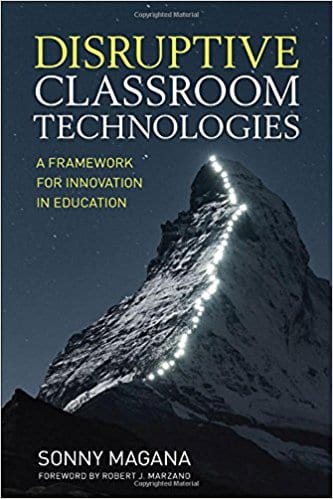

 Teaching with technology can be kind of like getting onto a roller coaster or auditioning for a play. For some, it’s thrilling. For others, it’s terrifying. Some jump right in. Others may reluctantly try it after much prompting. And still, others will flat out refuse to have anything to do with it.
  When Livonia Public Schools launched its tech initiative, it wanted to create a professional development program to help staff get the most out of their upgraded equipment. It spent more than a year planning how to do this. The result – Level Up LPS, a one-day professional development program focused solely on teaching with technology. The event takes place every year in August to kick off the school year. It’s organized it like a mini-conference complete with keynote speakers, food trucks and 100 peer-led breakout sessions on how to use the new technology in the classroom. The event included time for teachers to network and to practice what they’d learned. The district gathers feedback each year so it can make the next event even better.
 Push teachers out of their comfort zones
 Show them the “why.”
 Make it relevant.
 The idea that learning is personal has been a shared notion among those who study how people learn for many years. Multiple intelligences, constructivist theory, learning styles and many other ideas converged over the last decade and made a crash landing into the classrooms of the early 21
 As NCLB reached its peak, teachers were…tired. Students were tired. Parents were tired. Students who fared well in this process were weary from constantly being pushed without any input into how they felt. Teachers were asked to look at more, and more, and more data, and ensure everything they did was “data-driven.” Parents were mostly left out of the process, trying to determine why their child got a “C” in reading when all their papers had an “A” at the top.
 The family matters.
  Personalized Learning is not Blended Learning.
  Kristin Novy is principal of