It’s been a long and amazing evolution so far by Emily Weston
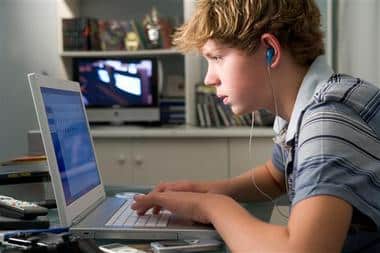 By now, most of us in the education world have heard of flipped learning or using a “flipped classroom.” At the most basic level, flipped learning involves having students watch their classroom lecture at home and use class time for active learning and homework with their teacher (and fellow classmates).
The concept of flipped learning was developed by teachers and innovators Jonathan Bergman and Aaron Sams 10 years ago. The movement started out with Bergman and Sams exploring a concept to help students at the rural school where they taught to stay up to speed on their school work. They found kids were often missing class time – due to a long commute home, sports and other factors like being sick. The flipped learning model allowed them to get the lessons to their students no matter where they were.
Fast forward to today, flipped learning has become common practice, with nearly 80 percent of teachers having flipped at least one class. And while research is still being gathered, we continue to find new evidence – quantitative and qualitative – that demonstrates how the flipped learning model can benefit our students and prepare them for the future. There are a few consistent areas where educators are continually seeing positive results from the flipped learning approach.
1.) Increased competence in core subjects: Flipped learning has proven to help students – especially those who struggle in a subject – grow stronger in their studies. Byron High School in Rochester, Minnesota evaluated the impact of flipped learning in its math classes between 2010 and 2011. The teachers found a 9.8 percent increase in calculus proficiencies and a 5.1 percent increase in Algebra II. Increased proficiencies translated to improved standardized exams. The math mastery level for students went from approximately 65 percent in 2010 to nearly 74 percent by 2011 once flipped learning was implemented.
 2.) Improved grades and test scores: Increased competence and proficiency naturally translates to better grades. In a 2011 published report, students from the University of British Columbia taking a physics course were split into two groups in which one was given a flipped classroom curriculum. When tested, students in the flipped classroom scored an average of 74 percent. Compared to the traditional group who scored an average of 41 percent. Another study conducted by TeacherVision explored teacher experiences with the flipped learning model. In a survey of 453 teachers who flipped their classrooms, 67 percent reported increased test scores for all students. While the teachers surveyed felt all students benefited from flipped learning, they noted special benefits among students in advanced placement classes and students with special needs.
3.) Decreased stress and improved classroom satisfaction: We all talk about the importance of creating a “student-centered classroom.” The ability to have a more tailored, individualized approach has led to improved satisfaction for students in a flipped classroom model. A study conducted at a private high-school in Dubai with a diverse international student population evaluated the flipped classroom for its effect on student’s stress and academic success. At the end of the semester, students reported lower stress levels and an overall positive feeling about the flipped classroom style. The study also found overall semester grades were improved.
4.) Enhanced student engagement: Counter to what you might expect, students have been especially open to the flipped classroom model, and many seem to enjoy it even more than traditional methods. 75 percent of students studied at Stockholm University in Sweden reported a positive view of the flipped classroom. The students also noted that it is “easier and more effective to learn” with the flipped classroom approach and they felt “more motivated as a learner.” Another study conducted among college students at Facultad Regional San Nicolás in Argentina demonstrated student acceptance and enthusiasm for the flipped classroom model. The study confirmed that they preferred to work on their own with guidance which aligned well with the new flipped learning model. Finally, at Ashland Middle School in Massachusetts, two French classes were compared – one with a traditional teaching model and the other with flipped learning. The flipped classroom saw completed homework increase to 98.7 percent (up from 79.8 percent).
5.) Ability to pace and meet students where they are: It is a constant struggle to balance the pace of your lecture or  class lesson to meet the needs of every student. A flipped learning curriculum allows students to go at their own pace, which can be especially helpful to those who are either higher or lower performers. At Annie Wright Schools, I started using flipped learning with my math students about six years ago. I didn’t see the positive results right away, but by year two and three, I realized how much more I was able to connect with my students on a personal level and could gain a better understanding of who they are as learners. I have seen favorable results with those who have historically struggled with math. Many of these students have certainly seen improved grades and most have shifted their attitudes and opinions towards math in a more positive way. The Stockholm study (referenced earlier) found similar conclusions with the “low achievers,” demonstrating the power of flipped learning.
Even with new research coming in, flipped learning is still met with some push back from educators and researchers who have found limited concrete evidence that flipped learning contributes to better outcomes. For example, one 2014 study demonstrated no evidence that students in a flipped classroom learned more or improved knowledge of a subject compared to counterparts in a traditional classroom setting. Another recent study showed flipped learning had a neutral to positive impact on K-12 students.
Furthermore, a few key challenges have been cited for students and teachers alike, including increased workload for teachers who must create the lessons in advance, students’ ability (and desire) to engage in learning on their own time and access to resources needed at home and at school (e.g. internet access, computers, etc.) to make flipped learning possible.
Looking forward, we will likely see more and more schools explore flipped learning in their classrooms while others may choose to keep the more “traditional” classroom approach. That’s what makes the educational space so special – we can keep innovating and exploring new models to find what works for us. There is no one size fits all.
Interested in exploring flipped learning in your classroom?
Here are a few tips to get you started:
 1.) Start slow. Start with one unit or lesson, get comfortable with it and expand from there. You can also consider using lectures from other teachers online as a starting point.
2.) Experiment with the technology. Don’t stress over the video quality – the content is what matters most. Good news is, as flipped learning has grown in popularity, more tools have become available such as EDpuzzle, Zaption, Sparkol and Camtasia. And of course, you can also use your phone or iPad.
3.) Invest time up front. If you put time upfront to record videos, more time can be spent creating meaningful classroom experiences for your students and providing meaningful feedback. Consider summer break or long weekends as potential opportunities to record your lectures.
4.) Join the flipped learning community. There are so many teachers online who share their lessons and best practices they have learned over the years. I personally enjoy the Flipped Learning Network. You can also follow #flipclass on Twitter for more great conversations.
References
- “An Alternative Vote.” Economist.com, The Economist Newspaper, 14 May 2011.
- Caligaris, Marta, et al. “A First Experience of Flipped Classroom in Numerical Analysis.” Procedia Social and Behavioral Sciences, vol. 217, 5 Feb. 2016, pp. 838–845.
- Ferriman, Justin. “Interesting Flipped Classroom Statistics.” LearnDash.com, LearnDash, 15 May 2014.
- Findlay-Thompson, Sandi, and Peter Mombourquette. “Evaluation of a Flipped Classroom in an Undergraduate Business Course.” Business Education & Accreditation, vol. 6, no. 1, 1 Feb. 2014, pp. 63–71.
- Granata, Kassondra. “Study Assesses Effectiveness of Flipped Classroom Approach.” EducationWorld.com, Education World, 2014.
- “Improve Student Learning and Teacher Satisfaction in One Flip of the Classroom.” ClassroomWindow.com, TeacherView, 21 June 2012.
- Marlowe, Cara A. “The Effect of the Flipped Classroom on Student Achievement and Stress.” ScholarWorks.
- Nouri, Jalal. “The Flipped Classroom: for Active, Effective and Increased Learning – Especially for Low Achievers.” International Journal of Educational Technology in Higher Education, vol. 13, no. 1, 2016, doi:10.1186/s41239-016-0032-z.
Author
Emily Weston is an Upper School Math Teacher at Annie Wright Schools. She believes that students succeed in math when they are engaged daily in the classroom and work in cooperative small groups. Emily adopted the flipped model in her classroom in 2011, allowing her more time to work one-on-one with every student, every day.
She earned a BA in Advertising and Mass Communications from the University of Colorado-Boulder and an MA in Education from Pacific Lutheran University.
Follow the Annie Wright Schools on Twitter.
Further Reading

 As the founder and leader of the
  Nancy believes that by including the voice of young people in this dialog and debate, we can speed up the building of the framework, providing faster solutions to the challenges of the world. A quicker, more efficient collaborative process that not only thinks outside the box but approaches innovation without a proverbial box anywhere close to the conversation. Nancy wants to tie in the creativity and “unbounded nature” of young people to open up a whole new way of thinking that inspires solutions to the challenges of everyday life.
 Nancy Conrad created the


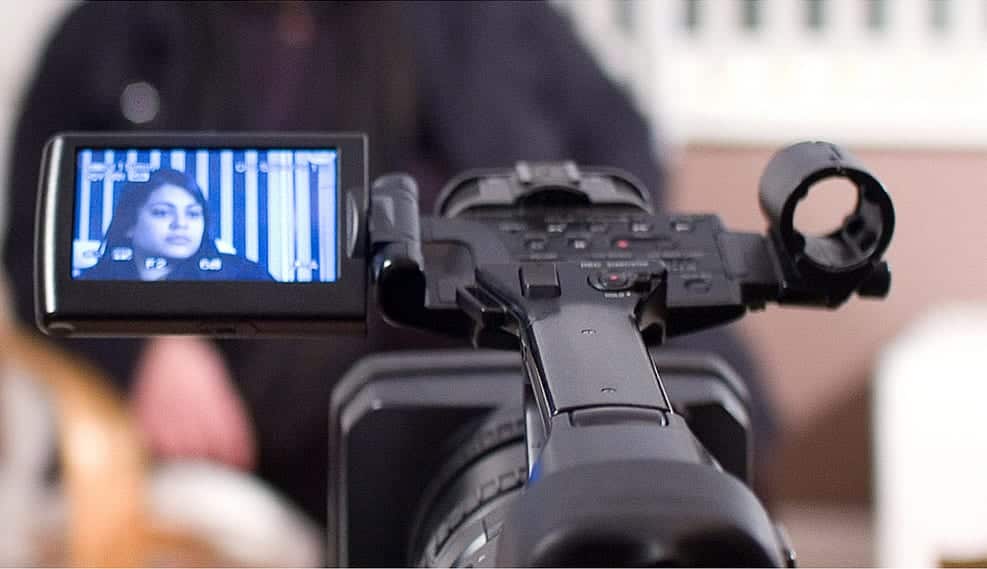
 In today’s high-stakes environment of teacher evaluation, there is an increasing demand for higher quality professional development. Administrators and school leaders are challenged with providing teachers individualized, ongoing support, while not being stretched too thin – both from a capacity and budgetary standpoint.
  In “
In “ Like any initiative, video coaching involves planning logistics, developing a smart strategy, establishing a supportive culture, and implementing it well day in and day out. When this is done with fidelity, video coaching can transform the professional learning process for administrators, coaches, and teachers alike.
 Gezim Gashi is a storyteller that enjoys teaching kids how also to be storytellers. As a songwriter early in life, Gezim found a natural progression into his role as public relations and marketing guru for the Academy of Music and Business (AMB) in Tingsryd, Sweden.
  Gezim tells the story of one of his students named Belle, a 15-year-old girl who was troubled by the street violence in Stockholm. She poured her heart and emotions into a song she wrote, and approached Gezim. He was impressed and started collaborating with her to record and promote her creation. After producing a video of her singing her song, he posted it on Facebook and it got over 100,000 views within an hour; a week later she was doing the morning talk shows in Sweden, and was approached by record companies offering her a recording contract. It was a demonstration of the power of public relations and marketing.
 Students from Christian Oaks flew to Sweden to perform with their AMB counterparts at the American Embassy in Stockholm, and the resulting conference was a massive success. The AMB students returned the favor and flew to Los Angeles to perform with the Oaks Christian orchestra, for what was declared a life-changing magical event. The students in Sweden and Los Angeles learned so much by connecting through Soundtrap that the experience went far beyond just making music. It allowed the power of storytelling to make a huge impact on lives spread across the globe.
 Gezim Gashi is a 27-year-old marketer and entrepreneur who is Head of PR and Marketing at
 Steven W. Anderson is an accomplished education consultant who travels from coast to coast talking about the use of Social Media in the classroom to teachers and administrators in schools and districts all across the country.
 To Steven, quality professional development is a critical tool in helping schools keep up with the constantly shifting education technology and the variety of electronic devices that parade through classrooms on a daily basis. “One of the issues that I have a lot with professional development in some conferences, they’re trying to cram the technology into the learning process versus ‘Let’s talk about how collaborative classrooms through the use of technology work and what they look like.’ Technology comes and goes. What we need to be focused on are pedagogy and processes and how students are creating new knowledge and new opportunities through that technology. And technology enables us to do things we weren’t able to do before.”
 “We get too hyper-focused on one particular application and then tomorrow it’s gone, and we haven’t understood the processes that made that application so great,” he says. “We’re at a loss. I want to see schools, districts and educators focusing more on their pedagogy and having good solid sound pedagogy around the use of technology.”
 Steven W. Anderson is a Dad, Learning Evangelist, Speaker and Author. After a successful career in public education as a Teacher, Instructional Technologist, and Director of Instructional Technology, Steven works with educators across the globe as a consultant. Highly sought after for his skills in helping educators and school leaders better understand technology and social media through his humorous approach to learning, Steven can work with you to improve learning for all students.