A next-generation of measures and assessments at DeKalb ISD  Dr. John Booth, superintendent of the DeKalb Independent School District (ISD) in rural northeast Texas, believes in developing the whole child. His district is moving away from the rigid accountability standards of the past and looking at each child’s needs. Dr. Booth is tailoring learning to the student and incorporating the parents and the community. Local businesses, industry professionals, and future employers are being brought into the process. The community is best served by asking the parents and community, “What do you want? What are your aspirations for the child?” r. John Booth, superintendent of the DeKalb Independent School District (ISD), believes in community-based accountability.
“We’re in a social sector,” Dr. Booth notes. “We’re in a related sector. It has to be more about relationships. And that’s what community-based accountability does. It gets into the relationships between the school and the parent, the school and the child, and the school and the community. That’s the essence of community-based accountability.”
Dr. Booth and his district are members of TPAC, the Texas Performance Assessment Consortium (TPAC). TPAC is a group of 44 Texas school districts working to build on the success of community-based accountability systems already in use in districts across the state by developing next-generation measures and assessments that would enable broader use of such systems. “Once upon a time, the school handed a parent an education plan and said, ‘This is what your child needs,’” said Dr. Booth. “That’s no longer how the world works ─ the whole world, not just education.”
According to Booth, TPAC is on the cutting edge. He says TPAC is the future of school systems. “It is a great start with TPAC. These 44 districts will set a palette, a standard out there, and some variations will occur. Ten years from now, it will look completely different. Once people get it and see it ─ and buy into it ─ then we will see them go back to their home districts and say, ‘I want some of that for my child. I want to have that kind of input in my school.’ That’s how it’s going to grow. It can’t be a mandate. It’s not going to be pushed from the top down. It’s going to be bottom up.”
Dr. Booth believes in his path and has much hope for the future. He believes that the blossoming edtech revolution is the game-changer. “We got away from teaching the individual student because, as a society, we couldn’t afford to teach each child where they were,” he said. “But technology is allowing us to do that now ─ to bring different pieces, learning styles, and methods into classrooms even in the most remote areas.”

 As Directors of Curriculum for the
  The teachers are allowed significant autonomy but Dr. Mahan says for the teacher, understanding the standards is more important than understanding the curriculum. “There is always a confusion concerning ‘This program is your curriculum,” says Dr. Mahan. “This is a misnomer. You have a curriculum, and you purchase a program with supplemental materials to SUPPORT it.”
  Dr. Farrah Mahan is the Director of Curriculum for the
  Violeta Katsikis has served the students and staff of the
 I have had a lot of conversations in my career where it is offered that the solution to the problem of challenging students is simply to add more rigor. It is as though a teacher could go to the spice rank and hunt amongst the dill and the Cayenne pepper to find a bottle of rigor that can simply be shaken on the class and the problem will be solved.
  To provide an example of different types of thinking, a teacher could ask this question: “What is your favorite book and why?” Students will not have to struggle to figure out what book is their favorite. They may have to think a little harder to determine the why of their choice. A lot of times students know they like something, they just cannot point to what exactly they liked about it. By having them break it down and analyze what elements of the book they enjoyed will access a higher level of thinking.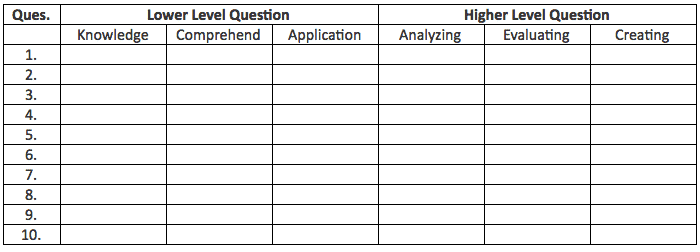
 This fundamental change in your classroom of reflecting on the level of thinking your work requires of students can immediately increase the rigor of your classroom. Some teachers might balk at this prospect because it is too hard. Keep in mind, raising the rigor in your classroom means raising the rigor on your teaching, but just like your students will be better learners, you will be a better teacher.
 Thinking back to my school years, class time was spent taking notes while teachers led lectures from the front of the classroom and homework was all about practicing what we learned. Now as I, and the education industry, age, I see this teacher-centric style of teaching working its way toward retirement, and that is a good thing.
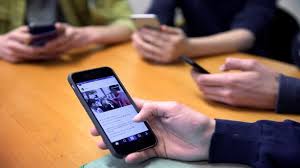 Even just five years ago, if you walked into a classroom and saw a student using a cellphone, he or she would most likely get in trouble. Now, it’s the new norm. Whether the school has instituted a BYOD program, a 1:1 program or a combination of the two, students are often working on devices during class. This makes it easier for students to collaborate on group projects, do research and present evidence to support their claims during class discussions.
 In many classrooms, the roles of class time and homework have switched. Now, the digestion of new content – the reading and taking notes – takes place at home so time in class can be spent on small group work or projects that allow students to apply the concepts they are learning. This student-centric learning style not only gives students the freedom to express their learning in different ways, it challenges them to hone important non-academic skills such as collaboration, communication, problem-solving and more.
 Because classrooms are becoming more collaborative, the seating arrangement is changing to reflect this. Cafes offer a myriad of seating options for customers, including relaxing couches, secluded individual tables, and bigger tables for groups and many classrooms are adopting this design mindset. Classrooms are beginning to incorporate softer furniture like couches and chairs, as well as reading nook-style areas where students can work on their devices both individually or in groups. Additionally, desks and chairs with wheels are becoming more popular because they provide flexibility. If the class is participating as a whole in a lesson, students can face forward and they can quickly rearrange their desks for group work on the fly.
 School libraries are transforming into true media centers. The shelves of books, magazines and computers for research are now joined by collaborative and informal learning spaces. The media center is becoming a meeting place where students can work on projects. Soft furniture makes the media center more inviting and lounge-like. Some schools are even installing displays in these informal learning spaces so groups can practice presentations, view documents or websites as a whole, and more. Media centers are also expanding the tools they offer. Some rent out video cameras, green screens and even virtual reality goggles for projects.
 As edtech continues to advance, classroom instruction and design will continue to change. The goal of schools is to provide students for a future career, but our workforce looks different now. Upon entering the workforce, students are expected to have foundational knowledge, as well as collaboration and critical thinking skills needed to operate in a highly skilled technical workforce. By creating educational environments that better reflect the “real world,” schools are better preparing their students.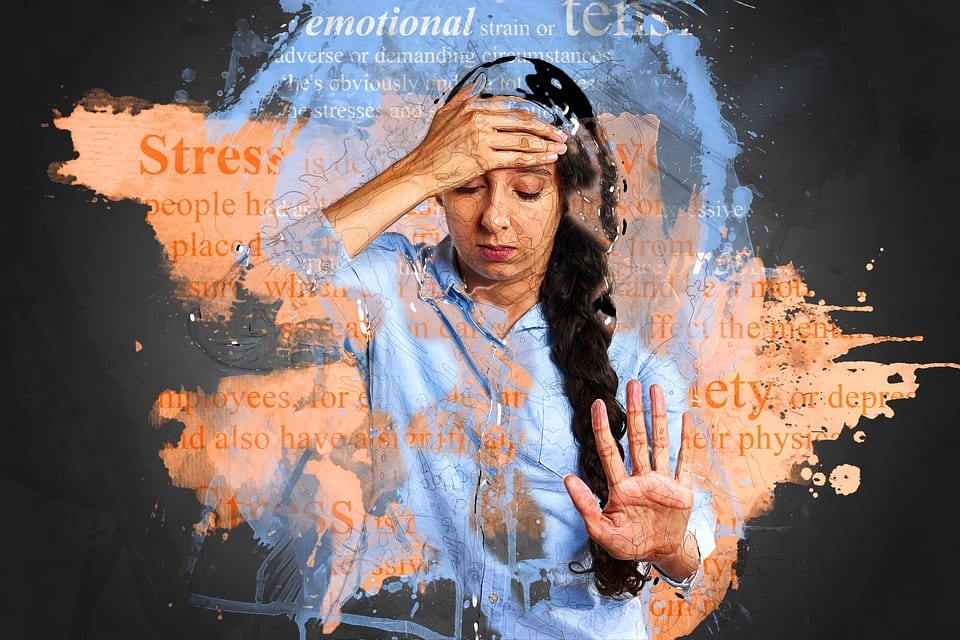
 Early in my career as a principal I came across a student in our hallways that did not look well. The blood was gone from her face and she looked ghastly, standing at her locker, binders in hand, Chromebook under her left arm, musical instrument in its case lying at her feet. The bell had rung; she was late, however she was not in a hurry to make it to class. I stopped and asked if everything was alright, and her eyes immediately welled up with tears.
  Unfortunately, this is an all too common scenario. As educators, we are witness to students who are coming of age in an era of information overload. Students are often overwhelmed, anxious and restless. It is not uncommon for learners to be overscheduled as they try to navigate a do-it-all society with do-it-all perfectly expectations.
  Unmet and unrealized expectations have serious implications for a student. When a goal is not complete, an achievement is not reached, a certain status is yet to be attained – it is often considered failure. For some the setback is genuine because the target was determined by the individual. The due course of the process allows for evaluation and adjustment. This indicates an authentic goal that is intrinsically motivated.
 Beyond challenge, beyond rigor and assessment, beyond mastery and development, lies the true key to learning which is curiosity. With information at the fingertip and answers to questions seemingly accessible at the touch of a screen, the foundational element of curiosity can be lost for a student.
  The more students are asked to complete standardized tasks and assessments, the more internal unrest they will have. Students are naturally intuitive. When asked to complete tasks that are counter to their own internal goals, anxiety and cognitive dissonance can arise. Even worse, high stake tasks that serve no purpose outside of data cultivation are construed as empty and void of purpose.
 Mrs. Miller was my fifth-grade teacher. Both of my sisters had passed through her justifiably famous hands. She was an imposing, loved, and feared presence. We did okay together, even though my sisters’ reputation for politeness and manners was not present in equal measure for yours truly.
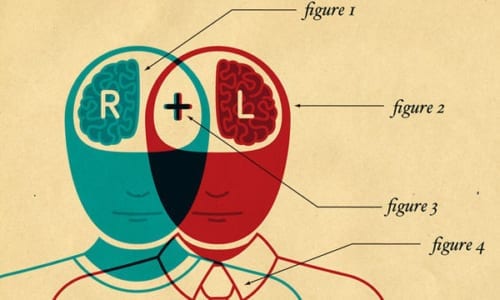 Pair your students off by differences, e.g., those who prefer a certain artist, food, or athletic team—or their stance on a topic you’re exploring. Give them a Venn diagram (two overlapping circles). This diagram has three interior spaces. Each puts her/his name on one side. The rules of the game? They list their differences on the outer sectors (
 A fellow by the name of Gilbert Ryle gave an important lecture in 1945. A long time ago, I’ll admit. On the other hand, Abraham Maslow’s
  And we can increase opportunities for creation — making something. We know from research as well as from observation that people (children as well as tall children, aka adults) need to get their experiential brain engaged to get in the habit of tying learning to doing. Weave goals and objectives into this process; have learners work together to define how they will measure successful learning and mastery (with your guidance). When we are responsible for defining measures of achievement, we are much more highly invested in outcomes.
 We can help our students feel comfortable generating
  Since 1994, Mac Bogert has been president of