After over twenty-five years in retirement, why do faculty, staff, and students keep in touch with their former principal? It can only be that she built a loving and caring environment for everyone. Her school was diverse―evenly split between black, white, and Latino students―when she was the leader in the 1980s. All students were expected to learn and excel. Teachers and parents were expected to have the same high standards for student achievement. If teachers did not hold this belief, they were asked to transfer to another school. Bus drivers, cafeteria staff and maintenance staff were all considered vital parts of the school community and were treated with the same dignity and respect afforded all staff and faculty. All stakeholders had an equal responsibility for educating the children and helping them become productive citizens in their career of choice. This principal had learned the power of positive leadership.
For a new principal, whether he is new to the position or new to the building, it is imperative that he position himself properly from the start. Part of this positioning involves an awareness of the different relational dynamics in the school community – principal to teacher, teacher to teacher, teacher to student, parent to school – and how what he does and says impacts those dynamics. There are four basic leadership styles: absent, authoritarian, delegator, and role model:
The absent leader― This principal does not have a presence in the building because he hides in his office. There is no clear structure of role or processes. The seeming disinterest sets the stage for conflicting end goals. This leads to a power struggle without any clear sense of what the one fighting for power wants to accomplish.
The authoritarian leader―On the opposite end of the spectrum is the authoritarian leader who refuses to share power. He is often accused of micromanaging, and his faculty and staff tend to function more like children than adults. This style may work in crisis situations, such as when there is a threat of being taken over by the State. However, more often than not this style only fuels the negativity of faculty and staff.
The delegator―This leader shares power by providing leadership opportunities for those who desire them. He knows that leadership is often best developed in the trenches. By empowering others to be risk-takers, he inspires their own leadership potential. This person feels he has done his job when all those on the team discover that they don’t need him to tell them what to do.
The role model or servant leader―He practices the behaviors, relationship building and engagement he wishes to see in all of his staff. He is willing to do whatever it takes to support his faculty, staff and students to make them successful.
A new principal may try on these different styles to see what suits. However, what is proven time and again to be most effective is supporting and empowering others to succeed. This helps build trust and loyalty among faculty and staff.
After determining what leadership style he will use, one of the first things a new principal must do is an environmental audit. This audit can begin even before he assumes his official role. He must look at the physical aspects of the building. This includes everything from layout to paint to signage to floors to front office to landscape to lighting to hallway traffic flow to furniture to cleanliness. From a physical standpoint, is the school a welcoming and nurturing place for all stakeholders? If not, he must develop a plan to make necessary changes by asking himself what it would take to make the school a place students and teachers want to be each day.
An additional component to this environmental audit is the social and emotional piece. What does the building feel like? Does the front office staff kindly greet visitors? Are students and teachers smiling? Are transitions occurring in an orderly manner? Are inviting parent materials clearly displayed? Answering these questions will provide insight into the climate of the building.
When students, faculty, staff and parents see physical changes occur in the building, they will know that the principal is committed to change. Although everyone may not agree with every decision, new paint, clean floors, different front office protocol speak volumes about the value of both the building and the people. Making tangible changes can help create more buy-in from the stakeholders.
A school principal is much like an entrepreneur. He must keep many plates spinning at once. At times the task can seem daunting. However, he can enlist help from faculty, staff and parents by communicating clearly with them. One of the first things he needs to communicate explicitly is his philosophy of leadership. In other words, what is his leadership style and why? By communicating his philosophy, other stakeholders will gain an understanding of what is expected of them and what they can expect of their leader. Unspoken expectations destroy trust; spoken expectations build trust.
A natural outgrowth of the philosophy of leadership is the vision and mission. The vision is the lofty goal – the desired state; the mission tells who, what and how will work toward that vision. Having a clearly defined vision and mission gives all stakeholders direction – a unified common goal. Principals may choose to write the vision and mission independently or as a team. The chosen process tells much about his leadership style. Once the vision and mission are written, it is important to formally introduce the vision and mission to the entire school community. One cannot assume that it will be read and understood because it is posted on the school website. Setting the direction for the school is worth having conversations at faculty meetings, parent meetings and school-wide assemblies so everyone can buy-in.
In addition to having open conversations about the vision and mission, it is imperative that the principal have continual conversations with teachers, parents and students. Perhaps, he can set open office hours to facilitate these conversations or schedule meetings on a regular basis with teachers who are influencers in the building. These meetings need to be about more than business; they need to be about connecting as individuals. He also needs to be present in the hallways and classrooms during class changes to interact with the school community. It is especially important for him to greet students in the morning when they arrive and in the afternoon when they leave.
This leads us to the most important part…the students. In the end, education is not about test scores or fancy buildings, winning teams or state recognition. It is about the students. Students need to feel valued. A smile or high-five in the hallway is more than a greeting; it communicates value. It tells the student, “I am important enough for this busy adult to take time for me.” In addition to value, students need to have clear expectations communicated to them. They need to know that they are expected to behave and expected to learn. If they struggle with behavior or academics, appropriate support needs to be provided for them, whether this is daily check-ins with another adult in the building or peer tutoring. By providing support for success, the principal is addressing the social and emotional needs of the students. Research shows that when social and emotional needs are met, student’s behavior and academics will improve. Students, teachers and parents need to know that failure is not an option because everyone is working together.
All of the pieces mentioned above are constantly interworking. Since school is a human institution, it will never be perfect. There is room for continuous improvement. It is the principal’s job to communicate that this evolution process is both natural and desirable. This gives people room to be human…to be honest…to work authentically instead of striving for unrealistic perfection. In order to manage this continuous improvement, be sure to define focus areas, identify actions, specify responsibilities and allocate resources.
The ultimate goal of a principal is to create a safe place where people want to be, a place where teachers want to teach and students want to learn…a place where everyone belongs. In the end, it’s all about relationships…principal to teacher, teacher to teacher, teacher to student, and parent to school. Relationships start with caring. People know you care when you take time for them.
Subscribe to edCircuit to stay up to date on all of our shows, podcasts, news, and thought leadership articles.

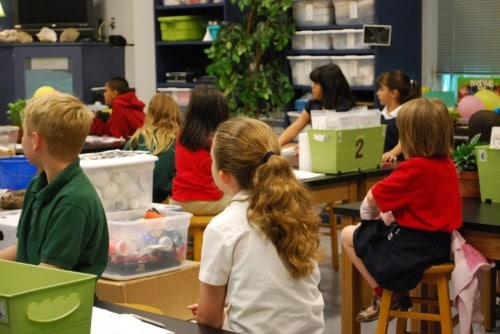 What Is PBL in a Nutshell?
 In response, the first finding by Ericsson and Pool (2016) and Daniel Coyle (2009) is about building confidence and fluency with everyday problem solving through practice, coaching and motivating factors. These experts believe
 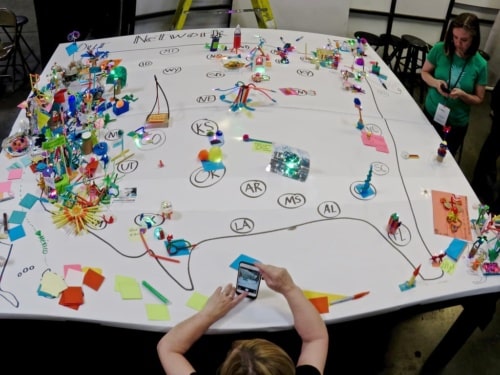 Finally, PBL in a Nutshell is about transforming the everyday classroom lesson into an
  You are
 You will
 You will
 Referencing Maya Angelou’s poetic quote, Deborah shares, “I’ve learned that people will forget what you said, people will forget what you did, but people will never forget how you made them feel.” Deborah believes that excellent teachers make students feel like they can be successful. People may remember idiosyncrasies and moments, but the biggest thing they remember is how you made them feel. The teachers make the students feel welcome like they’re in a safe place where they can experiment, try and fail. As Deborah points out, “We set the kids up to succeed in the classroom, but the learning is in the failure.”
  As their brochure says, “We see a place where what a student does is more important than where the student comes from, where success is rewarded but the effort that provides it is cherished. We see a place where students work together to construct within and between themselves the skills and habits an uncertain future requires. We seek to move students from dependent to independent learners; from receivers to creators of knowledge.”
 Deborah Brown is the 2017 North Carolina Charter School Teacher of the Year and serves on the NC Governor’s Teacher Advisory Council. She is a National Board Certified Teacher with a Master’s Degree, summa cum laude, from
 Alina Campana is the Program Director for
 They’re building up the arts throughout the school and in every classroom with the idea that that will help them impact student achievement and student engagement and also things like family involvement which is key to a successful school and school climate and culture.
 So there is growing compelling research that shows that the arts can be a positive influence.
 And then, some teachers are uncomfortable with the arts, and it could be kind of scary because it wasn’t core to how they grew up in their learning or they haven’t had experience with the arts that much. But, very often, when they try it, they do see a shift in their classroom in the ways kids learn. And, sometimes, we hear from teachers who say that the arts have helped them see that child in a new way and the child was a student whom they thought of as struggling. Learning through the arts allowed that child to shine, in a way, that they hadn’t seen before. So it helps shift teacher perspectives on who their kids are and how they learn. I think that’s important for all the kids.
 AC:
AC: Alina Campana is the Program Director for
 1.) The
  2.) Others will answer this question better than I can, but the real answer is: Use anything that works. PBL is not technology dependent—that’s a mythology from the early days when technologists in the late 90’s began to push a purely constructivist or discovery version of PBL. At its heart, PBL is a simple process: Engage students in a challenging, open-ended problem; turn them loose in teams to research, weigh, design, and create; give them adequate doses of essential knowledge and core content; and expect them to produce a well-constructed, thoughtful public product that shows what they have learned and concluded. Where does technology fit into the process? Wherever people today normally use technology to find and share stuff.
  3.) As voice and choice is an essential component to any PBL product, one of the easiest ways to integrate technology, and my personal favorite, is using technology as a product for student learning. We want students to apply their learning in a variety of contexts in a PBL project. We also value authenticity in a PBL experience. Both of these ideas “scream” for technology to be leveraged as students create their products. Products that leverage technology could be websites, podcasts, movies, public service announcements, and presentations; all of which are highly authentic and allow students to express their creativity. By using technology-based products, we are allowing students to express their learning in assessments that are meaningful, rather than a simple pen and paper examination. It only makes sense for students to show their learning through technology.
 4.) My favorite strategy for using technology within a PBL environment: not using technology! Okay, maybe that’s not quite the right wording…more along the lines of think about how technology will make your project more effective and let that drive the usage. Allow for the project to demand when and if technology is utilized. Content can easily slip away and be masked by the glitz and glam of the latest tech. Projects that integrate technology at appropriate times, driven by the needs of how it is unfolding, generally have more success and the information sources are often sound (and necessary). This is how we do life (efficiently and with purpose) and therefore, we want our learners equipped with best practice.
  6.) One technology strategy that I have embraced over the last several years is the use of the video recording abilities found within the Learning Management System,
 Benjamin Heinen is the visual arts curriculum coordinator and local program coordinator for
  Together with national and local partners, Turnaround Arts mission is to improve low-performing schools by not only integrating the arts back into a standard daily curriculum but using them to enhance a student’s grasp of all subjects and lessons through integrating the creative problem-solving and scientific method connection they foster. Turnaround Arts seeks to improve the social-emotional learning and development of K-8 students by bringing the joy and excitement of learning back to the classroom through the arts.