Guiding college students toward a successful and sustainable life 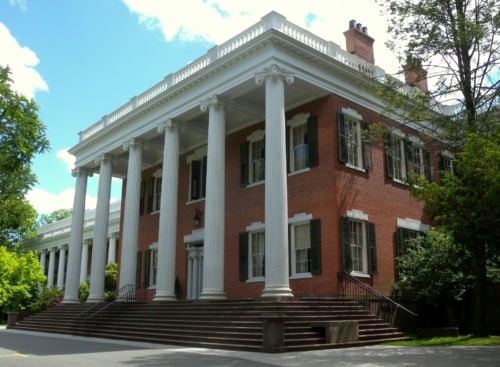
Dr. Robert Massa is the Senior Vice President for Enrollment and Institutional Planning at Drew University in Madison, New Jersey. Through this role, he is responsible for admissions, financial aid, athletics, career planning and institutional research. Recruitment of the best and the brightest plays a large part in driving his position and the success of the university as a whole.
There is a great deal of competition between colleges and universities across the country and Dr. Massa realizes the work it entails. As he states, “Our goal is not just to admit a freshman class, it’s to admit a class that’s going to graduate.”
Peter Kraft and Evolution Labs help Dr. Massa with his enrollment management, and Kraft notes how savvy Drew University has been with the “cradle to the grave” approach of supporting their students. Drew uses Evolution Labs’ S360 platform to help reach a variety of goals for engaging and recruiting new students. “Sometimes just buying them a cup of coffee and listening makes all the difference in the world,” Dr. Massa says.
Throughout the forty plus years that Dr. Massa has been involved in higher education, he has seen the roles of admissions officers, administrators and professors evolve. “The role of the faculty member in an undergraduate program is not only teaching in a classroom, but it’s really mentoring students and helping them to find their way,” he says.
 “We’re there to help young people mature into adulthood, help them learn how to make their own decisions,” he says. “To grow and develop in ways that are necessary to have a successful and sustainable life.”
Dr. Massa starts by doing everything he can to assure a student’s success by using the right criterion for admission. Sometimes colleges admit students who are not the right fit academically, motivationally or as Dr. Massa says, who lack “grit.” He believes enrollment management is relationship management. It’s not all data-driven with logistical regression models. “We use some tools to help us maximize our yield on students who are admitted,” Dr. Massa explains. “But what we’re trying to do is to build and sustain those relationships.”
 A robust advising and counseling system helps support student needs once on campus. Dr. Massa directs his admissions staff to check in on undergraduates from time to time throughout their school year – reaching out as far as their junior and senior terms. Mentors remain critical in helping students cope with the extraordinary pressures of university and higher education.
“A lot of the best learning occurs in applying what you’ve learned whether it’s in the classroom or online to a real-world situation,” explains Dr. Massa. “Having a mentor take you through that is critical.” It’s the university’s responsibility, according to Dr. Massa, to help students stay in school and be successful both in academics and in future life pursuits.
About Dr. Robert J. Massa
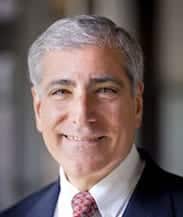 Robert J. Massa serves as Senior Vice President for Enrollment and Institutional Planning at Drew University in Madison, NJ. He is responsible for admissions, financial aid, athletics, career planning and Institutional Research. Prior to assuming his current position in January, 2015, Massa served for five years as Vice President for Communications at Lafayette College, his son’s alma mater.
From July, 1999 through June, 2009, Massa was the Vice President for Enrollment and College Relations at Dickinson College in Carlisle, Pa. For 10 years prior to joining Dickinson, he was the Dean of Enrollment at Johns Hopkins University. Beginning in 1974 he held various positions in admissions, financial aid and student affairs at Colgate University and Union College.
Massa received his bachelor’s degree from the University of Rochester and a doctorate in higher education from Columbia University.
He has published widely in books and journals in the field of college admissions and enrollment management and is active as an instructor and journal editor in national organizations for admissions and financial aid professionals. On August 28, 2000, his New York Times op-ed piece, “Who Needs the SAT,” resulted in Dickinson’s appearance on CNN several days later with the filming of convocation events, and interviewing students and faculty on the college’s optional testing policy.
He has also written and spoken extensively on the use of academic scholarships in student recruitment and on the abuse of national rankings of colleges and universities. When he left the field of college admissions in June, 2009 to head up Communications at Lafayette, the Chronicle of Higher Education did a major article on his contributions to the profession after 35 years. Each year, he is the keynote speaker at over 30 high schools nationally with his program, “Selective College Admissions – YOU do the Selecting,” which helps students keep the college admission process in perspective and shows them how to determine what makes a good college for them.
Follow Dr. Robert Massa on Twitter
This article was originally published in the Huffington Post
AuthorDr. Berger is one of many industry education correspondents for the Mind Rocket Media Group, An educator and former school administrator. He often hosts education panel discussions and develops strategic content. As an academic Dr. Berger is a guest lecturer at Vanderbilt University’s Owen Graduate School of Management. A former assistant principal, he has been an adjunct undergraduate professor and developer of online college courses. He is a passionate Detroit sports fan who has also adopted Nashville sports teams as his own.
Contact the Mind Rocket Media Group if you are interested in an industry interview and a placement on EdCircuit.
Further Reading
- Huffington Post – Using Technology to Support Students’ Emotional Needs
- The 74 – Mentoring Program Posts 81% College Persistence Rate With Focus on In-Person Coaching, Affordability, New Study Finds
- Huffington Post – Creating Safe Digital Spaces for Learners to Explore Social-Emotional Topics

 The looming teacher shortage isn’t exactly looming… it’s here. Per The Charleston (SC) Business Journal, “The Center for Educator Recruitment, Retention & Advancement, South Carolina’s teacher recruitment program, said in its annual Teacher Supply Study that approximately 6,400 teachers across the Palmetto State left their positions at the end of the 2015-16 school year — 1,600 of them left for another district, but at least 330 left the profession completely and 1,400 cited personal reasons for leaving or did not give a reason.
  And beautiful as it is, most people don’t want to move to rural Hawaii because the nearest mall is on Venus. You can’t switch districts for higher pay since its all one district. It’s a crisis in Paradise. Personally, I think they should market to retired Upstate NY and all New England teachers who will still get their pensions, will also get a Hawaii salary and get as far away from Winter as humanly possible. You can listen to my show on the Hawaii teacher shortage which is in crisis mode
  So, let’s add insult to injury.
  On my podcast, I deal with all the educational associations who annually march up Capitol Hill to explain their particular interest to their representatives in Congress. They get a lot of head shaking, up and down rather than right to left, but as you can see from what the House has proposed and what the Senate might pass, the up and down headshake was obviously their never-ending answer to the question,
 It is a new era for reading. Though the child in bed with a flashlight may seem like a quaint image from the past, the idea of illuminated reading under the covers can be as true today as it was yesterday. Today’s child can become immersed in the world of reading, but the light of the story glowing in the late corners of the evening may come from a screen rather than a flashlight. The reader of today is reading but not always one book at a time. This reader is athletic: jumping from idea to idea, genre to genre. He or she is reading across many platforms, many types of text, from visual to print, from moving images to primary source photographs. However, the child with the flashlight is still within us and within our children. The print book is not gone, and the technology has not taken over. Rather, the world is becoming a truly blended one. Reading is a lasting innovation in many forms. It sustains us, guides us, and makes us whole.
  Reading has become wilder than ever. The world now is full of many types of text emerging through new technologies. Grammar is changing; devices are changing—even fonts are changing and evolving. It is a very exciting time to be a reader. But a reader’s needs, like that child under the covers with the flashlight, don’t change that much. All readers need a choice in the text that they read, access to a wide variety of texts, time to read and mentor readers who guide and inspire them. Readers need an environment in which it feels safe to take risks, where they receive affirmative feedback regarding reading progress, the opportunity to have an ever-changing identity as a reader, and a community of supportive and encouraging fellow readers.

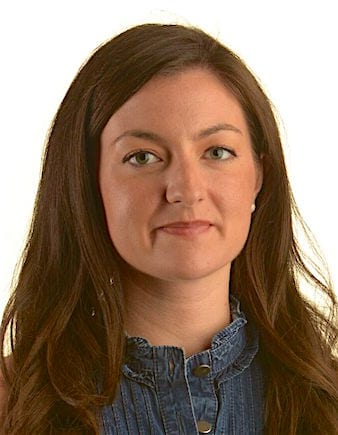 Dr. Monica Burns is a former classroom teacher, author and the founder of ClassTechTips.com. She visits schools across the country to support PreK-20 teachers to make technology integration meaningful and sustainable in their classrooms.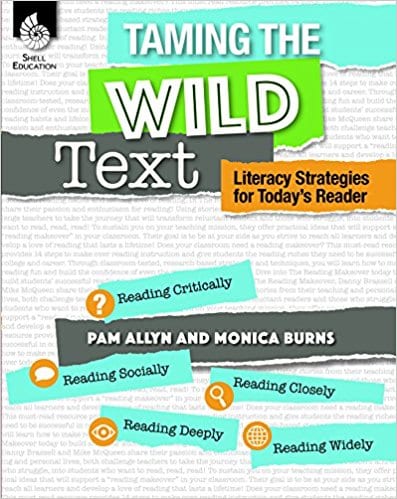

 Major reform efforts — such as improving student outcomes in large urban school districts — are often likened to turning an ocean liner: The work is slow and imprecise, but it can and must be done.
 Dr. Tawana Grover became GIPS’ new superintendent in Summer 2016, providing a natural opportunity for the district to consider what it is doing well and how it might read just some of its strategies to more fully meet the changing needs of its students. Dr. Grover contracted with our firm
  Although implementation is only in the early stages for GIPS, my organization has a lot of evidence to suggest that the trim-tab strategy is a winner. For five years in the State of Kansas and three years in Washington, DC, we served as the support to all the lowest performing schools and districts in the system. To provide the support, our firm developed and managed a model called The Learning Network, in which —among other things — participating schools and districts work closely with a coach to identify root cause of low student performance, identify one or two strategies to address the root causes (the trim tab), and then carefully implement the strategies using performance management techniques that include using and tracking indicators of implementation and impact and making adjustments based on progress or lack of progress.
 According to Diane DeBacker, former Commissioner of the Kansas State Department of Education, During our time working in Kansas, student achievement in TLN schools and districts not only increased but increased at a faster rate than non-TLN schools. Administrators told us that they greatly valued the support provided by (FourPoint) and attributed much of their gains to their work with TLN.”
 Looking across two years, the results are similar. In math, 11 of the 15 schools participating in the TLN both school years demonstrated gains, with 7 of the schools outpacing the average gains made across Washington, DC. In ELA, 11 of the 14 schools participating in the TLN both school years demonstrated gains, with all but 1 outpacing the average gains made across Washington, DC.
 Scott Joftus
 In the first article in this series, we characterized cognitive skills as the mental processes our brains use to take in, comprehend, organize, store, retrieve and use information. We looked at stages of processing from receiving information through our senses, to perceiving it (giving it meaning), to organizing and manipulating it (the directive capacities of our mind), to storing and retrieving it (a range of memory processes).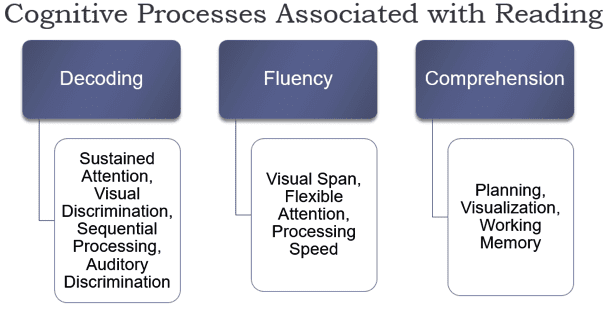
 Not only are all these cognitive processes essential for decoding, they all have to be working together at the same time in a coordinated, well-integrated fashion. Of course, other cognitive skills may be active for decoding; the purpose here is simply to explain the involvement of some of the most important skills required for decoding.
 • Working Memory. Working memory refers to our ability to hold information in our minds while we manipulate it. Working memory capacity is highly correlated with reading comprehension (and many other academic and non-academic outcomes).
 Of course, similar principles apply in math, and we’ll address those in a subsequent article. There we will find that, since we don’t have two brains – one for reading and another for math – many of the same skills discussed above will prove to be essential for math as well. We’ll also begin to examine how cognitive skills develop and how they can be strengthened in ways that contribute to
 Wayne Skipper and Concentric Sky are very well-known within technology circles. Still, most educators and the general public have little knowledge of how the technical transformation in education is taking place. In twenty years, education at all levels will look very different. Learners will have a public persona, and their achievements will be documented and searchable, much the way we search for consumer products on the Internet today.
 “Open Badges is a technology standard that allows you to take any learning achievement, whether formal or informal and recognize it with a portable micro-credential,” said Skipper. “In the past, we’ve had formal achievements signaled by a degree and informal achievements like Scout badges signaled by other means.
  “Pathways in Badgr allow students to discover new learning pathways upon which their badges may fall,” said Skipper. “We can look at all the badges a student has and show them pathways that they have already partially completed. For instance, if I’ve earned a certification in Maine, without something like Pathways, I wouldn’t have any way of knowing that it is accepted for credit as part of a Master’s degree in Georgia.”
 “There are over a thousand different products in the world that will issue an Open Badge to you,” said Skipper. “What makes Badgr different is that it is a complete open source toolkit. Our goal is to give developers a tool that handles all of the heavy lifting around Open Badges and demonstrates industry best practices. Badgr was originally designed to serve as the official reference implementation of the Open Badges standard, and for that reason, great care has been put into its implementation.”
 Concentric Sky has long-standing partnerships with a wide number of prominent international organizations including The World Bank, United Nations, NASA, the National Science Foundation, National Geographic, Encyclopedia Britannica, and Cengage Learning. There are several thousand organizations using Badgr, including over seven hundred of the world’s leading academic institutions.