A Boomer took over as principal and immediately decided to ban computers from her leadership team meetings. Instead, she purchased journals for team members to take notes. She believed computers distracted users from ‘the work,’ distracting them from collaborating and discussing issues. Most team members who were under the age of 40 found the switch unreasonable. They used their computers to communicate, send files to one another, and note the tasks discussed in the meeting. The principal said these were follow-up tasks for after the meeting. The conflict could have been avoided with a little more generational understanding.
A Millennial first-year teacher arrived at his first teacher team meeting with colleagues who all taught the same subject in his high school. The experienced teachers were prepared to share their resources and unit plans with him, particularly on a student research paper they had historically all taught during the fall semester. The new teacher, feeling on equal footing, said he had a different approach to the research unit assessment that he felt would be more engaging. His ‘announcement’ didn’t go over well with his veteran colleagues.
From greeting a colleague at the staff mailboxes in the main office to our daily interactions in the lunchroom to our after-school meetings, we encounter others from several generations, with perspectives and understandings that can be very different from our own. Daily routine adult-to-adult communications in schools can help us build trust and make connections. They also can also become moments of miscommunication that lead to frustration and diminish understanding. As multiple generations come together in one workplace with a variety of expectations of how to “play well with others,” communication and collaboration can be tricky.
The generation gap, according to Deal (2007), is “in large part the result of miscommunication and misunderstanding, fueled by common insecurities and the desire for clout—which includes control, power, authority, and position.” School leaders need to understand the needs and wants of different generations as they work to create community.”
Who are the Generations in the Schools?
Leaders first need to know more about the four generations working in schools and what a generation is. One definition of a generation is “an identifiable group that shares birth years, age, location, and significant life events at critical developmental stages” (Tolbize, 2008). Members of a generation share experiences that influence their thoughts, values, behaviors, and reactions. Individuals, of course, bring their own personalities, influences and particular perspectives due to identification with class, gender, race, region, family, religion and more, but some broad generalizations are possible about those born in approximately the same years. The four generations working in schools today are:
Traditionalists
1922-1943
Many of these elder statesmen and women have been in the profession the longest. Given their inclination to stay with one profession, they may be on the cusp of retiring with 35 or more years in the field — dedication that can shock Millennials who might not plan to stay in one place or one job longer than a few years. The Traditionalists have seen world wars, an economic depression, and a slew of technological changes in their lifetime. Traditionalists generally are loyal, hard-working, respectful of authority and uncomfortable when conflict isn’t handled behind closed doors.
Baby Boomers
1944-1964
This generation is represented by educators who have become the anchors of the school, holding together grade levels or departments and providing institutional knowledge. They may be experienced principals or have moved to the district office, where they have been leading for the last decade or more. They are the most celebrated generation, largely because the generation is so large. Baby Boomers are usually collaborative consensus-seekers, service-oriented, and interested in relationships and outcomes, not just results.
Gen Xers
1965-1981
Born in the era of women’s rights, the introduction of the birth control pill, legalized abortion and higher divorce rates, Gen Xers might be a smaller group compared with the generational groups on either side of them, but they leave an impression with their direct style and attitude. Xers can be entrepreneurial and innovative, independent and autonomous. Xers respect individuals in roles, not just roles themselves, and as many HR staff have found, this generation is interested in a life-work balance, which can lead to requests for job shares and part-time assignments.
Millennials
1982-2000
The Millennials, teachers and administrators who are in their early 30s or younger, grew up with adults very aware of and interested in how to meet their needs educationally as well as socially and culturally. Many grew up with tremendous support and constant connection to family members, and they continue to expect similar just-in-time supports and structures within their school workplaces. Millennials can be assertive, collaborative, very focused and productive, and often look for praise. They are ready to change how adults communicate in schools and in professional learning communities.
Knowing about each generation is a beginning step for school leaders. The next step is to consider what knowledge one needs about multiple generations working together so we all can communicate well and collaborate more effectively across the generations.
Gen Savvy Strategies for Effective Collaboration
In Trust in Schools, Tony Bryk and Barbara Schneider (2002) discuss their study of the role of social relationships in schools in which they conclude that a base of trust in school heightens functioning and gets staff working at a higher level and achieving more ambitious goals. Creating that relational trust requires smooth communications. And yet, each of us has ways of communicating that perhaps align with our generational inclinations and get in the way of building better relationships across generations. To be more savvy in communicating with each generation, school leaders can identify linguistic nuances and approach collaboration using different strategies.
Traditionalists
- Watch your grammar and informal language.
Many a time a participant in one of my workshops has come up to me after the session to share a dog-eared page from a training packet and to point out a ‘that’ instead of a ‘which’ or the use of a comma rather than a semicolon, sharing their intent to help me be as professional as possible. For many of this generation, good grammar indicates that you respect your colleagues enough to proofread and communicate properly. Imagine how some might view spelling errors, Internet slang, acronyms or profanity. Younger generations may think it’s ‘no biggie’ to use informal language, but members of this generation might find it unprofessional.
- Be mindful of levels of disagreement and conflict in whole group discussion.
A Traditionalist superintendent might notice something amiss across a meeting room and immediately respond by going to the individual for a quiet conversation or reference the matter in a personal talk at a later date. Traditionalists see handling conflict or disagreement in front of the group as unseemly. Facebook, Twitter, and reply-all emails seem inappropriate to many of this generation, as does speaking up in a group. A younger leader asking in a meeting, “Does anyone have a problem with doing A or B?” might not elicit a response from a Traditionalist, who probably would prefer to handle differences of opinion in a subtler way.
Boomers
- Think “we.”
Many Boomers were raised during the civil rights movement, the women’s movement, and a time of activism. They value community and group, and they find working together toward a goal meaningful. The word we is important; they appreciate recognition for contributing to the bigger picture. One of my Boomer colleagues who has been working “behind the scenes” for years, as she says, feels few recognize her contributions or the need for all to go the extra mile to do the hard work and show “we are in it together.” Even informally recognizing the value of the group and individuals’ contributions to the group goes a long way to helping Boomers feel connected.
- Be careful of appearing brusque or unfriendly.
Icebreakers, social committees, appreciations, celebrations, acknowledgements and kudos at the start of staff meetings or in weekly newsletters have been common practice in schools for decades. Gen Xers sometimes are viewed as brusque or uncaring because they want to be efficient. Their goal is to get through the agenda so everyone can go home. One person’s desire to focus only on work can seem impersonal or uncaring to other generations. Understanding staff members’ approaches to meeting time can go a long way toward creating community.
Xers
- Focus on pragmatism and results.
The key descriptor for many Xers is autonomous. Xers value independence and often feel that some agenda items could be better handled in an email, that explanations in meetings could be shorter, or discussions would be more productive and effective if all involved had a clearer understanding of the expected outcome. I have worked with colleagues who are interested in doing the work — but on their own time, outside school hours. They’ll say, “Give me the directions, tell me what to do, and I am on it.” Others have commented on how delighted they are when meetings aren’t “full of fluff.” Such focus might sound too blunt for other generations, but for many Xers, results win out over relationship.
- Explain why. Transparency matters.
Xers want to know the rationale for what is being asked of them. They can rub others the wrong way when they ask, “Why do we have to do that?” rather than the more neutral, “Can you help me understand the thinking behind …” They may be perceived as having a bad attitude. (The same is true with Millennials’ asking, “Why can’t we do it this way?”) Leaders working with Gen Xers need to anticipate the question and be prepared.
Millennials
- On teams, make sure everyone has a voice, including the new person.
The unspoken hierarchies or power structures that might diminish a new teacher’s voice would be frustrating to any new teacher but are especially so to Millennials, who believe in collaboration and co-creation no matter how many years of experience one has. Key to Millennials’ satisfaction is having opportunities to participate. Leaders who want to reach this generation should ask, “Do they feel acknowledged?” Millennials want opportunities sooner and faster. Just as on Facebook, where all voices are heard equally, this generation expects their voice to be acknowledged in their professional learning teams.
Traditionalists, Boomers or Xers who expect their voices to hold greater sway over the group based on their experience can be challenged by these newcomers’ expectations. Eyebrows often go up in groups when Millennials suggest that the way things were done last year might not work for them and a different way of doing the annual (pick the subject) sounds more up their alley. Millennials want to contribute to the team, and they voice their thoughts to show engagement. Their suggestion for what they are willing to do or not do isn’t a show of insubordination but a sign of commitment.
For example, after the first day of a two-day training, one Millennial participant approached me after the workshop to suggest several changes that could make the next day’s session even more effective. After an initial moment of shock, I realized he was demonstrating his sense of engagement and a desire to feel productive. Some might have taken the feedback and thought, “Who does he think he is?” but then we wouldn’t have improved the session. Millennials see their actions as collegial and collaborative, no disrespect intended. Leaders need to not take offense and find ways to acknowledge and include Millennials’ perspectives.
- Don’t patronize.
Newbies, green beans, the baby of the group. These names for new staff members, who often are Millennials, diminish their role among colleagues. They often are viewed as youngsters without credibility. One assistant principal told me, “I am almost 30. I have taught for seven years. I am an administrator, but some of my more veteran colleagues continue to call me ‘Sweetie.’ It’s really disrespectful. I wear a tie and am professional. Why aren’t they?” Underlying assumptions about competency can diminish a relationship. With Millennials, examining your approach and watching your words are critical for creating community.
All school leaders need to be more generationally savvy to co-create a strong school climate and to communicate with all staff members in constructive and supportive ways. Adding the generational lens to your view of your staff will increase your generational dexterity and ability to work effectively with colleagues of all generations.
TEXT BOX – Collaboration across the generations
| Based on our own generational characteristics, we might want a colleague who… | |
| Traditionalists |
|
| Boomers |
|
| Gen Xers |
|
| Millennials |
|
Source:
Abrams, J. & von Frank, V. (2013). The Multigenerational workplace: Communicate, collaborate, & create community. Thousand Oaks, CA: Corwin Press, pp. 69-70.
Portions of this article are adapted from Abrams, J. & von Frank, V. (2013). The multigenerational workplace: Communicate, collaborate, & create community. Thousand Oaks, CA: Corwin Press.
Resources:
Abrams, J. & von Frank, V. (2013). The multigenerational workplace: Communicate, collaborate, & create community. Thousand Oaks, CA: Corwin Press.
Bryk, A. S. & Schneider, B. (2002). Trust in schools: A core resource for improvement. New York: Russell Sage Foundation.
Deal, J. J. (2007). Retiring the generation gap: How employees young and old can find common ground. San Francisco, CA: Jossey-Bass.
Tolbize, A. (2008). Generational differences in the workplace. Minneapolis, MN: University of Minnesota, Research and Training Center.
Subscribe to edCircuit to stay up to date on all of our shows, podcasts, news, and thought leadership articles.
 Are you one of the many secondary education teachers who rank motivating students as their greatest professional challenge? Research reveals a steep and steady decline in student motivation from kindergarten through high school, and this makes a teacher’s job difficult. Even armed with the latest curriculum, cutting-edge technology, and the best of intentions, teachers are likely to struggle with a classroom full of unengaged and unmotivated students.
  Students inspired to pursue a long-term goal that will allow them to contribute to the world in a personally meaningful way are grittier, more resilient, and likely to feel a greater sense of control over their lives and schoolwork, compared to their non-purposeful peers. They also tend to report that the work they do in school is more meaningful. This makes sense when you think about it: Students pursuing a purpose in life have a strong sense of where they are headed and what they hope to accomplish, and consequently, they are better able to see how their school work can get them there.
  For many educators, teaching is a calling. They enter the field because they genuinely care about young people and want to play a role in shaping the future generation. If this is the case for you, consider sharing the purpose you find in teaching with your students. Let students know why you became a teacher and what you hope to accomplish through your work. Doing so will not only improve your relationship with your students, but it also will introduce them to the language of purpose and help them reflect on their own purpose in life.
 When we focus on the blessings in our lives and on the people who have blessed us, our research finds, we are naturally inclined to consider ways we want to give back, and contribution is an important component of purpose. Encourage your students to keep a gratitude journal, where they jot down three good things that happen to them each day, or to write a gratitude letter, where they thank someone who has helped them in their lives. These kinds of gratitude-inducing activities have been found to improve both mood and rates of purpose.
  Psychological research on purpose has exploded in the past fifteen years, and today you’ll find empirically based online resources — many available for free — that can help your students discover their purpose. For instance, encourage your students to participate in the Purpose Challenge (
 Kendall Cotton Bronk is an Associate Professor of Psychology at the
 After over two decades as a teacher and school administrator, Dr. Jeff Burke is now finishing his first year as superintendent of
  Dr. Burke has worked to improve and strengthen community engagement throughout his administrative tenures in the
  In explaining to the community that it’s an ever-evolving process, Burke says, “I think you have to tell that story and you have to tell it over and over and over. You have to tell it in a variety of context both internally and externally. But the hardest part for us is making our people tell their story. It’s one of the most frustrating things about our jobs. We want people to post stuff on We want you to share what’s going on.”
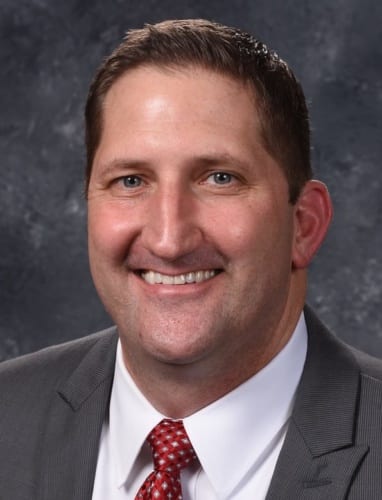 Dr. Jeff Burke serves as the Superintendent of Schools in
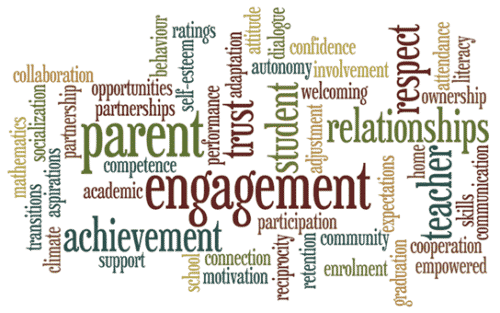 The vast majority of educators agree that parent engagement is hugely important and badly lacking in our schools. However, increasing parent engagement is a complex, widespread and confusing puzzle to solve. It takes a specific effort focused on specific goals. And, as if the concept isn’t hard enough to get a handle on, it is made even harder to understand by its ambiguous definition.
 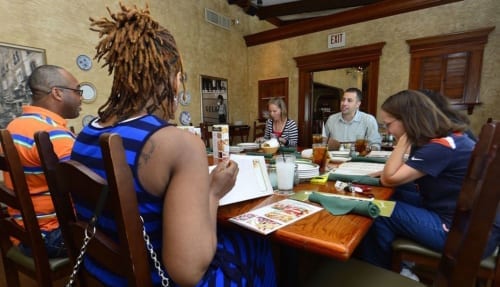 The answer to “What is parent engagement?” is not one definition, it is many. Ask ten people what they think parent engagement is, and you will receive ten different answers. Ask a hundred people and you will get a hundred different answers. This proves that a catchall phrase isn’t going to help us focus on the specifics of what’s needed.
 Whether you are a teacher, principal or parent, there is something you can do to get things moving in a good direction. You can ask questions. Remember the hundred answers? It is a good thing because we end up getting a clearer picture of what people think, what to focus on, what to learn more about, what can be measured and what can be done.
 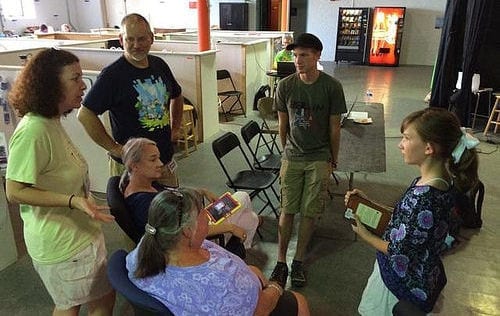 Improving parent engagement in your schools requires unique solutions. There is no “one answer” that applies to all communities. Your community must figure out its own ideas, changes, initiatives, and solutions. What each group needs is a clear idea of how to engage parents, how to measure how well they are doing at improving it, and how to use things that are working in other schools. That’s why people like you must fight for clarity.
 Once upon a time there lived a beautiful prom queen. This prom queen possessed all the
  This call to arms to change how and what we are doing to our students must be shouted from the rooftops, “Something is rotten in the state of American education.” I can’t help but suspect that unequal treatment of cisgendered children may have something to do with a collective failure to adequately educate all of our children.
 This seems to defy the logic of assessment. It appears to be blatant discrimination. There were some exceptions to this puzzling phenomenon. Teachers didn’t downgrade boys who had identical test scores to girls… on one condition. Boys that shared the girls’ positive attitude toward learning received the same grade. The well-socialized boys received a higher grade for good behavior.
 My study of gender and dyslexia began some years ago when the Dyslexic Prom Queen courageously walked into my office. Long before I met her, I had many years working as a reading specialist. Many days have been filled with conversations with
  Dr. Ellen Burns Hurst, author of
 Dr. John Booth, superintendent of the