The identities of children as readers are decided for them. Children are all faced with the dilemma of figuring out into which worlds they will enter temporarily or peripherally and those they will enter with positions of power and prestige. For some, positions are predetermined culturally and socially. This is especially true in the schools of the United States. Children who have difficulty with literacy skills are positioned as “struggling,” “remedial,” “reluctant,” and “marginalized.” Thus, undiagnosed dyslexics, through the marginalizing labels we place upon them, are often set up to become resistant to reading. As Alvermann (2001) so aptly states, “Culture constructs disability, as well as ability” (p. 677).
Our children are never taught to consider that their reading troubles might be due to a normal difference in their genes and brains, just like being tall or short. They would never venture to guess that the alphabetic code presents a completely unnatural processing challenge to their brains. Instead, they blame themselves. They feel ashamed of themselves and ashamed of their minds. Statements like: “I’m dumb,” “I’m stupid,” “I’m not smart,” and “I’m not good in school” are all strategies to protect themselves from the shame they feel. Shame motivates children to avoid reading. It also fosters self-doubt and undermines the cognitive capacities needed to engage in other academic endeavors. Millions of children are caught in a downward spiral. Not only are they in danger of being poor readers; they are also in danger of developing aversions to the concept of learning. Shame is disabling, and it can have lifelong debilitating effects.
The words of dyslexics illuminate the ways in which the context of the classroom, teachers and peers impact literacy identities. This presents a view of literacy identity as an ongoing construction of the self, mediated by contexts in which each child is engaged. Such a view suggests a more complete picture of what it means to position oneself as a reader. Furthermore, becoming a reader is more than learning a set of skills to be performed on a standardized test. Rather, transforming one’s literacy identity changes who we are by changing our ability to participate, to belong, to create meaning.
Instructional Implications
On the first day of school, a dyslexic child faces a myriad of challenges. They must process oral instructions from teachers and remember them long enough to act on them and finish required tasks. The difficulty of every task is exacerbated by a poor working memory and subsequent unreliable short-term memory. Children with dyslexia start school at an immediate disadvantage long before the task of reading is introduced. The dyslexic takes much longer to process information, particularly in reading, where one has to connect letter patterns with associated words. Slow and poor phonological awareness may cause slow and inaccurate processing of the spoken language, slowness to read, and the possibility that the child will become so confused he or she will resort to copying from others nearby. Where teachers are ill-informed, problems with fine motor skills will make the dyslexic student look clumsy and as such is open to ridicule from both teachers and peers. The inability to organize and demonstrate on-task behaviors leaves your dyslexic in a vulnerable position with little social capital.
Long before entering school, most children possess well developed linguistic competence. They have acquired sophistication in phonology, grammar, word meaning, and pragmatics. Learning to read and write requires attention to the linguistic building blocks of words. Phonemes, the smallest sound unit, have no meaning as separate units but when represented by their graphic counterpart, graphemes, written words emerge. Syllables are composed of onsets, which are initial consonants or consonant clusters, followed by rimes, the vowel and what follows it. In order to read, one must perceive these sound units of spoken language and link them to the corresponding spelling patterns in words. The connections are formed out of the readers’ general knowledge of phoneme-grapheme correspondences that recur in many words. Given the importance of these linguistic units, educators must determine the linguistic focus and the corresponding instructional activities that offer the highest probability that word recognition will occur.
There is no consensus as to the nature of the optimum beginning reading instruction. Reductionist theorists take a philosophic stance which holds that meanings in the world can be broken down into logically, verifiable sequences, where smaller parts of a phenomenon, when added together, describe and explain the whole phenomenon or meaning. Literacy scholars who embrace the reductionist stance insist that systematic instruction in phonological awareness and phonics benefits the reading accuracy of most children, and it can be taught in various ways. Reductionists assert that systematic phonics instruction helps level the playing field by improving the reading of at-risk children and poor readers. Early identification, screening, dynamic assessment in programs that include this instruction are cost-effective and highly successful in some large-scale implementations.
However, holistic literacy researchers are dubious of the evidence that supports explicit phonics instruction is for all children. Their whole-part-whole constructivist stance contends the whole of any phenomenon cannot be broken into parts then added together while maintaining the essence of the whole. This sequence aligns with language development theory to mathematics learning and forms the basis of the writing process, whole language techniques, inquiry-based science, and authentic assessment movements in education.
As the dyslexic matures, new and equally challenging decisions face literacy educators. For those who begin the intermediate grades with weak word recognition skills or poor fluency, the challenges of intermediate-level reading can lead to or exacerbate reading difficulties and lower-achievement. The demand to read more complex texts increases in the fourth and fifth grades. Likewise, teachers at these grade levels require students to do more independent reading and independent learning from their reading as the shift from ‘learning to read’ to ‘reading to learn’ takes hold (National Reading Panel, 2000).
Students with lower-achievement in reading in the intermediate grades continue to experience reading difficulties throughout high school and adulthood. Students with reading difficulties are more likely than those without reading difficulties to drop out of school. They present a compelling argument that dropping out of school is not a one-time, one-moment phenomenon, but a situation that begins early in one’s school career when the efforts to attain a kind of school literacy that reflects high-level thinking about text goes awry. The sad end is that reading difficulties overshadow reading strengths when word recognition strategies compete with memory capacity for higher-level functions such as comprehension. This results in a painstaking effort by the reader to merely “get through” the text. Slow, capacity-draining word-recognition processes monopolize the reader’s cognitive resources leaving little to focus on higher-level processes of text integration and comprehension.
If the alphabetic principle, which facilitates rapid word recognition, is slow to be acquired and internalized or is not practiced sufficiently, students extend more of their cognitive energies to making sense of the words instead of the text. This phenomenon is also known as word-level comprehension failure.
Students in the intermediate grades who still struggle with word recognition read less because reading becomes unrewarding, thus practice with reading is avoided, precluding eventual growth and development. This phenomenon is a “downward spiral” for students, suggesting that if word-level difficulties are not overcome, the students’ experiences with reading become worse. What we know about stopping this downward spiral is limited.
The National Reading Conference (NRC) emphasizes the importance of keeping adolescents’ interests and needs in mind when designing effective literacy instruction at the middle and high school level. The following insights add to the growing complexity of providing appropriate literacy instruction in the 21st century:
1.) Adolescents’ perceptions of how competent they are as readers and writers, generally speaking, will affect how motivated they are to learn in their subject area classes (e.g., the sciences, social studies, mathematics, and literature). Thus, if academic literacy instruction is to be effective, it must address issues of self-efficacy and engagement.
2.) Adolescents respond to the literacy demands of their subject area classes when they have appropriate background knowledge and strategies for reading a variety of texts. Effective instruction develops students’ abilities to comprehend, discuss, study, and write about multiple forms of text (print, visual, and oral) by taking into account what they are capable of doing as everyday users of language and literacy.
3.) Adolescents who struggle to read in subject area classrooms deserve instruction that is developmentally, culturally, and linguistically responsive to their needs. To be effective, such instruction must be embedded in the regular curriculum and address differences in their abilities to read, write, and communicate orally as strengths, not as deficits.
4.) Adolescents’ interests in the Internet, hypermedia, and various interactive communication technologies (e.g., chat rooms where people can take on various identities unbeknown to others) suggest the need to teach youth to read with a critical eye toward how writers, illustrators, and the like represent people and their ideas—in short, how individuals who create texts make those texts work. At the same time, it suggests teaching adolescents that all texts, including their textbooks, routinely promote or silence particular views.
5.) Adolescents’ evolving expertise in navigating routine school literacy tasks suggests the need to involve them in higher level thinking about what they read and write than is currently possible within a transmission model of teaching, with its emphasis on skill and drill, teacher-centered instruction, and passive learning. Effective alternatives to this model include participatory approaches that actively engage students in their own learning (individually and in small groups) and that treat texts as tools for learning rather than as repositories of information to be memorized (and then all too quickly forgotten.
Power of Discourse
The context of the classroom and the pedagogical choices made by the teacher are critical in influencing how the struggling reader experiences a literacy event. Aspects of the teacher and the activity determined whether these women considered an event worthy of effort. This decision determines their level of participation in the literacy event and ultimately their literate identities. The affinity of these women for engagement in peer discussions reinforces the efficacy of discussions as an instructional approach for dyslexic readers. Discussions provide contexts where dyslexic readers may acquire a more complete understanding of the text, practice comprehension strategies in organic ways, and engage in high-level thinking about text.
The context of the classroom and the pedagogical choices made by the teacher are critical in influencing how the struggling reader experiences a literacy event. Aspects of the teacher and the activity determined whether these young people considered an event worthy of effort. This decision determines their level of participation in the literacy event and ultimately their literate identities. The affinity of these students for engagement in peer discussions reinforces the efficacy of discussions as an instructional approach for dyslexic readers. Discussions provide contexts where dyslexic readers may acquire a more complete understanding of the text, practice comprehension strategies in organic ways, and engage in high-level thinking about text.
Subscribe to edCircuit to stay up to date on all of our shows, podcasts, news, and thought leadership articles.

 Dr. Marilyn Denison wanted to be in education from a very young age and followed her lifelong passion for teaching through college into the classroom.
  MD:
MD: MD:
MD: MD:
MD: We all learn differently, and we shouldn’t have to be at one particular level at one given day in time and then be labeled at that. Again, we learn differently, and we’re interested in different ways of learning and different materials of learning.
 MD:
MD:
 Over the past several months, we’ve partnered with
  Once we established context for our action research in Episodes 1 and 2, we began speaking with school leaders and learners about the learning transformations happening in their environments. Dr. Kevin Brown, superintendent, and Dr. Frank Alfaro, assistant superintendent of the Alamo Heights Independent School District in
  personalization, open-walled and socially-embedded.” Our major learning from this conversation was that learner-centered leaders have a clear understanding of learner agency and the role it plays in shifting the paradigm from school-centered to learner-centered.

 Randy Ziegenfuss
 Lynn Fuini-Hetten

 Early in my career, I taught sixth through eighth grade mathematics in a rural school deep in the swamps of Louisiana. I had convinced the principal I knew how to teach middle school mathematics, which was a long way from the truth. One October day we tackled the objective of solving percent of discount problems.
 The first element of the Expert Lens is the Interpersonal Knowledge of the expert teacher. This lens is the optics through which teachers view students’ social and emotional needs. Expert teachers are able to pick up subtle clues from facial expressions, body language, tone of voice, and other interactions to understand the needs each student in the classroom. This lens is also the foundation of the classroom culture the teacher and students create.
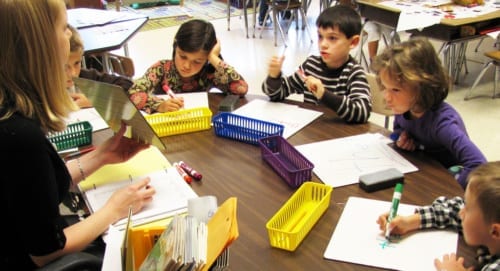
 The pedagogical element of the Expert Lens is the choices the teachers makes in choosing the strategies or teaching methods to use to teach the content and build culture. These methods build upon the interpersonal knowledge as the teacher chooses strategies to help student master content, but also impact culture. For example, in Suzy’s first hour class, the students worked through a poetry analysis activity using a Think Write Round Robin structure to practice the SIFT method for analyzing poetry. During Suzy’s second hour class, the students used the same SIFT method, but the class used a jigsaw discussion structure instead of a Think Write Round Robin.
 The final element of the Expert Lens is content knowledge. Expert teachers have a highly developed, conceptual knowledge of their content. This understanding allows them to see the content as a whole and understand the big picture connections running across their year. These teachers are able to understand how each moment in each lesson fits into the overall mastery of the content.
 In education, we are always seeking the one thing to make every child successful. From the perfect curriculum to that one canned program to the earth-shifting strategy, we keep seeking. All of these are fruitless pursuits. The one thing is a powerful teacher who possesses highly developed interpersonal, pedagogical, and content understanding and applies these through the Expert Lens.
 Michael Cardona
  But I think there’s been this movement of accountability that’s overwhelmed the system and that’s put this enormous amount of stress on not only students and their parents, but on teachers as well.
 I believe that it helps to engage the child when they know that they have that support system. That they know it’s not this linear thing that they are at home, they go to school, and they go back home; that it’s all-encompassing. It’s an environment. It’s comprehensive in that Mom or Dad or caretaker are there and a part of that ecosystem in a way that is communicative and provides, I think, feedback to the teacher. So isn’t it incumbent upon us to provide parents with an opportunity where not only do they have access to the classroom but it’s access that allows them to participate?
  So how do you, as a leader, look at that and say, “Alright, I want to make sure that, yes, we all know it’s a technology-driven classroom that we’re working in now.” How do you provide support to those veteran teachers or even the brand new, early career teachers that think that this is not exactly what they thought they would be doing? They’re all dependent upon you and your team to provide them the skills, the resources, and the training.
 There was a reporter from this foundation and she said, “Who do you want to talk to?” and I said, “Talk to any of these principals or teachers because if they’re here on a Saturday, they’re invested in us making sure that they’re taken care of. You have some teachers here who have been in the district for 35-plus years and they’re leading mindfulness exercises.”
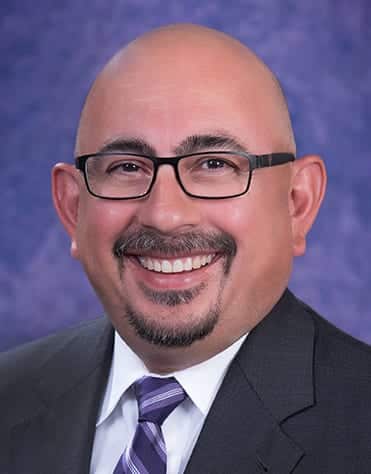 Michael A. Cardona was named Superintendent of