Oaks Christian Collaborates with Swedish Academy of Music and Business
 Mary Kay Altizer believes in using the tools of music technology to amplify the experiences of her students in the classroom. As the Department Chair of the Performing Arts at Oaks Christian School, she has harnessed the power of a student’s own tools from their everyday life. Using laptops, tablets, and smartphones Mary Kay ignited their creativity and problem solving by encouraging collaboration with teachers and one another.
Mary Kay enrolled in a class about global learning while working towards her Master’s degree, and a passion was sparked. “Global learning isn’t just an education tool, it’s a tool for all of humanity,” Mary Kay says. “It’s no secret that we live in a world where we don’t trust each other; we don’t connect with each other, we don’t talk to each other… and connecting students together through the power of music is the first step to solving this huge issue.”
Mary Kay formed a partnership between Oaks Christian and the Academy of Music and Business in Sweden, a country that is #2 in the world for composing and producing pop music hits, and launched a pilot program using Soundtrap as their common platform. The program chose twelve students each from Sweden and the United States to collaborate on a cover tune. Soundtrap is non-proprietary and dovetailed perfectly with their project; it works on any device and students can text, video chat, and swap sound files back and forth easily.
 As a result of their collaboration, students flew to Stockholm to perform a joint concert at the United States embassy in Stockholm. Unfortunately, they landed on April 7th, 2017 to hear the news of the truck terror attack in downtown Stockholm that morning. After many consultations and much soul searching, everyone decided that the concert would go on. So with NO rehearsals outside of their Soundtrap sessions while still thousands of miles away from each other, the orchestras from the Swedish Academy of Music and Business and the Oaks Christian School sat down together and performed a flawless 30-minute concert at the American embassy.
“What happened wasn’t just musically or technologically amazing,” Mary Kay says. “The power of the music at that moment, in that place, in those tragic circumstances, was almost supernatural.”
With the will, the desire, the talent, and the technology, the language of music that spans the globe came together in that room that day and embodied the best that humanity has to offer. “Music is the demilitarized zone, the safe place,” Mary Kay states. “The beauty of teaching with the music technology that is available out there is that students in the remotest and poorest areas can connect from their classroom with the rest of the world through music.”
Below is the Soundtrap-sponsored video of that amazing collaboration.
About Mary Kay Altizer
 Mary Kay Altizer is the Department Chair of the Performing Arts at Oaks Christian School. She conducts the orchestra, heads up the piano department, and has developed and teaches the digital recording and production program, utilizing Pro Tools, Logic Pro X, and Soundtrap. She is also the writer, arranger, and producer of Oaks Christian’s annual Spring Spectacular.
Mary Kay has performed in many musical arenas from symphony pianist to studio work and is staff composer and arranger at Oaks Christian School. She received a Bachelor’s Degree in Piano Performance from the University of the Pacific Conservatory of Music, a Professional Certification in Digital Recording and Production from Berklee College of Music, and a Masters of Arts in Educational Technology from Azusa Pacific University.
Mary Kay is in her 17th year of teaching at Oaks Christian, and was a recipient of the Atsinger Award for Teaching Excellence, naming her “Teacher of the Year.”
Follow Mary Kay Altizer on Twitter
This article was originally published in the Huffington Post by Dr. Rob Berger.
AuthorDr. Berger is one of many industry education correspondents for the Mind Rocket Media Group, An educator and former school administrator. His video interview work and conversational podcasts have been featured in various media outlets. He often hosts education panel discussions and develops strategic content. As an academic Dr. Berger is a guest lecturer at Vanderbilt University’s Owen Graduate School of Management. A former assistant principal, he has been an adjunct undergraduate professor and developer of online college courses. He is a passionate Detroit sports fan who has also adopted Nashville sports teams as his own.
Contact the Mind Rocket Media Group if you are interested in an industry interview and a placement on EdCircuit.
Further Reading

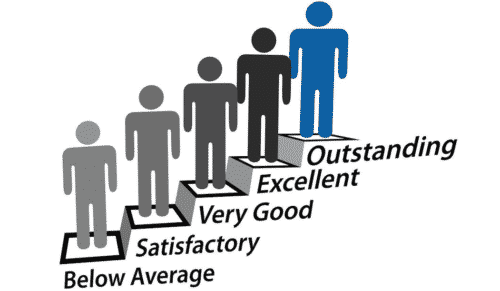 Take a moment to think about your worst test. For me it was Macroeconomics. Unable to understand concepts such as GDP Deflator and Quantity Equation, I memorized parts of the text and got accused of plagiarism. Fortunately, it was an understanding professor who explained why I might like Microeconomics better. His feedback included relevant advice for achieving my goals. And I was grateful!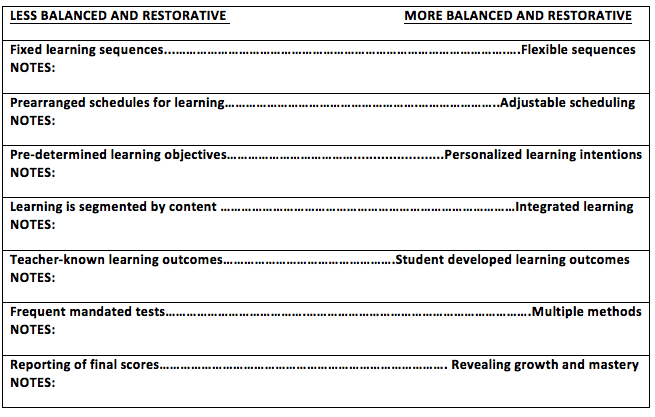
 Please don’t misunderstand my intention or interpret this as a one-sided position. Rather take it as advocacy, guidance, and encouragement for finding balance in assessment. Consider your students, the types of assessment given to them and how learning outcomes are reported. Flip your thinking from external testing mandates to your student’s needs; from narrow data analysis to broadband assessments; and from summative measures to progress being made towards mastery. In this way, assessment will be restored to its intended purpose.
 Many educators are working with an entirely different type of learner today than they did in the past. On the outside, this generation looks similar to previous generations, but neurologically they are quite different. These on-going observations were shared in the 2010 best-selling book
  Chronic exposure to video games, television shows, movies, websites, online videos, audio clips (music and speech), podcasts, texts, tweets, slideshows, photo galleries, Instagram messages, social media content, and other forms of digital bombardment have permanently altered the digital generation’s’ visual and mental processing abilities. As a result, they read differently, play differently, process information differently, socialize differently, communicate differently, and most importantly, learn differently. Parents, educators and politicians can’t ignore what’s happening in the new digital landscape, because it is having such a profound impact on everyone’s lives today.
 Attribute #1 – Digital learners prefer receiving information quickly from multiple, hyperlinked digital sources. The world that digital learners live in today includes one of the greatest collections in human history – the internet. Students can access billions of interconnected web pages and resources and use them to construct their own knowledge. However, to effectively use the power of the Internet, students and teachers alike must be able to distinguish between the flash and substance of online resources.
 Dr. Ayanna Howard, as a teacher and lecturer, is a storyteller.
 She says, “We have to teach the student from a very early age how to learn from failure. We have to teach them not to give up so easily. Too many give up too soon before the lesson is learned. We need to teach them that there is an out, a next, a way BEYOND the problem.” Dr. Howard shares the importance of realizing early in life that real learning comes from trying, failing and then trying again. She speaks about being the “smart nerd” in a school that concentrated on sports, and being defined by her mathematical acumen… and the shock of getting to college and discovering that she was defined as being a black woman first and mathematician second, and feeling the pressure and the struggle to justify her enrollment.
 Social media poses specific challenges for educators. I have thousands of followers on
  2.) Know your school and district’s policies regarding social media. It is likely there are policies regarding student images and even mentioning your school or district on social media. While your district may allow you to post pictures of students working in your classroom – don’t do it. Parent will have their own personal thoughts on seeing their child’s face on a class blog, and some will not like it one bit. Just because you can do something doesn’t mean you should do it.
 Social media can be a wonderful thing. It allows people to stay in touch with family around the country and the world. It brings news to your desktop as it is happening. As a former classroom teacher and building principal, I love seeing how my former students have grown into wonderful adults and parents. It is gratifying to think I might have played some small part in their development. The key is that these are former students and they, for the most part, reached out to connect with me.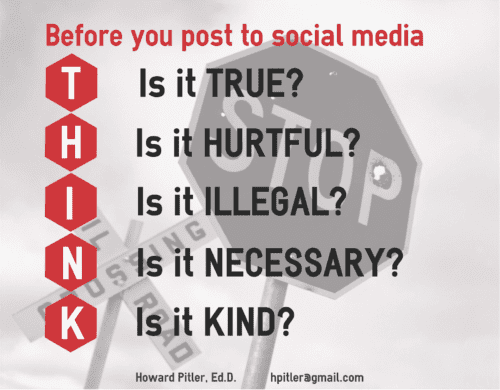

 In
In  Bill suggests the role of leadership in this transformation: “My job is to set the right conditions in the right context. As superintendent, I’m trying to set conditions so the principals can work with the teachers to create what needs to happen inside the building.” Learner-centered leaders build mindsets and skillsets in ways that model the expectation for learning in the classroom.
 In order to develop this vision as well as a shared understanding, the most effective learner-centered leaders are open-minded and anchored in the school’s beliefs. What is right for the community? What is best for our students? Who are our students? Learner-centered leaders ask, “Who is my ‘who’? How do I design experiences that are both intellectual and for the heart?”
 Our conversation with Steve reminded us that learner-centered leaders leading a system transformation effectively engage community. In Mesa’s work over the past 18 months, community has been engaged to develop a model of proficiency-based learning that best serves the unique context and needs of Mesa County.
 Randy Ziegenfuss
 Lynn Fuini-Hetten