As Educators, Let’s Take Civics Education Seriously
By Larry Jacobs
Do your students know that elections have results that impact them? For example, this headline from InsideHigherEd.com: Protecting Pell? Critics Say Budget Wouldn’t: By cutting a third of program’s surplus and slashing other aid programs, Trump administration’s first budget would imperil college access, advocates argue.
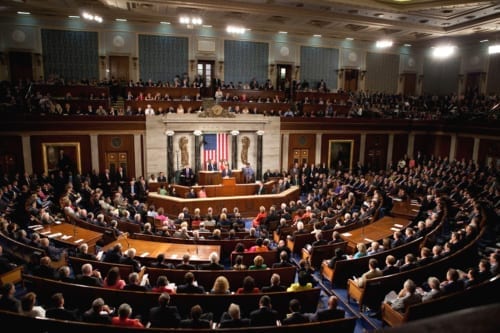
School counselors, college counselors, here’s some advice: start promoting Civics Education at your school.
The government currently wishes to cut after-school programs and others that feed kids as well because, as OMB director Mick Mulvaney stated “they have no effect anyway”…except for this effect… that about 80 percent of the children involved in these programs do better in school and exhibit better behavior. And if anybody doesn’t believe that, I’ll use myself as an example. I get angry if I miss my mid-morning snack and everybody who knows me knows to stay away until I’m fed!
Who did the folks who are impacted by this idea vote for, if they voted at all? We need to prepare real citizens.
So, let’s talk Civics in schools… now with Science Education!
Sometime during the 2016 primary election, Senator Marco Rubio said that he doesn’t believe in climate change. Rick Scott, Governor of what is rapidly becoming Flori-DUH, said the same thing and forbade the folks in Florida government to even mention it.
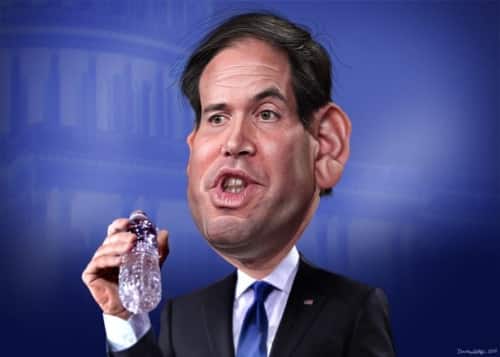 My standard joke was “Who cares? These guys aren’t scientists. If a doctor told you that you had cancer, would you seek out Marco Rubio or Rick Scott for a second opinion?”
Of course you wouldn’t. They could say the earth is flat for all I care. Hopefully for them, reality will set in when they keep walking and don’t fall off the edge… unless maybe they think they haven’t walked far enough yet.
But the challenge isn’t what they say, it’s what they do because these two gentlemen have political power. Their power, duly elected, allows them to set legislation and regulations. And both were elected fair and square. And elections are all about Civics. Civic engagement affects government, and government controls education.
Get it? That’s why we need solid Civics education in our schools, no matter which side of the political spectrum you’re on.
Sometimes people forget that if we don’t understand history, we’re doomed to repeat it.
Think it can’t happen here. Oh wait, it did.
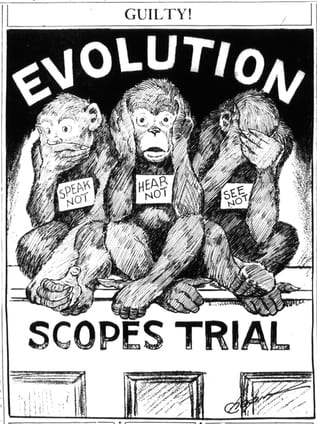 Back in the 1920’s there was another minor challenge to science education in the form of a little event called The Scopes Trial when teacher John Scopes, down in Tennessee, was put on trial for teaching evolution, i.e., the ridiculous notion that man was somehow descended from the same family as the apes.
Put him on trial??? Ridiculous, eh?
Nope, not ridiculous at all. He should have been put on trial because he broke the law, as passed, by a duly elected Tennessee legislature. Looking back, Tennessee would have done better had they elected our cousins, the apes and, by the way, Scopes was found guilty and was fined maybe $2.00… and, I assume, immediately after the decision was given a bunch of bananas for lunch and a cardboard box to rip apart during his free periods.
Yes, a duly elected legislature didn’t want evolution taught in schools because if we don’t mention it, it didn’t happen. In the film of that event, Inherit the Wind, Frederick March, as the William Jennings Bryan character prosecuting Scopes says, “I believe more in the Rock of Ages than the age of rocks.” Good luck teaching geology.
So, if you don’t think your teaching of science is under attack and has nothing to do with civics, au contraire… you would be wrong. Civics teaches civic responsibility…. civic responsibility affects elections and elections affect… guess who?… you and your school and your teaching!
I do hope you believe in evolution and I do hope you believe that climate change is real. However, if you don’t, that’s your business!
But if you do believe in science, do you want people who, for no other reason than politics, fight science in office? Because if they fight science, they are going to fight science education in public schools. And that is going to affect every student you teach. Every science teacher should encourage their school to teach Civics and media literacy.
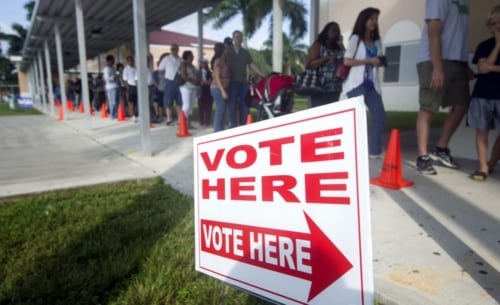
Simply put, our students are the voters of tomorrow and, no matter who they vote for, they need to understand who they are voting for, why they voting for that person, what the effects of their election will be and what they can do about it if they aren’t happy with the results.
And civics education works for both sides of the political spectrum. For example, a client/friend in Kansas who is the most salt-of the-earth guy in the universe once told me he’d be “out my way” in the forthcoming weekend.
“You’re coming to Maine?” I asked.
Turns out that “out my way” meant he was going to Washington DC ( Okay, what’s 600 miles between friends. I guess if you’re in Kansas, Maine & D.C. look closer on a map.)
As it turns out he was chaperoning a bus full (or more) of kids from his church/school for a Pro-Life rally… and he said half-kiddingly, “Guess you’re not real happy about that, eh?”
 And my answer was, “Well, I’m not happy about one part of it… that you’ll probably be committed to an asylum after a 2300 mile round trip on a bus filled with teenagers, but on the other hand, I admire your sacrifice, not for the issue, but for the sake of the kids learning a great civics lesson because that’s exactly what good citizens are supposed to do. When you disagree with a law, you peacefully protest and make your voice heard. It’s a great lesson for the kids in civics and government.”
“So we agree to disagree,” he said .
Yes, indeedy we did and we’re still friends.
So, let me help you with civics. We can do it the old way and teach that there are three branches of government in the US, Executive, Legislative and Judicial. That’s all. Thank you very much. Have a nice day.
But wait, there’s more. A lot more. Civics education today requires it. Both sides need to be respected in our nutsy political climate. And we need to teach so it isn’t argumentative. As Bishop Desmond Tutu once said, “My father used to tell me, don’t raise your voice… Improve your argument”.
How do you start? Go to a web site called Procon.org which, in a neutral way, presents both sides of every issue. One of the favorite things I learned from talking to their President Kamy Akhavan is that the term “Gun Control” is offensive to folks who want a very strong 2nd amendment. The better and truer phrase is “Gun Rights” because gun ownership is quite Constitutional and changing the phrase makes the argument more palatable, correctly I might add. See how easy it is for a change of perspective.
And with all the information on the web, I’ll talk “media literacy” in my next column so the kids can at least see where their information is coming from.
Two sides to everything. Elections have results. No matter what subject you’re teaching, encourage civics education, please.
And if you’d like to learn more about the importance of solid civics education , listen to this discussion from our Education in America podcast.
Author
- Concord Monitor – Duckler: Some lawmakers see teaching civics as our civic duty
- The Toledo Blade – TPS course to look at fact-checking news
- The Christian Science Monitor – Teaching civics in an age of Trump


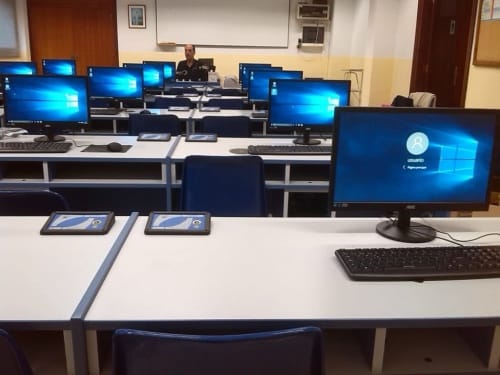 In addition to phenomena-driven learning, high-quality digital resources can help improve student engagement. Today’s students are very comfortable with digital media and other technologies. These resources are a part of students’ daily lives outside the classroom, so why wouldn’t we make them an integral part of teaching and learning?
 Visiting an active volcano is out of the question for many students, but with high-quality digital resources, an educator can immerse students in observing and questioning what they see when a volcano erupts. Through a Virtual Field Trip (VFT), students can visit a variety of sites, guided by experienced experts, and see firsthand these phenomena in the real world.
 The challenge of finding ways to engage students in learning, and then sustaining that engagement, is not new. However, the standards for engagement have changed and so must educators’ approach to teaching, specifically in the sciences. Each science teacher knows it is a big, wonderful world out there, and as a lover of chemistry, I am always interested in how the essential elements react when combined. So, I encourage you to think of phenomena-based learning and digital content as two essential elements of great teaching and learning. I think you will be pleased with the reaction you will see in the classroom when these elements come together!
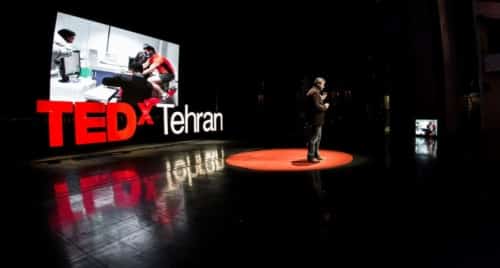
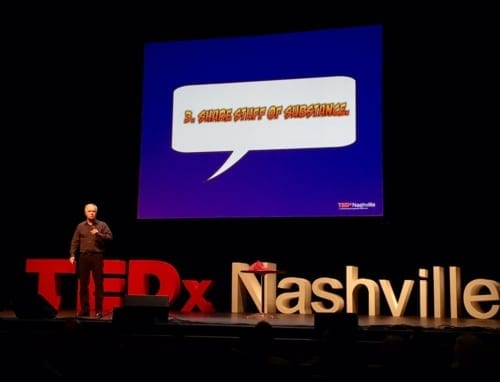 Rob Ivy lives in Nashville. He is the chief financial officer of Lee Company, a mechanical contracting, facilities and home services company with over 900 employees serving government, institutional, commercial, healthcare and industrial organizations as well as residential customers throughout middle Tennessee, southern Kentucky, and northern Alabama. Ivy is a board member and speaker coach for TEDx Nashville, a successful TEDx organization. Ivy and others refer to the home organization as Big TED, and the TEDx organizations as Little TED. Ivy is a big believer in the value of TED, and talks passionately about the platform. “I believe that part of the appeal of TED Talks is the “purity” of the platform. No politics, religion, or advertising. No fees or honorariums. Just original ideas presented by passionate advocates. I think of it as “open source knowledge.” Viewers appreciate that TED Talks are a safe space, where the only agenda is enhancing society through imparting knowledge, sharing ideas, and sparking creativity.
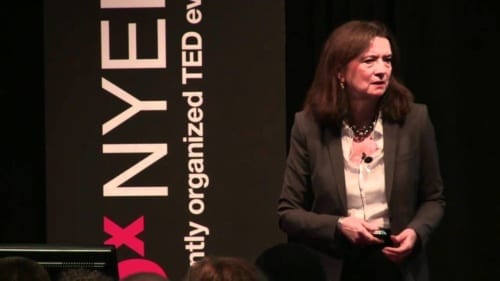 Heidi Hayes Jacobs at TEDx NYED in 2011
 It is striking how often teachers consider a TEDx Talk as part of their resource bank of media sources to use in the design of curriculum units and activity design.
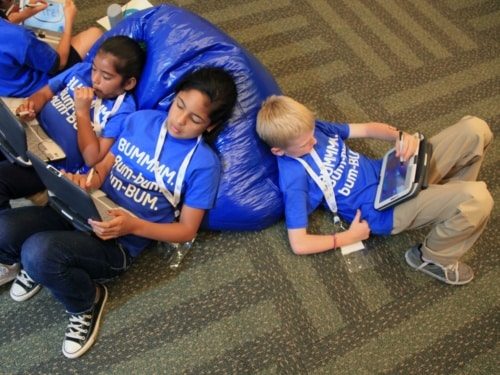 Such a shame that so many schools and districts bought the whole “all-free-materials” pitch and have tried to do it, exhausting their teachers to no end and causing some to leave during the biggest teacher shortage there has ever been! This, instead of budgeting for the new way and demanding funds to get professionally designed and curated digital curriculum with built-in machine learning algorithms.
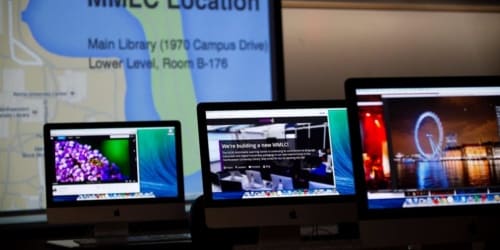 The mobility and networking companies are also doing great and will continue to.
 Truth is, the market has splattered into a million tiny bits of lesson plans that teachers are building and putting into those repositories that frankly will not compete with the full digital courseware world. Once we are taking full advantage of, and have implemented digital courseware for all that it is worth, the majority of the market will turn to sophisticated systems and postures of digital delivery that are surpassingly automated hubs, less human-centric and more student-experience oriented. Again, this is a maturity, and also competitive and cost-structure issue.
 Tons of individual learning objects will, again, be being bought, and made, and companies who are marketing hard on these will be big gainers in 2017. The shopping behavior right now for this stuff is awesome, and we expect to see a lot of what were tiny companies getting mighty, very quickly. The trick they need to pull from their hat, though, will be brilliant marketing, not sales: content marketing, showing up to meet-and-greet and expertly pitch, forming alliances with others of similar ilk in a camaraderie of products, all those are brilliant moves for this tier of companies. Unfortunately for some reps this means those companies will do better with fewer reps and more marketing spend on reaching folks. The good news is new communities like
 03/21/17 | Northern Indiana, IN | ABC 57 News
 11/02/16 | Washington, D.C. | U.S. Department of Education

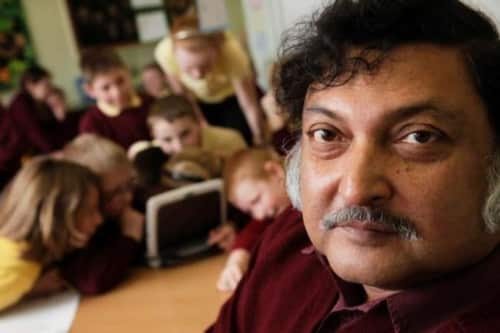
 When I returned to teaching, with my new mindset, I saw my students’ interest and involvement blossom, even the “poor performers,” when I trusted them to find their way to their own comprehension rather than mine. I was no longer the expert, I was a co-learner. Suddenly this teacher began learning again. As I listened more, talked less, gave them more freedom to run with their own possibilities, they did much better, even on tests.