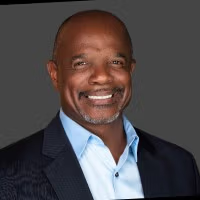


In this 2022 Equity Everywhere conversation, host Thom Jackson of EdisonLearning talks with Shomari Jones, then Director of Equity and Strategic Engagement at Bellevue School District, about how a district builds the position of director of equity. The section added below looks at what the role involves and at how some districts have changed it since 2025.
What is equity? Who is leading the charge in shaping educational equity? How can I get involved? The Equity Everywhere podcast answers these questions and more. Made for educators, this podcast will give you vital resources through conversations with equity leaders across the educational industry.
 Equity EverywhereThe Rise of Directors of Equity with Shomari Jones (S1E5)Play episode: The Rise of Directors of Equity with Shomari Jones (S1E5) (1 hour 4 minutes)Follow on SpotifyApple
In this episode, Thom Jackson, President and Chief Executive Officer of EdisonLearning, chats with Shomari Jones, the Director of Equity and Strategic Engagement at Bellevue School District in Bellevue, Washington.
In this conversation, Thom and Shomari focus on the process of developing an equity leader position for school districts. A bulk of the conversation discusses making this position as effective as possible. In this discussion, Thom and Shomari discuss addressing institutional issues, qualities of great equity leaders, the challenges equity leaders face, and most importantly, the structures that need to be created within a school district to support the creation and implementation of a director of equity.
This discussion is interesting because of the barriers and politics that directors of equity or equivalent positions in school districts face and how long the process of creating institutional equity takes. Thom and Shomari discuss how solutions like professional development, community engagement, institutional assessment, and more are long-form processes that take time, patience, and resolve but create lasting and essential change in schools and communities.
Equity Everywhere is a podcast series hosted by edCircuit and EdisonLearning President & CEO Thom Jackson. Joined weekly by a variety of K-12 practitioners and experts, they engage in critical, meaningful, comprehensive conversations about equity in education ― what are the key factors, variables, objectives, and considerations for the education system to acknowledge and address? Together, podcast participants will highlight, amplify, and refine best practices and solutions for ensuring education equity everywhere.
Learn more about EdisonLearning and its commitment to Equity Everywhere.
Listen to more episodes of Equity Everywhere on edCircuit.
Director of equity in schools: what the role involves and how districts are changing it
A director of equity in schools is a district-level leader whose job is to help the district examine and improve how students of different backgrounds experience its schools. The episode above, in which Thom Jackson and Shomari Jones discuss building the position, centers on the structures a district has to create around the person: institutional assessment, professional development, community engagement and the patience that long-term change requires. Since that conversation the position has been reshaped in a number of districts, and the examples below show the range of reasons given.
What the conversation says makes the role work
According to the episode summary, Jackson and Jones cover addressing institutional issues, the qualities of strong equity leaders, the challenges those leaders face, and the structures a district should put in place so that the position can be effective. They describe solutions such as professional development, community engagement and institutional assessment as long processes that take time and resolve. A board could take from that framing that a title alone achieves little, and that it is worth deciding in advance what scope, reporting line, data access and budget the position will have.
How some districts have changed the position
Local reporting since 2025 shows districts taking different paths. CBS Detroit reported in April 2025 that the Rochester Community Schools superintendent, Nicholas Russo, told parents the district was ending its diversity, equity and inclusion director position to avoid a substantial risk of losing federal funds, tying the decision to changes in federal policy. In May 2026 The Philadelphia Inquirer reported that the Norristown Area School District in Pennsylvania was ending its chief of diversity, equity, inclusion and belonging position when the school year closed. Board president Jeremiah Lemke said the board is not abandoning the work but wants equity to be everyone’s responsibility, and that it would publicly report data such as Advanced Placement participation, staffing diversity and student perception. Assistant Superintendent Yolanda Williams cited two gaps at a board meeting: white students are under 10 percent of enrollment but over 37 percent of gifted students, and Black students account for 55 percent of out-of-school suspensions. The article also gives a Hispanic graduation rate of 77 percent against 81.5 percent overall, without naming a source for it. Obed Arango, director of a Norristown immigrant community center, said the board acted without consulting the community and that the new job description leaves out the words diversity, equity and inclusion.
These two reports are local examples and do not describe the whole country, and the sources reviewed give no national count of districts that have made similar changes. They do show two different reasons, one about federal funding risk and one about how responsibility is shared, and they show that the disagreement over the best structure is open.
Questions a district can answer before it creates, keeps or reshapes the role
- What decisions will the person be able to influence, such as hiring practices, discipline data review, curriculum review or family communication, and what decisions stay with principals and the superintendent?
- What data will the district publish each year so the community can see whether outcomes are changing? The Norristown figures above are one example of the kind of data a board can choose to track.
- How will families and staff be consulted before the structure changes, since a Norristown critic pointed to consultation as a weakness?
- What do the district’s legal advisers say about federal and state requirements that apply to its funding? This article does not give legal advice and districts differ.
- How will the district judge the work after two or three years, using measures it set at the start?
The conversation between Jackson and Jones remains a record of how one district approached building the role in 2022. Readers following the topic now will find that the underlying tasks it describes, which are assessing the institution, training staff and engaging the community, continue in many districts under different titles.
Related reading
More on Diversity, Equity, Inclusion